





Improved
6112 HealthChanged
3786 LivesSaved
3568 Lives0 lives impacted in the last 24 hrs Learn More
 iStockphoto/Thinkstock
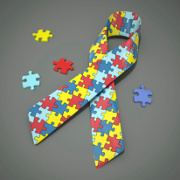
In the United States, about 1 in 88 children is on the autism spectrum, according to the Centers for Disease Control and Prevention.
Several disorders make up the autism spectrum, including autism, Asperger syndrome, Rett syndrome, pervasive developmental disorder not otherwise specified, and childhood disintegrative disorder.
Symptoms of autism spectrum disorders fall into three general categories.
The first is impairment in social interactions. For example, a child on the autism spectrum may make poor eye contact or respond unusually to other people's emotions.
The second category is repetitive and stereotyped behaviors. These behaviors can be mild, such as moving their fingers by the eyes, or more severe, such as arm flapping, according to the National Institute of Mental Health.
The last category is communication difficulties. A child on the autism spectrum may be delayed in reaching her language developmental milestones. Some children on the autism spectrum may coo and babble by the time they are a year old, but then cease doing so.
What causes autism spectrum disorders is not yet known. Research has looked at the effects that genetics and environment may have on the development of the disease.
The National Institute of Neurological Disorders and Stroke stated that the theory that parental practices are involved in the development of autism spectrum disorders has been disproven.
New research has identified a possible link between prenatal inflammation and an increased risk for autism.
The study looked at C-reactive protein, or CRP, which is produced by the liver. When there is inflammation in an individual's body, her levels of CRP increase.
In the autism study, researchers used archived maternal serum from the Finnish Maternity Cohort, which includes about 810,000 women. Serum is a component of the whole blood.
The researchers analyzed CRP in the serum of 677 women who had given birth to a child who developed autism and matched them to an equal number of control.
The press release from the National Institutes of Health stated that the risk of developing autism increased by 43 percent when the mothers' CRP levels were in the upper 20th percentile. That risk of developing autism increased to 80 percent when the mother's CRP levels were in the upper 10th percentile.
While this finding provides greater insight into the role maternal inflammation can play on the development of autism, the results should be taken with caution.
Alan Brown, M.D., professor of clinical psychiatry and epidemiology at Columbia University College of Physicians and Surgeons, New York State Psychiatric Institute, and Mailman School of Public Health, was the lead scientist on this study.
Brown told the National Institutes of Health in its press release that "the vast majority of mothers with increased CRP levels will not give birth to children with autism. We don’t know enough yet to suggest routine testing of pregnant mothers for CRP for this reason alone; however, exercising precautionary measures to prevent infections during pregnancy may be of considerable value.”
References
Centers for Disease Control and Prevention. Autism Spectrum Disorders: Data and Statistics. Web. 6 February 2013.
http://www.cdc.gov/ncbddd/autism/data.html
National Institute of Mental Health. What is Autism Spectrum Disorder (ASD)?. Web. 6 February 2013.
http://www.nimh.nih.gov/health/publications/a-parents-guide-to-autism-spectrum-disorder/what-is-autism-spectrum-disorder-asd.shtml
National Institute of Mental Health. What are the Symptoms of ASD?. Web. 6 February 2013.
http://www.nimh.nih.gov/health/publications/a-parents-guide-to-autism-spectrum-disorder/what-are-the-symptoms-of-asd.shtml
National Institute of Neurological Disorders and Stroke. Autism Fact Sheet. Web. 6 February 2013.
http://www.ninds.nih.gov/disorders/autism/detail_autism.htm
MedlinePlus Medical Encyclopedia. C-Reactive Protein. Web. 6 February 2013.
http://www.nlm.nih.gov/medlineplus/ency/article/003356.htm
National Institutes of Health. Prenatal Inflammation Linked to Autism Risk. Web. 6 February 2013.
http://www.nih.gov/news/health/jan2013/niehs-24.htm
Reviewed February 6, 2013
by Michele Blacksberg RN
Edited by Jody Smith
Add a CommentComments
There are no comments yet. Be the first one and get the conversation started!