





Improved
6112 HealthChanged
3785 LivesSaved
3568 Lives0 lives impacted in the last 24 hrs Learn More
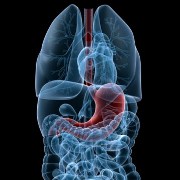 Photo: Getty Images
One of the biggest concerns in the community of parents whose children have autism is the various gastrointestinal problems that they confront. Some estimates say that as many as 50 percent of children with autism have digestive issues, including food allergies, malabsorption issues and inflammatory bowel disease.
The site for the National Autism Association directs parents to read up on gluten-free and casein-free diets as well as the Specific Carbohydrate Diet (SCD) from the Elaine Gottschall book “Breaking the Vicious Cycle.” The diet theorizes that certain starch and sugar molecules are too large for normal digestion and are harbored in the intestines, where they attract damaging bacteria and fungi.
Clearly, there are no diets, therapies or treatments that guarantee gastrointestinal relief for children with autism. And experts are always careful to point out the lack of hard evidence that autism causes gastrointestinal problems or that GI problems cause autism.
Autism, a developmental disorder, and its link to GI problems can be a highly charged subject, and the medical community is still struggling to understand it. The interesting news out of the Mailman School of Public Health at Columbia University, though, is that bacteria in the gut of autistic children with GI problems appears to differ from gut bacteria in non-autistic children.
Study results published Jan. 10, 2012, online in mBio® reveal that bacteria from the group Sutterella made up a relatively large proportion of the microorganisms found in 12 out of 23 tissues samples from the digestive tract of autistic children. The microorganisms were not found in any samples from non-autistic children.
A microbiologist quoted on ScienceDaily.com said that Sutterella is not a well-known bacterium, although it has been associated with gastrointestinal diseases below the diaphragm but it is unclear whether it is a pathogen or not.
The findings are significant because digestive problems in autistic children not only can be quite serious, but they can also contribute to behavioral problems, according to an American Society for Microbiology news release.
In addition, the research relied on tissue samples surgically removed from the intestinal walls instead of stool samples, as used in previous research. Intestinal tissue samples are more reflective of the bacterial environment in children’s digestive tracts than stool, the researchers said.
Even though this might be the start of research that can provide more answers on the gastrointestinal problems often seen in autistic children, it is still good to keep in mind the American Academy of Pediatrics’ assertion that there is no causal relationship. Some autistic children might have digestion issues -- for instance, constipation -- because of their particular eating habits or because of medication, the AAP said.
The pediatric organization cited a 2009 study to make this statement: “... children with autism should not be treated indiscriminately with restrictive diets or dietary supplements, which should only be used for specific gastrointestinal disorders.”
Sources:
“Bacteria in the Gut of Autistic Children Different from Non-Autistic Children.” ScienceDaily. Web. 16 Jan. 2012. http://www.sciencedaily.com/releases/2012/01/120109211825.htm
Goddard, Jody. “Autism and GI Problems.” Breaking the Vicious Cycle: The Specific Carbohydrate Diet. Web. 16 Jan. 2012. http://www.breakingtheviciouscycle.info/autism/autism_and_gi_problems.htm
“Dietary Intervention.” National Autism Association. Web. 16 Jan. 2012. http://www.nationalautismassociation.org/diet.php
“Gastrointestinal Disorders Are Not Linked to Autism, Study Finds.” American Academy of Pediatrics. Web. 16 Jan. 2012. http://www.aap.org/en-us/about-the-aap/aap-press-room/Pages/Gastrointestinal-Disorders-are-not-Linked-to-Autism-Study-Finds.aspx
Reviewed January 16, 2012
by Michele Blacksberg RN
Edited by Jody Smith
Add a Comment4 Comments
As a mom whose Asperger's son is now grown, I wanted to share that studies give some info on what's possible, but studies DON'T apply to individual children. We dealt with common & uncommon food allergies from birth, environmental allergies, medications & side effects, & struggles getting appropriate educational supports (Asperger's wasn't a diagnosis yet!) & lots of problems with Anxiety!! I would like to remind everyone of the connection between emotions & gut activity. Stress is going to affect gut activity, & I can't think of anything more stressful than struggling with autism. I eventually had to tell all the experts I dealt with that I had to live with the reality of the situation, & I was always going to go with what worked for me & my child. Agreement with 'science' wasn't important. Good Luck to you all.
May 10, 2012 - 6:13pmThis Comment
If your child has autism, restoring a healthy gut is vital. You can start simply, by supplementing digestive enzymes, and giving probiotics to restore the balance of gut bacteria. Both measures help heal the digestive tract and promote normal absorption, and have produced positive clinical results in autistic children.
March 30, 2012 - 2:09amPolycystic Ovarian Syndrome
This Comment
I am not sure if the diet helps every child with autism. I believe it does require more research because I tried the diet for 10 month on my 9 year old child and it was difficult for me to identify a significant change. Some improvements could have been because of other behavior approaches and during those 10 months, my child cried and cried every day. The first week of the diet, our DAN doctor told us that the crying and frustrating melt downs were "die-off," but this die-off (candida dying in the gut releasing toxins) lasted for almost all the 10 months. Again, I am not against diets, but I suggest more research to be done because applying a strict diet to our child was one of the most difficult task for him and for us. Now he eats almost anything, but we focus on healthy food. Nevertheless, we continue to struggle with the same meltdowns and autism symptoms that he had during the diet.
February 5, 2012 - 1:47amThis Comment
I'm glad SCD is getting more exposure, it has been helping all kinds of digestive issues for over 60 years and has helped many ASD kids. Here is a study that just came out showing how effective it is:
http://works.bepress.com/barbara_olendzki/46/
I know it works for Autistic children and IBD as I receive testimonials all the time. I recovered from IBS using it and now with our blog http://scdlifestyle.com my buddy Jordan and I have helped over 10,000 people get started!
January 19, 2012 - 1:09pmThis Comment