





Improved
6112 HealthChanged
3786 LivesSaved
3568 Lives0 lives impacted in the last 24 hrs Learn More
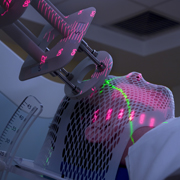
Radiation therapy is a common part of cancer treatment. Advances in both imaging technology and radiation delivery provide more a more specific attack on the cancer with less damage to surrounding tissue in the organs at risk.
Dr. S. A. Bhide and Dr. C. M. Nutting of the Institute of Cancer Research and Royal Marsden Hospital, London, UK, provided a review. X-rays and gamma rays are the most common types of radiation therapy, but charged particles are also used.
“The delivery of radiotherapy has changed significantly over the last few decades,” Bhide wrote. The therapeutic ratio is improved by techniques that deliver a higher radiation dose to the tumor with less irradiation of the organs at risk.
Depending on the type of cancer, the following techniques may be used:
1. IMRT: intensity modulated radiotherapy.
This is now standard for head and neck cancers, and for prostate cancer. When used for head and neck cancers, it minimizes damage to the salivary glands, upper aero-digestive tract mucosa, optic nerves, inner ear, swallowing muscles, brain stem, and spinal cord.
2. IGRT: image guided radiotherapy.
With highly “focused” radiation, it is critical to know the tumor's location, size, and shape accurately. Imaging techniques include computed tomography (CT), magnetic resonance imaging (MRI), and positron emission tomography (PET).
3. 3D-CRT: three-dimensional conformal radiotherapy.
This technique fits the shape of the radiation dose to the shape of the tumor.
4. Stereotactic radiotherapy.
The Cyberknife technique and similar linear accelerator systems are used for treating metastatic tumors in the head, and some cancers of the lung, kidneys, liver, spine, and prostate.
5. Particle therapy.
Charged particles, such as protons from an accelerator, deposit most of their energy in a small area called the Bragg peak at the end of their penetration range. This method is the closest to a “magic bullet” that can be aimed at just the cancer.
Dr. Silvia C. Formenti and Dr. Sandra Demaria of the New York University School of Medicine explained that radiation does much more than kill cancer cells directly. Radiation of both cancer cells and normal cells alerts the immune system to “danger signals” and triggers an inflammatory response.
The outcome can be desirable or undesirable depending on many factors, including the genetics of the patient. Under favorable conditions, radiation modifies the tumor so that the immune system attacks it. Thus radiation therapy may be combined with cancer therapies based on the immune system.
References:
1. Bhide SA et al, “Recent advances in radiotherapy”, BMC Medicine 2010; 8:25-30.
http://www.ncbi.nlm.nih.gov/pubmed/20426851
2. Formenti SC et al, “Systemic effects of local radiotherapy”, Lancet Oncol. 2009 July; 10(7): 718-726.
http://www.ncbi.nlm.nih.gov/pubmed/19573801
Linda Fugate is a scientist and writer in Austin, Texas. She has a Ph.D. in Physics and an M.S. in Macromolecular Science and Engineering. Her background includes academic and industrial research in materials science. She currently writes song lyrics and health articles.
Reviewed November 30, 2011
by Michele Blacksberg RN
Edited by Jody Smith
Add a Comment1 Comments
Revitalization Medical Institute(RMI) uses the latest approaches supported by medical research to help you achieve optimal health. We work with you to develop a comprehensive program that allows you to Feel and look better, Have more energy and think more clearly, Have more muscle tone and less body fat, Enjoy a better sexlife.therapy for cancer
December 8, 2011 - 9:07pmThis Comment