





Improved
6112 HealthChanged
3786 LivesSaved
3568 Lives0 lives impacted in the last 24 hrs Learn More
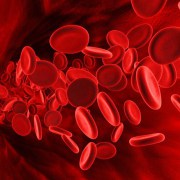 Photo: Getty Images
Researchers at the University of California, San Diego have developed a novel method of disguising nanoparticles as red blood cells, enabling them to evade the body's immune system and deliver cancer-fighting drugs straight to a tumor. The research will be published June 27, 2011 in the online Early Edition of the Proceedings of the National Academy of Sciences.
According to the researchers, the method involves collecting the membrane from a red blood cell and wrapping it like a powerful camouflaging cloak around a biodegradable polymer nanoparticle stuffed with a cocktail of small molecule drugs. Researchers call the technique “drug-polymer blending”. Nanoparticles are less than 100 nanometers in size, about the same size as a virus. The technique allows researchers to precisely control the ratio of drugs loaded into the particle. They can also control the rate at which each drug will be released once it enters a tumor cell.
"This is the first work that combines the natural cell membrane with a synthetic nanoparticle for drug delivery applications." said Liangfang Zhang, a nanoeningeering professor at the UC San Diego Jacobs School of Engineering and Moores UCSD Cancer Center. "This nanoparticle platform will have little risk of immune response".
Researchers have been working for years on developing drug delivery systems that mimic the body's natural behavior for more effective drug delivery. That means creating vehicles such as nanoparticles that can live and circulate in the body for extended periods without being attacked by the immune system. Red blood cells live in the body for up to 180 days and, as such, are "nature's long-circulation delivery vehicle," said Zhang's student Che-Ming Hu, a UCSD PhD candidate in bioengineering, and first author on the paper.
Researchers from MIT and Brigham and Women’s Hospital already use specially designed stealth nanoparticles to deliver two very different chemo drugs, cisplatin and docetaxel, to prostate cancer cells. Other research has successfully used the technology to target liver cancer and breast cancer cells. The nanoparticles are coated in a synthetic material such as polyethylene glycol that creates a protection layer to suppress the immune system so that the nanoparticle has time to deliver its payload. Zhang said today's stealth nanoparticle drug delivery vehicles can circulate in the body for hours compared to the minutes a nanoparticle might survive without this special coating.
But in Zhang's study, nanoparticles coated in the membranes of red blood cells circulated in the bodies of lab mice for nearly two days. The study was funded through a grant from the National Institute of Health.
A shift towards personalized medicine
Using a person’s own red blood cells marks a significant shift in focus and a major breakthrough in the field of personalized drug delivery research. Trying to mimic the most important properties of a red blood cell in a synthetic coating requires an in-depth biological understanding of how all the proteins and lipids (fats) function on the surface of a cell act so the right properties can be exactly mimicked. Instead, Zhang's team just takes the whole surface membrane from an actual red blood cell and lets it do its job.
"We approached this problem from an engineering point of view and bypassed all of this fundamental biology," said Zhang. "If the red blood cell has such a feature and we know that it has something to do with the membrane -- although we don't fully understand exactly what is going on at the protein level -- we just take the whole membrane. You put the cloak on the nanoparticle, and the nanoparticle looks like a red blood cell."
Using nanoparticles to deliver drugs also reduces the hours it takes to slowly drip chemotherapy drug solutions through an intravenous line to just a few minutes for a single injection of nanoparticle drugs. This significantly improves the patient's experience and compliance with the therapeutic plan, he said. The breakthrough could lead to more personalized drug delivery wherein a small sample of a patient's own blood could produce enough of the essential membrane to disguise the nanoparticle, reducing the risk of immune response to almost nothing.
Zhang said one of the next steps is to develop an approach for large-scale manufacturing of these biomimetic nanoparticles for clinical use, made possible through funding from the National Science Foundation. Researchers will also add a targeting molecule to the membrane that will enable the particle to seek and bind to cancer cells, and integrate the team's technology for loading drugs into the nanoparticle core so that multiple drugs can be delivered at the same time.
“Being able to deliver finely-tuned multiple drugs in a single nanoparticle is an important step because cancer cells can develop a resistance to drugs delivered individually,” said Zhang. “By combining drugs and giving the nanoparticle the ability to target cancer cells, the whole cocktail can be dropped like a bomb from within the cancer cell.”
The National Institutes of Health has more information on using nanoparticles for chemo drug delivery at http://www.nih.gov/researchmatters/january2011/01242011nanoparticles.htm
Lynette Summerill is an award-winning writer who lives in Scottsdale, Arizona. In addition to writing about cancer-related issues for EmpowHER, her work has been seen in newspapers and magazines around the world.
Source: UC San Diego press release accessed at http://www.sciencedaily.com/releases/2011/06/110620161300.htm.
“New nanoparticles could improve cancer treatment” Anne Trafton, MIT News. Oct 5, 2010. Accessed at http://web.mit.edu/newsoffice/2010/nanoparticle-chemotherapy-1005.html.
Reviewed June 21, 2011
Edited by Alison Stanton
Add a CommentComments
There are no comments yet. Be the first one and get the conversation started!