




Improved
6112 HealthChanged
3786 LivesSaved
3568 Lives0 lives impacted in the last 24 hrs Learn More
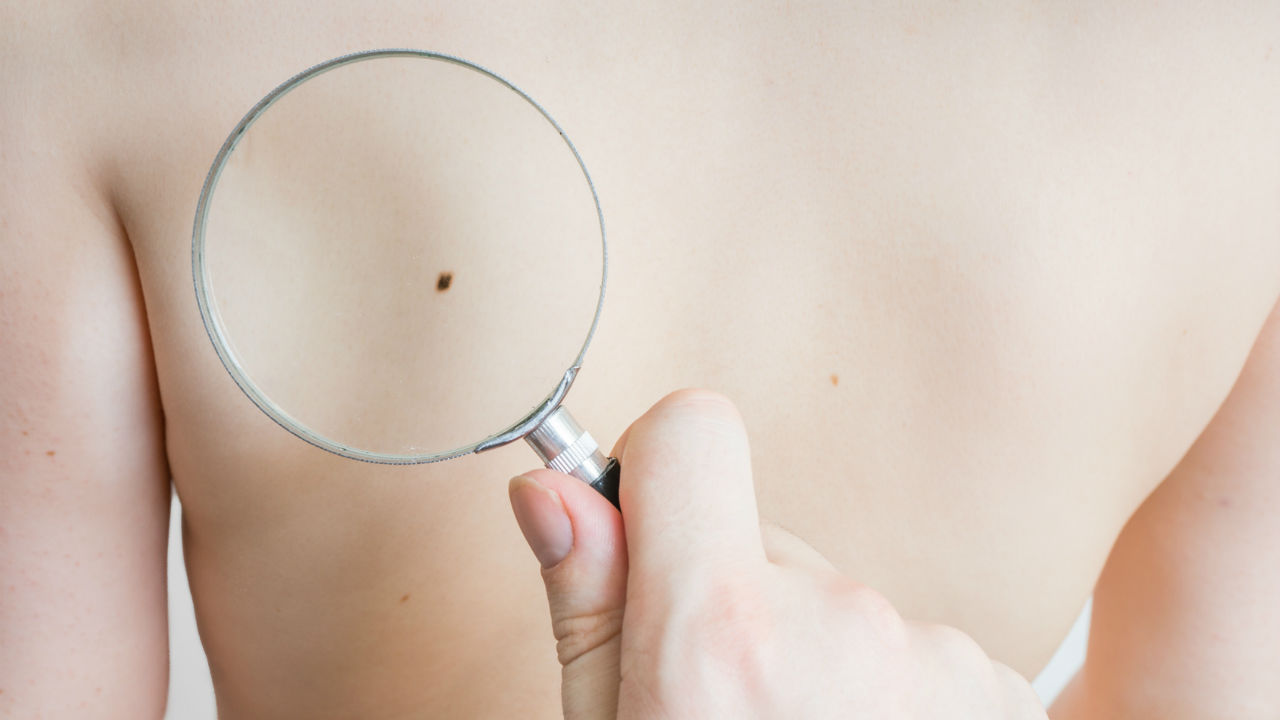
Melanoma is the most dangerous type of skin cancer. Early detection and treatment are easy in principle, but in practice many of these cancers are diagnosed only after they have metastasized. The presence of nevi (moles) can be a warning sign of elevated melanoma risk. Juliana Hypolito Silva and colleagues in Sao Paulo, Brazil, provided a review of the relationship between nevi and melanoma.
“The incidence of cutaneous melanoma has increased rapidly worldwide,” Silva reported. “Although it corresponds to only 4% of all skin cancers, it accounts for 80 percent of skin cancer deaths.”
Approximately 20 to 30 percent of melanomas are associated with pigmented moles, according to data used by Silva. However, the vast majority of moles do not develop melanoma. Silva's literature review indicates that identification of high-risk moles may lead to significant improvements in melanoma prognosis.
“The clinical distinction between benign and malignant pigmented lesions can be challenging,” Silva explained. The ABCDE rule is a shortcut for moles at high risk of cancer:
A: asymmetry
B: irregular borders
C: varied colors
D: diameter greater than 6 mm
E: elevation. A central papule surrounded by a macular ring looks like a “fried egg”.
The U. S. National Library of Medicine's PubMed Health web site adds that the E could also stand for evolving, as changes in the appearance of a mole should alert the individual to see a doctor.
Atypical mole syndrome is the term for a large number of moles, including at least one that fits the ABCDE rule. The condition is believed to indicate a genetic susceptibility to melanoma.
The classical definition of atypical mole syndrome includes the following:
1. At least 100 melanocytic nevi (pigmented moles)
2. One or more of these with a diameter of at least 8 mm
3. One or more with clinically atypical features
The National Institutes of Health updated the classification in 1992 to include family history of melanoma, and cell structure features characteristic of melanoma. In 1993, J. A. Newton and colleagues refined the classification further to account for age and location of the moles.
The PubMed web site lists additional risk factors for melanoma:
1. Fair skin and blond or red hair
2. Excessive exposure to ultraviolet rays, with sunburn
3. Exposure to cancer-causing chemicals including arsenic, coal tar, and creosote
4. Weakened immune system
5. Family history of melanoma
For diagnosis, a biopsy is generally necessary. See your doctor is you have any suspicious skin lesions.
References:
1. Silva JH et al, “Atypical mole syndrome and dysplastic nevi: identification of populations at risk for developing melanoma – review article”, Clinics 2011; 66(3): 493-99.
http://www.ncbi.nlm.nih.gov/pubmed/21552679
2. U. S. National Library of Medicine. PubMed Health. Web. Melanoma. Dec. 12, 2011.
http://www.ncbi.nlm.nih.gov/pubmedhealth/PMH0001853/
Reviewed December 19, 2011
by Michele Blacksberg RN
Edited by Jody Smith
Add a CommentComments
There are no comments yet. Be the first one and get the conversation started!