




Improved
6139 HealthChanged
3797 LivesSaved
3584 Lives0 lives impacted in the last 24 hrs Learn More
 PS Productions/PhotoSpin
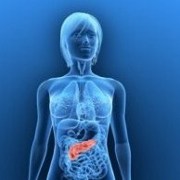
Chances are you rarely think about your pancreas unless you become ill. While measuring only about six inches in length, the pancreas is a large and important organ located behind the stomach and near the liver and top of the small intestine.
This hard-working organ produces “juices” that help absorb the food we eat, and the hormones insulin and glucagon to use and store energy and control blood sugar levels. Insulin is used to lower blood sugar levels while glucagon raises them.
Pancreatic cancer, (sometimes called exocrine cancer) is a common cancer that starts in the pancreas. In 2010, the latest estimates available indicate that 43,140 Americans were diagnosed with the disease and 36,800 will die as a result of it, according to the National Cancer Institute, part of the National Institutes of Health.
The public health struggles of noted Americans U.S. Supreme Court Judge Ruth Bader Ginsburg, former Apple CEO Steve Jobs, and actor Patrick Swayze has brought recent attention to pancreatic cancer, one of the leading causes of cancer death.
Pancreatic cancer has a poor prognosis for several reasons. There is no reliable early screening test for pancreatic cancer.
It is typically a fast spreading cancer that invades other organs and is difficult to diagnose in the early stages when it is most operable. That’s because pancreatic cancer is either without symptoms until it is in its advanced stage or the symptoms mirror that of other diseases or conditions, such as jaundice, stomach pain, fatigue or weakness, vomiting, diarrhea, loss of appetite and unintentional weight loss.
The five-year survival rate for pancreatic cancer approaches 25 percent if the tumors are surgically removed while they are still small and have not spread to the lymph nodes, reports Johns Hopkins. However since most pancreatic cancers are found late, surgery is not an option. Inoperable cancer is treated with radiation and chemotherapy.
Your doctor will use cancer staging to learn the extent of the disease and identify the best treatment options. To do this, the size of the tumor, how much the original tumor may have spread to nearby tissues, and where in the body the cancer has spread are all carefully identified, usually through testing and other medical procedures. The stages of pancreatic cancer are:
It is virtually impossible to say what causes a person to get pancreatic cancer but cancer biologists have used large population studies to conclude pancreatic cancer is fundamentally a disease caused by DNA mutations. These mutations can be genetic, meaning they are passed down through families, happen by chance, or caused by things we do to ourselves, such as smoking, eating the wrong kinds of foods and obesity.
For example, cigarette smoking doubles a person’s chance of pancreatic cancer especially for early age diagnosis and is the leading preventable cause of pancreatic cancer.
Here are some other risk factors:
While the prognosis of pancreatic cancer may seem grim, there is always hope. Consider enrolling in one of the clinical trials as part of your treatment plan. There is amore information about this on the Pancreatic Cancer Action Network (PanCan) website.
To learn more about inherited cancer syndromes for pancreatic cancer visit the web site of the National Familial Pancreas Tumor Registry at: http://pathology.jhu.edu/pancreas/NFPTR/
Lynette Summerill, an award-winning writer and scuba enthusiast lives in San Diego, CA with her husband and two canine kids. In addition to writing about cancer-related issues for EmpowHER, her work has been seen in newspapers and magazines around the world.
Sources:
The Sol Goldman Pancreatic Cancer Research Center at John Hopkins. What Causes Pancreatic Cancer. Accessed online 20 Sep 2011 at: http://pathology.jhu.edu/pc/BasicCauses.php?area=ba
National Cancer Institute. What You Need To Know About Pancreatic Cancer. Accessed online 20 Sep 2011 at http://www.cancer.gov/cancertopics/wyntk/pancreas/page3
Pancreatic Cancer Resources and Support. Pancreatic Cancer Action Network. Accessed online 20 Sep 2011 at http://www.pancan.org/section_facing_pancreatic_cancer
National Institutes of Health, National Cancer Institute Seer Pancreatic Cancer Stat Fact Sheet. Accessed online 20 Sep 2011 at http://seer.cancer.gov/statfacts/html/pancreas.html
Pancreatic Carcinoma. The US National Library of Medicine,(Pubmed Health). Accessed online 20 Sep 2011 at: http://www.ncbi.nlm.nih.gov/pubmedhealth/PMH0001283
Reviewed September 20, 2011
by Michele Blacksberg RN
Edited by Jody Smith
Add a CommentComments
There are no comments yet. Be the first one and get the conversation started!