




Improved
6112 HealthChanged
3785 LivesSaved
3568 Lives0 lives impacted in the last 24 hrs Learn More
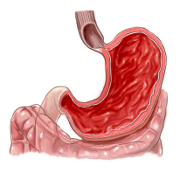 Photo: Getty Images
Gastritis involves inflammation or swelling of the stomach lining. Gastritis can be of short duration (acute) or it may go on for months and even years (chronic).
Gastritis is most commonly brought on by drinking too much alcohol, after taking pain medications like aspirin, naproxen or ibuprofen for a prolonged period, or from an infection by the bacteria Helicobacter pylori in the stomach lining.
The stomach has a protective layer lined with mucus to stand between the stomach and the acids it contains for digestion. When the stomach's protective layer has been damaged in some way, the risk for gastritis increases. H. pylori can cause this erosion of the stomach lining.
H. pylori causes most stomach ulcers. Gastritis has been known to contribute to the development of stomach ulcers, and may bring with it greater risk for stomach cancer.
Gastritis may be the result of ingesting poison or using cocaine. Gastritis can also be caused by autoimmune diseases like pernicious anemia or bile reflux into the stomach.
Bile assists in the digestion of fats. It is manufactured in the liver and is then stored in the gallbladder.
Normally bile is sent to the small intestine through a network of tubes. But if the pyloric valve (the muscle that keeps bile out of your stomach) isn't working properly, bile can move right into the stomach. Gastritis can be the result.
Viral infections like herpes simplex virus or cytomegalovirus can lead to gastritis. People who have weakened immune systems are particularly vulnerable to viral infection.
Prolonged or intense stress, or trauma can be factors in contracting gastritis, as can kidney failure or major surgery. A person on a breathing machine may be at risk for gastritis.
It is also believed that the thinning of the stomach lining as people age can increase the risk for gastritis. The disorder more commonly affects older people than it does to the young.
It's also possible to have gastritis and not know it. Sometimes there are no symptoms.
In other situations, loss of appetite, nausea and vomiting, or pain in the upper abdomen may be indicators of gastritis. If you've been experiencing symptoms that may indicate gastritis for a week or more, see your health care provider.
If there is bleeding of the stomach lining, black stools may result, as well as vomiting of blood or a substance that resembles coffee grounds. If this happens, it's important to see your health care provider immediately.
Sources:
Gastritis. Nlm.nih.gov. Jan. 31, 2011. Retrieved Oct. 19, 2011.
http://www.nlm.nih.gov/medlineplus/ency/article/001150.htm
Gastritis. Mayoclinic.com. Apr. 9, 2011. Retrieved Oct. 19, 2011.
http://www.mayoclinic.com/health/gastritis/DS00488
Gastritis: Mayoclinic.com: Symptoms. Apr. 9, 2011. Retrieved Oct. 19, 2011.
http://www.mayoclinic.com/health/gastritis/DS00488/DSECTION=symptoms
Gastritis: Mayoclinic.com: Causes. Apr. 9, 2011. Retrieved Oct. 19, 2011.
http://www.mayoclinic.com/health/gastritis/DS00488/DSECTION=causes
Gastritis: Mayoclinic.com: Risk Factors. Apr. 9, 2011. Retrieved Oct. 19, 2011.
http://www.mayoclinic.com/health/gastritis/DS00488/DSECTION=risk-factors
Visit Jody's website and blog at http://www.ncubator.ca and http://ncubator.ca/blogger
Reviewed October 20, 2011
by Michele Blacksberg RN
Add a CommentComments
There are no comments yet. Be the first one and get the conversation started!