


Improved
6112 HealthChanged
3785 LivesSaved
3568 Lives0 lives impacted in the last 24 hrs Learn More
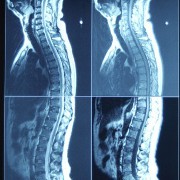
As we discussed on Monday, a herniated disc can be a real pain in your….back. What did you think I was going to say?
And because a herniated disc can be extremely painful and put you off track of your daily activities, many people with this condition find themselves in a slump on the couch with their favorite “happy meal.”
Here is a news flash: being sedentary with a herniated disc is the fastest way to worsening your condition and bloating your belly. What you should be doing is working with your doctor or physical therapist on ways to strengthen your back and stabilize your core.
By strengthening you back, you are reducing risk of re-injury and disability. And because muscles surround your spine, when you strengthen them, you are ultimately releasing the pressure off of your herniated disc and allowing it to recover faster and stronger.
While you spend time strengthening your back, it is equally - if not more - important to stabilize your core. Every move you make, your core is activated. It aids us in breathing, bike riding and bathing. Get my point? Our core holds us steady and balanced, moving us the way our brain tells it to. It keeps our spine strong, stable and keeps our posture in line.
When you keep your core strong, you are also limiting your chances of injury, such as a herniated disc. But, if you already have a herniated disc, it is never too late to get your core in check to prevent re-injury and aide in your recovery.
To strengthen your trunk, keep in mind that quality is more important than quantity. This means that doing 1,000 crunches without breathing will hurt you more than help you. In order to breathe normally during exercise, try breathing through your diaphragm. To know if you are doing this correctly, try lying on your back with your hands over your stomach. When you breathe, your hands should lift. Try to continue this breathing method throughout your workout. Feeling short of breath or just plain tortured while trying to contract your core muscles has absolutely no benefits for either your core or your spine. Only do exercises that allow you breathe normally throughout the entire routine.
Also, try to keep your spine in its standard position. Your spine naturally has curves it is, so whenever you bend it in unnatural positions you are adding unnecessary stress to it during your workout.
And because no one enjoys being in any type of pain, it’s never a bad idea to use old faithful – heat and ice. Talk to your doctor about the heat/ice ratio you should be doing to give you the best results.
On top of pain management, core stability and breathing exercises, some recommended treatments also include a massage and acupuncture. These forms of treatment are not a good fit for everyone, so be sure to consult your doctor first.
Always bear in mind that everyone recovers at a different rate. The good news is that for most cases of a herniated disc, they tend to heal on their own over time. Many cases improve significantly within a month, while most heal within six weeks. No matter what you recovery rate is, always be easy on yourself, have patience and keep moving. Your body wasn’t built to sit around all day, so don’t. An active life – herniated disc or not - is a healthy life.
Add a Comment2 Comments
Thank you so much for this post and the one previous to it. I am 20, and have had a herniated & torn disc for... well it will be 4 years tomorrow, monday the 19th. I have seen tons of doctors and have learned a lot, but your post helped me learn more about my situation!
I have known the best thing is breathing exercises, and I have had such trouble even being motivated to do it, even though I know I could do it right now while I'm typing. I'm going to try a lot harder, but it is difficult to keep up the positive attitude and motivation when you're so young and have already had this so long. Every doctor I've been to hasn't been able to help me, the only option I have been given is either spinal fusion or continuing medication. And even though I've been on medicine for so long already, and hate that I have to continue to take it because I know how bad it is for my body, I need it to even be able to get out of bed let alone continue with a somewhat normal day. Spinal fusion is scary for me, especially at my age, I have been told by countless people that I should not do this, at least not yet.
If you have any other medical advice pertaining to this issue, it is much appreciated. I never knew a community like this existed online, I'm so glad I found it, I feel like it can really help me with my problems and there seems to be a lot of support here, which is so important in the getting better process for any situation.
April 17, 2010 - 10:27pmThis Comment
I came across your post nearly three years later. If you are still in pain, I highly recommend Dr. Scott Russo, a chiropractor that uses the disc pump, cold laser, and trigger point therapy to put the discs back in place so they can heal and ultimately, refill with gel. He learned many years ago from professional and personal experience with injured discs that traditional chiropractic methods only worsen matters. When you rotate the vertebra in the traditional chiropractic treatment, you only squeeze more gel out of the disc, increasing the speed in which it deflates. Dr.
March 10, 2013 - 12:29amRusso's treatments is painless and it works. I have herniated discs in my neck, mid-back and low back. When I learned of Dr. Russo I was in extreme pain. Traditional chiropractic had worsened my problem in all areas of my body. The medical community gave me little hope outside surgery or pain meds. I've seen Dr. Russo regularly for some time and am nearly completely well, but I felt relief immediately and continued to improve with each visit. His treatment is unusual and I don't know if there is anyone else out there practicing the same way. His work is based on trigger point therapy and neurology, muscle therapy, and spinal alignment, but he does not rotate or "crack" bones. He is often visited as a last resort or after multiple failed surgeries and yet he is still able to bring relief and often healing. Medical science disagrees that it's even possible to heal a herniated disc, but many of his patients have the MRI's to prove it. See Dr. Russo's work at discpump.net. Tell him Le Nette sent you. :) I hope this helps. If not you, others suffering with back pain. He's worth the visits even if you're out of the area.
This Comment