


Improved
6112 HealthChanged
3786 LivesSaved
3568 Lives0 lives impacted in the last 24 hrs Learn More
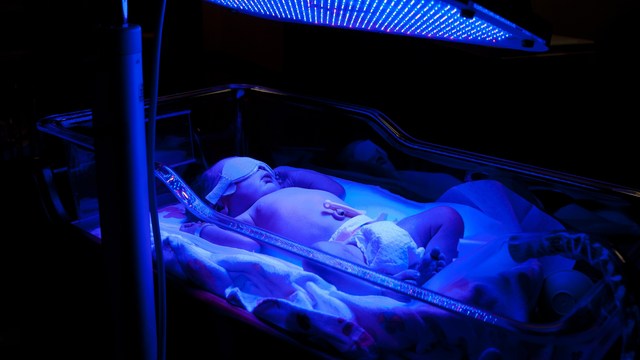
Jaundice is a very common finding in newborns; according to the March of Dimes jaundice occurs in 60 percent of all new babies. It happens when there is too much bilirubin (a yellow pigment) in the blood, and makes the skin and whites of the eyes turn a shade of yellow. Before leaving the hospital, the newborn should be checked for jaundice. They can check this with a skin sensor test or a blood test (blood test is more accurate, and recommended for babies with darker skin tones).
A few days after birth the skin may start to look a shade of yellow. Often times, this is corrected naturally without any treatment, but if the baby has severe jaundice, it may become very serious. Babies should be examined for jaundice at their newborn check-up three to five days after birth.
Why does jaundice occur? Jaundice is an excess of bilirubin. When red blood cells die (this is very normal, and occurs everyday throughout life) they release hemoglobin (the oxygen-carrying component), which is converted into bilirubin. Normally, the liver takes this bilirubin and removes it from the body through bowel movements. Newborns happen to break down a lot of red blood cells (more than other times in life) and this can be a lot for a new liver to handle. So as bilirubin, this yellow pigment, is building up in the blood it starts to shade the skin.
Does breastfeeding lead to jaundice? It has been mentioned that breastfed babies have a greater chance of developing jaundice. This not necessarily the case, and is contributed more to a lack of calorie consumption and dehydration. Unlike formula feeds where the mother can note an exact amount of nutrition the newborn is taking in, breastfeeding requires a good latch and swallow between mom and baby. This may be a little difficult, especially the first days out of the hospital, and it’s the lack of enough nutrition that leads to jaundice. For this reason, breastfeeding moms should feed at least eight to 12 times per day to help prevent or reduce bilirubin levels.
How do you tell if your baby is developing jaundice? The first thing to change is usually the yellowing of skin around the face and whites of the eyes. Look at your baby in natural sunlight when checking skin color. Often times, a baby with jaundice eats, sleeps, and acts just like any other healthy newborn. If for any reason the baby appears very yellow or is lethargic, hard to wake, or has unusual eye movements, contact your health care provider right away. Severe jaundice may develop into another condition called kernicterus, which may lead to serious health problems.
Overall, a full-term newborn with proper nutrition is the best preventative measure. Having a fully developed liver will help remove excess bilirubin from the blood, and feeding your baby often will help encourage bowel movements, which will also lead to the removal of excessive bilirubin.
Information in this article can be found at The March of Dimes: http://www.marchofdimes.com/professionals/14332_9268.asp
Claire is a twenty-three year old nursing student at Arizona State University interested in perinatal nursing. She currently lives in Tempe, AZ with her dog Bella.
Add a CommentComments
There are no comments yet. Be the first one and get the conversation started!