


Improved
6112 HealthChanged
3786 LivesSaved
3568 Lives0 lives impacted in the last 24 hrs Learn More
 Photo: Getty Images
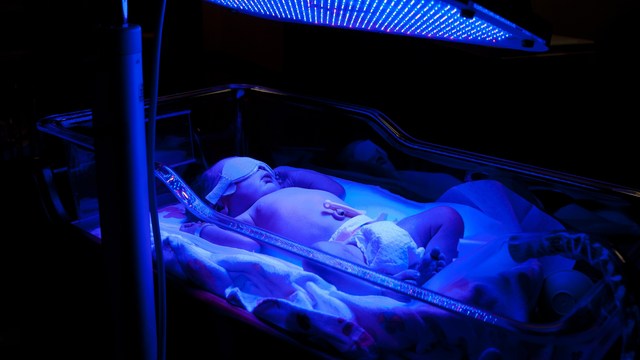
Having a baby is one of the most joyous occasions in a person’s life. The baby comes out and moms and dads count their fingers and toes, wait for a strong cry, and declare the baby healthy. However, when tests are done in the hours after birth, many babies are diagnosed with jaundice.
The March of Dimes, a non-profit organization dedicated to creating stronger, healthier babies, says on their website that 60 percent of healthy babies are diagnosed with jaundice.
They describe jaundice as “a yellow discoloration of the skin and the whites of the eyes. It is caused by a build-up in the blood of a yellow pigment called bilirubin.”
The March of Dimes website goes on to say the American Academy of Pediatrics (AAP) recommends that all newborns are have their bilirubin levels checked (to check for jaundice) within the first days of life, before they leave the hospital. They say that babies should be examined again for jaundice by a health care provider at three to five days of age as this is when bilirubin levels are typically the highest.
Breastfed babies are more likely to suffer from jaundice, often because the child isn’t feeding correctly or efficiently and is not getting enough milk to stimulate bowel movements to push the bilirubin out of the body.
The American Pregnancy Association lists three types of jaundice in newborn babies, two of which have to do with breastfeeding.
The most common form of jaundice in newborns, affecting up to 60 percent of full-term babies, is called Physiologic Jaundice. This is the normal type of jaundice that can be detected in the first week of a baby’s life. This type of jaundice is caused simply by elevated bilirubin levels and usually self-corrects itself.
The second form of jaundice is called Breastmilk Jaundice. This rare form of jaundice persists after the physiologic jaundice goes away. It is seen in healthy, full-term breastfed babies.
While there is no known cause for breastmilk jaundice, American Pregnancy Association speculates that there is something in the breastmilk that stops some babies from breaking down the billirubin they need to expel. This type of jaundice tends to be genetic and run in families, but it does not mean that something is wrong with the breastmilk or that mothers should stop breastfeeding.
The third form of jaundice is caused when newborns are not getting enough breastmilk and is called Breastfeeding Jaundice. (This form is not associated with breastmilk jaundice). When babies get enough breastmilk, they will have increased bowel movements which will help eliminate the excess bilirubin in their system.
If babies don’t get enough breastmilk because of poor lactation technique, low or slow milk production, or a variety of other breastfeeding issues, breastfeeding jaundice can occur. Fixing the breastfeeding issue so babies can get more milk will help to lower the bilirubin levels.
SOURCE:
MarchofDimes.com. Web. 18 October, 2011. "Sick baby care: Jaundice". http://www.marchofdimes.com/sickbabycare_jaundice.html
American Pregnancy.org. Web. 18 October, 2011. "First year of life: Breastfeeding and Jaundice". http://www.americanpregnancy.org/firstyearoflife/breastfeedingandjaundice.htm
Reviewed October 21, 2011
by Michele Blacksberg RN
Edited by Jody Smith
Add a CommentComments
There are no comments yet. Be the first one and get the conversation started!