


Improved
6112 HealthChanged
3786 LivesSaved
3568 Lives0 lives impacted in the last 24 hrs Learn More
Rising temperatures and increased dehydration linked to global warming will boost kidney stone rates in the United States and around the world, new research suggests.
In the United States in particular, hotter weather will lead to a dramatic rise in kidney stone disease among residents of southern states -- the so-called "kidney-stone belt." This will result in an increase of 1.6 million to 2.2 million additional kidney stone cases by 2050, according to the study.
"This is an example of how global warming will affect people directly," said study author Tom Brikowski, an associate professor with a specialty in hydrology in the department of geosciences at the University of Texas at Dallas.
The study authors stressed that the exact degree of the increased risk remains unclear. But, Brikowski added, "We are certain that warming will increase, and that the rate of kidney stone disease will go up. So as a nation, we will have to pay more attention to this problem."
The findings are reported in this week's issue of the Proceedings of the National Academy of Sciences.
Brikowski and his colleagues said the "kidney-stone belt" currently includes Alabama, Arkansas, Florida, Georgia, Louisiana, Mississippi, North Carolina, South Carolina and Tennessee. But with global warming, the risk of kidney stone disease could ultimately touch a much wider swath of states, stretching from Kentucky all the way to northern California, the researchers said.
According to the U.S. National Kidney and Urologic Diseases Information Clearinghouse, about 5 percent of Americans develop kidney stones at some point, with the risk rising as men and women enter their 40s and 50s, respectively.
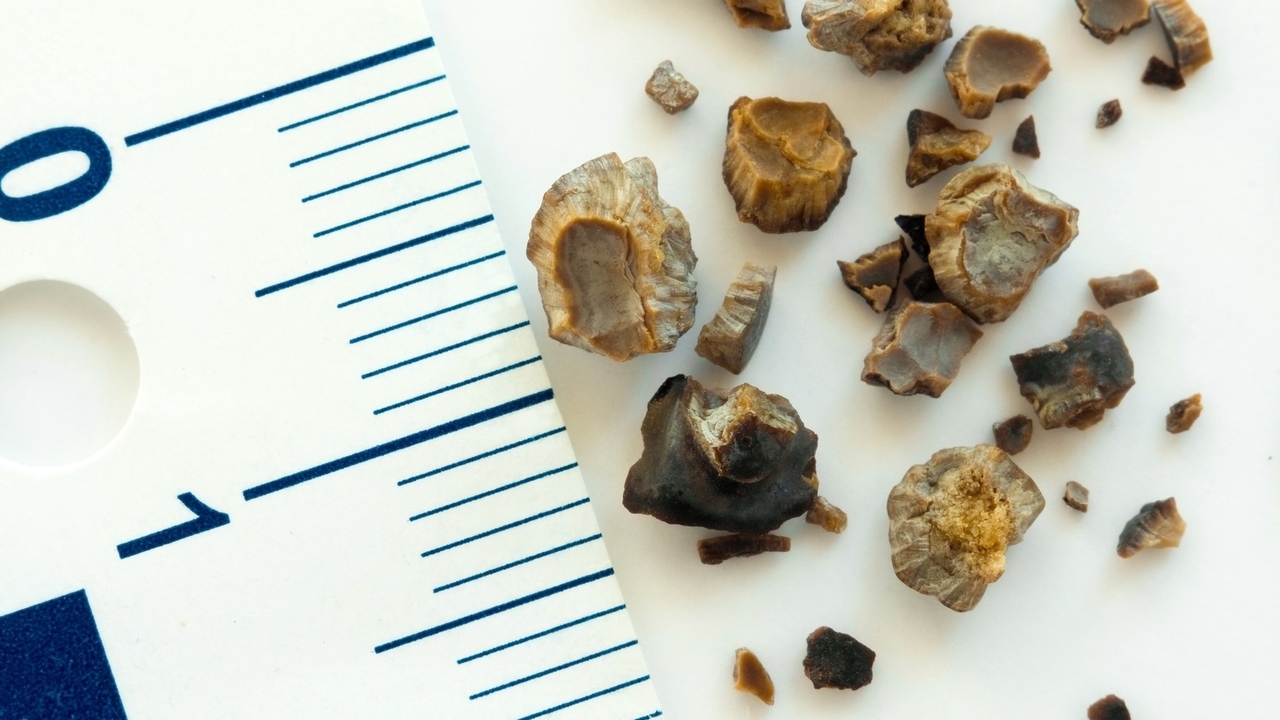
Typically composed of calcium and other minerals found in urine, a kidney stone is a hard, crystallized mass that passes -- often painfully -- through the urinary tract. Drinking too little fluid and/or dehydration can lead to development of a stone, as can a metabolic predisposition for kidney stone disease, known as nephrolithiasis.
To gauge the potential impact of global warming on kidney stone risk, the researchers analyzed two prior kidney stone studies that had plotted disease incidence by U.S. geographic regions, along with federal reports assessing global warming patterns. The researchers then developed two mathematical models to compute all the information. Both models predicted that the current "kidney-stone belt" would expand and that overall incidence will rise.
However, while one model suggested that most of the rise in cases will be concentrated in the southern half of the United States, the other model identified the upper Midwest region as the future problem area.
The study concluded that, in either case, the increase in kidney stone cases could boost health-care costs by as much as $1 billion.
"And this problem is not just confined to the U.S.," said Brikowski. "This will also touch southern Europe, southeastern Europe, and southeast Asia. And because in that last area treatment options are more limited, countries in that region will certainly experience a much more severe impact on health."
Kristina Penniston, a registered dietician and associate scientist in the department of urology at the University of Wisconsin School of Medicine and Public Health in Madison, called the new research "illuminating and provocative."
"It does seem entirely plausible that incidence [of kidney stones] will increase with global warming, primarily because one of the driving forces of incidence is hydration, and with global warming people will tend to be less well hydrated," she said.
"I'm also interested," Penniston added, "in how global warming will impact the diet of people, because there are also many nutritional factors related to kidney stones. And climate change affects the nutrient composition of the plants that we grow and the animals that we eat. For example, fruits and vegetables are inhibitors of stones. So the question then is, will people be eating less of that as temperatures rise because these things don't grow as abundantly? And will that then alter people's risk for stones? These are some of the important issues that this study raises."