


Improved
6112 HealthChanged
3786 LivesSaved
3568 Lives0 lives impacted in the last 24 hrs Learn More
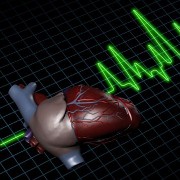 Photo: Getty Images
Long QT syndrome is a serious heart condition, in which patients have life-threatening heart arrhythmias. The irregular heart beat can cause patients to faint. If the irregularity lasts long enough, sudden death may occur. To diagnose long QT syndrome, a doctor will run several tests.
One important test is an electrocardiogram (EKG). This test is used to check a patient’s heart’s electrical activity. The heart produces five different electrical waves, called P, Q, R, S and T. In between the Q and T waves is the QT interval. Patients with long QT syndrome have a longer QT interval than normal. In order to detect this, the doctor will tape electrodes to the patient’s chest, which transmit signals to a computer monitor or printout.
To check the heart’s electrical activity for an uninterrupted 24-hour period, the patient may undergo an ambulatory EKG monitoring, also called Holter monitoring. Electrodes are attached to the chest as before, but the patient carries a portable recorder. If the doctor wants to monitor a patient’s heart for days or weeks, she may recommend event EKG recording.
Once long QT syndrome has been diagnosed, the next step is finding the right treatment. The goals of long QT syndrome treatment are to prevent the heart arrhythmias and sudden death. Options include medical interventions and lifestyle choices.
Medication choices include beta blockers and mexiletine. Beta blockers, such as propranolol, slow down the patient’s heart rate. Mexiletine may be combined with propranolol to reduce the QT interval.
The MayoClinic.com noted that some dietary supplements may help. These include potassium and fish oil.
If necessary, a doctor may recommend surgical interventions. An implantable cardioverter-defibrillator (ICD) monitors a patient’s heart beat and sends an electrical shock when she has an abnormal heart rhythm.
Another option is left cardiac sympathetic denervation surgery, which involves surgical removal of specific nerves. This surgery reduces a person’s risk of sudden death. Lifestyle changes can also be beneficial. If the long QT syndrome is caused by a medication (drug-induced long QT syndrome), changing the medication may alleviate symptoms. This should only be done under the supervision of a doctor. The National Heart, Lung and Blood Institute added that patients should avoid strenuous exercise.
References
MayoClinic.com. Long QT Syndrome. Web. 30 November 2011
http://www.mayoclinic.com/health/long-qt-syndrome/DS00434/METHOD=print
National Heart, Lung and Blood Institute. What is Long QT Syndrome?. Web. 30 November 2011
http://www.nhlbi.nih.gov/health/health-topics/topics/qt/
National Heart, Lung and Blood Institute. How is Long QT Syndrome Treated?. Web. 30 November 2011
http://www.nhlbi.nih.gov/health/health-topics/topics/qt/treatment.html
Reviewed November 30, 2011
by Michele Blacksberg RN
Edited by Jody Smith
Add a CommentComments
There are no comments yet. Be the first one and get the conversation started!