





Improved
6112 HealthChanged
3786 LivesSaved
3568 Lives0 lives impacted in the last 24 hrs Learn More
 Auremar/PhotoSpin
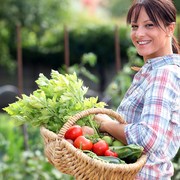
Urban farms are springing up in backyards and community centers in cities all across the country. But these vegetable-stocked paradises aren’t just another hipster trend.
Urban farms are revolutionizing and democratizing the way people view food as they improve health, increase family closeness, and promote environmental awareness. There’s no denying that a garden or small farm requires work, and the start-up costs can be higher than the cost of a simple trip to the grocery store.
However, the benefits of urban farming — both to individual families and to entire communities — are undeniable, and local gardens more than compensate their owners for the start-up costs within a few months.
Healthier Food
When you grow your own food — or help out a community garden that grows food for the neighborhood — you know exactly what went into it. You know what types of seeds were used and whether there are any potentially toxic pesticides.
You won’t have to spend any time deciphering the meaning of food additives or researching the dangers of chemicals that might be in your food. Instead, you can just eat!
For some people, homegrown fruits and vegetables can dramatically and quickly improve health. Allergy sufferers and people with multiple chemical sensitivities may find that many of their symptoms are alleviated if they simply eat food that has nothing added to it — an option that is typically only available if they grow their own food.
Better-Tasting Food
Urban farmers will happily tell just about anyone that homegrown food tastes better. While this may be partially because working for food can make the food seem more special, fresh food may actually taste better.
Try feeding a child who hates broccoli some broccoli he helped to grow, and you may just find that he’s not a broccoli-loather after all.
Greater Food Access
In poorer communities, access to healthy food is a major hurdle. There may not be a grocery store nearby, and even if there is, the produce selection can be sparse and the quality low. A community garden or small backyard farm ensures regular food access, even if there’s not a good grocer or farmer’s market nearby.
But this greater access doesn’t just affect poorer neighborhoods. Middle class people may have a wonderful grocer nearby but be too busy to ever go. By planting a few fruits and vegetables, you ensure that, even if you're exhausted and overworked, you can always pick something out of your garden.
A Smaller Carbon Footprint
An accessible garden means fewer gas-guzzling trips to the grocery store and restaurants. Families who rely solely or primarily on local gardens for their food also greatly reduce their demand for foods that require massive labor and a heavy environmental toll to produce.
Frequently, community gardens are designed to beautify a patch of land that was not being used or that had previously been heavily polluted, thus offering significant environmental and community benefits.
An Increased Sense of Community
Whether you’re gardening with your family or with your neighborhood, a local garden offers you a chance to work toward a shared goal with others. Doing so can make you feel more connected, less isolated and substantially more supported by your family or community.
In an increasingly fractured world, regular gardening sessions may be the only leisure time you regularly spend with your family or neighbors, but this time can go a long way toward preventing stress and producing feelings of well-being.
There is also some evidence that community gardens can decrease hostilities between groups. These gardens often provide a site for interracial, cross-generational and inter-class relationships that might not otherwise happen.
References:
Gabriel, L. (n.d.). Detroit's good food cure. YES! Magazine. Retrieved from
http://www.yesmagazine.org/issues/its-your-body/the-good-food-cure
Holland, L. (2004). Diversity and connections in community gardens: A contribution to local sustainability. Local Environment, 9(3), 285-305. doi: 10.1080/1354983042000219388
Edited by Jody Smith
Add a CommentComments
There are no comments yet. Be the first one and get the conversation started!