



Improved
6139 HealthChanged
3797 LivesSaved
3584 Lives0 lives impacted in the last 24 hrs Learn More
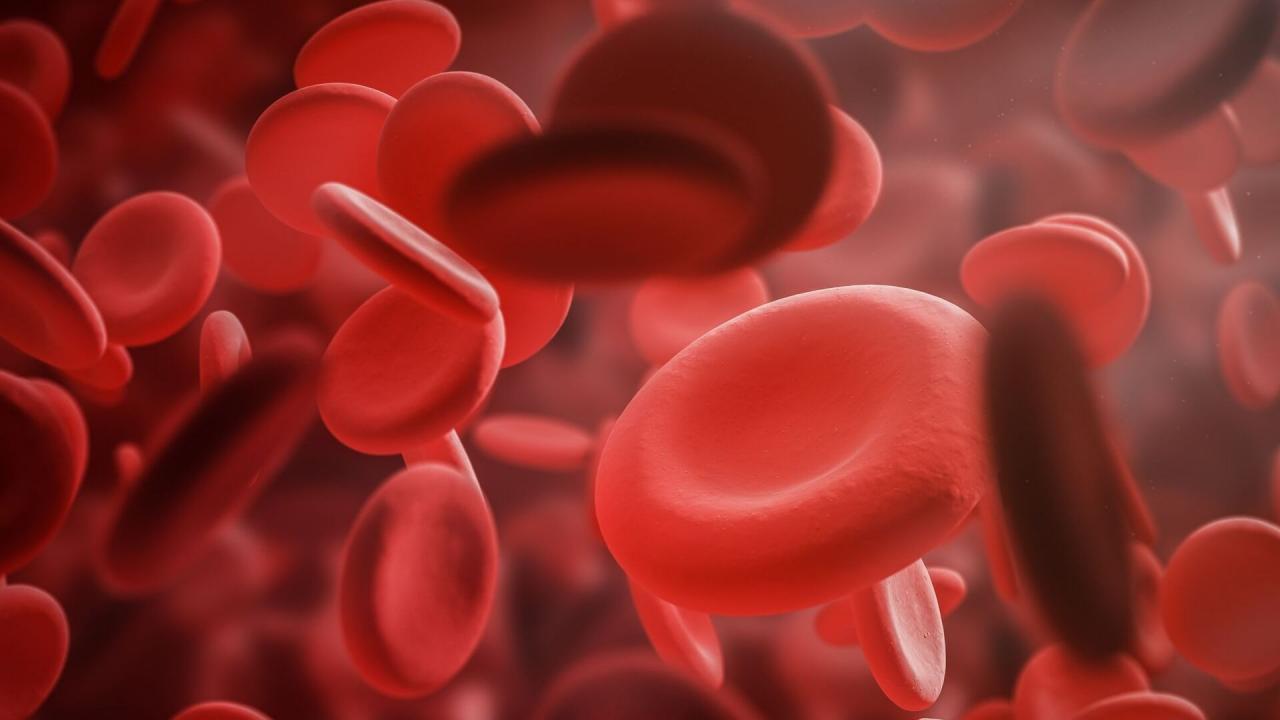
Phosphate is not poisonous unless something is wrong. Our bones and teeth are composed primarily of calcium phosphate. Healthy levels of phosphate in the bloodstream and tissues are vital to our metabolism. But too much dissolved phosphate is linked to death from cardiovascular disease.
My doctor routinely orders blood tests for lipids (cholesterol and triglycerides), liver function, blood count, and the basic metabolic profile of glucose, blood urea nitrogen (BUN), creatinine, sodium, potassium, chloride, carbon dioxide, and calcium. Phosphate is not included; I've never had my phosphate checked. So the first reference for this article caught my attention.
Phosphate, according to the medical literature, is a key factor in atherosclerosis. Experiments with animal models and human aorta cell cultures indicate that elevated phosphate in the blood tricks artery cells into acting like bone-producing cells (osteoblasts). These artery cells produce mineral deposits, which form calcified plaques. As Reference 1 describes the process, hyperphosphatemia (too much phosphate in the blood) is “an 'insidious bone-maker' in the walls of blood vessels”. For me, this puts “hardening of the arteries” in a new perspective.
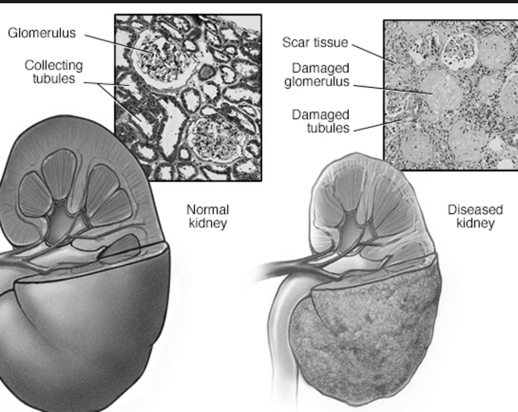
So what causes high phosphate in the blood? The most likely candidate, according to some researchers, is a defect in kidney function. A recent review article reports that high phosphate is linked to cardiovascular mortality in dialysis patients. The authors investigated whether the same link exists in subjects without obvious signs of kidney failure. Their conclusion: yes, elevated phosphate is associated with cardiorenal disease even before a loss of kidney function can be measured in terms of glomerular filtration rate.
Phosphate has a lot in common with cholesterol. Both are necessary for life, in healthy amounts. But too much in the bloodstream promotes vascular damage that ultimately causes heart attacks and strokes.
Approximately 13% of the US population has some degree of chronic kidney disease. Many are not diagnosed before significant damage has already been done. For risk factors, see https://www.empowher.com/news/herarticle/2009/09/02/top-ten-risk-factors-chronic-kidney-disease
by Linda Fugate, Ph.D.
References:
1. Kanbay M, Goldsmith D, Akcay A, Covic A. “Phosphate – The Silent Stealthy Cardiorenal Culprit in All Stages of Chronic Kidney Disease”, Blood Purification 2009; 27:220-230.
2. Mathew S, Tustison KS, Sugatani T, Chaudhary LR, Rifas L, and Hruska KA, “The Mechanism of Phosphorus as a Cardiovascular Risk Factor in CKD”, J Am Soc Nephrol 2008; 19:1092-1105.
Add a Comment4 Comments
The latest news on kidney failure is the prevalence of selling human kidneys for transplants. See https://www.empowher.com/news/herarticle/2009/09/14/transplant-kidneys-sale
September 14, 2009 - 1:53pmLet's get those checkups and try to reduce the demand for kidney transplants!
This Comment
Hi Linda... This was news to me as well. I've never even had a doctor mention phosphate and cholesterol or heart disease in the same conversation. For that matter, I don't think I've ever heard my doctor mention phosphates to me and I know I've never had my levels tested. I'll discuss with him the next time I go in!
For those interested in knowing if they already have plaque forming in their arteries, there is a preventative diagnostic test that may be of interest. CT Heart Scans are being used quite a bit in our region in cases where people have high risk factors to determine if heart disease has begun. You can read more info at the link below. Again, THANKS for providing such great info!
September 8, 2009 - 1:57pmhttps://www.empowher.com/news/herarticle/2009/08/31/woman%E2%80%99s-heart-ct-heart-scan
This Comment
Hi Linda... This was news to me as well. I've never even had a doctor mention phosphate and cholesterol or heart disease in the same conversation. For that matter, I don't think I've ever heard my doctor mention phosphates to me and I know I've never had my levels tested. I'll discuss with him the next time I go in!
For those interested in knowing if they already have plaque forming in their arteries, there is a preventative diagnostic test that may be of interest. CT Heart Scans are being used quite a bit in our region in cases where people have high risk factors to determine if heart disease has begun. You can read more info at the link below. Again, THANKS for providing such great info!
September 8, 2009 - 1:57pmhttps://www.empowher.com/news/herarticle/2009/08/31/woman%E2%80%99s-heart-ct-heart-scan
This Comment
This is new news to me! Thank you, Linda, for bringing this to my attention!
September 7, 2009 - 6:26pmThis Comment