




Improved
6112 HealthChanged
3786 LivesSaved
3568 Lives0 lives impacted in the last 24 hrs Learn More
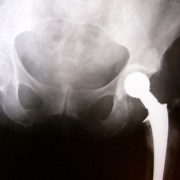 Photo: Getty Images
Minimally invasive hip replacement surgery is a new type of hip replacement surgery that is less stressful on the patient.
Minimally invasive surgery requires a smaller scar, which can be as small as 5cm, compared with the traditional hip replacement scar that is 20-30cm in length. Occasionally two small scars are needed. Division of muscles is not always necessary and when it is, it is less extensive than in traditional surgery. Surgeons can see what they are doing when they replace the joint by using special computer aided technology to see inside the body with cameras and the patient can stay awake during the procedure by having an epidural anaesthetic. This could be helpful for older patients who may not tolerate general anaesthetic very well.
Benefits of Minimally Invasive Hip Replacement
• Lower risk of death after surgery.
• Less risk of anaesthetic awareness during surgery. With epidural a patient can alert surgeons if he or she is in pain.
• Less blood loss – most patients don’t require blood transfusion.
• Less muscle damage.
• A smaller scar that is cosmetically more appealing.
• Less pain after surgery due to smaller incision.
• The use of epidural also reduces post-operative pain because the pain relief can last for up to 20 hours after surgery.
• A faster recovery – a hospital stay of only one or two days is common after minimally invasive hip surgery, compared with around five days for traditional hip surgery. 91 percent of patients were able to stand up the day after surgery, compared with only 85 percent who had traditional surgery.
• Patients can walk without help a lot quicker, sometimes discontinuing walking aids as early as eight days afterwards.
• There is no significant difference in the performance of the artificial hip when a minimally invasive technique is done.
• There is no significant difference in rates of bone fracture and the need for "revisions" soon after surgery.
Disadvantages of Minimally Invasive Hip Replacement
• The technique is highly specialized and fewer surgeons are trained to do it.
• Mistakes can be made in the positioning of the artificial joint if done by a less experienced surgeon so it is very important to carefully choose your surgeon.
• Sometimes the surgeon is not able to complete the operation and has to open the patient up fully in the traditional way.
Sources:
Minimal Invasive Surgery
http://www.minimalinvasivehip.com/index.php
Minimally Invasive Total Hip Replacement, American Academy of Orthopaedic Surgeons, page accessed 7th August 2011 - http://orthoinfo.aaos.org/topic.cfm?topic=a00404
Interventional procedure overview of minimally invasive total hip replacement, National Institute for Health and Clinical Excellence, accessed 7th August 2011 - http://www.nice.org.uk/nicemedia/live/11159/48814/48814.pdf
NHS: Minimally invasive total hip replacement IPG363
http://egap.evidence.nhs.uk/IPG363/section_2
Anesthetic Awareness, by Joanna Karpasea-Jones - http://www.suite101.com/content/anesthetic-awareness-a38144
Reviewed August 8, 2011
by Michele Blacksberg R.N.
Edited by Jody Smith
Joanna is a freelance health writer for The Mother magazine and Suite 101 with a column on infertility, http://infertility.suite101.com/. She is author of the book, 'Breast Milk: A Natural Immunisation,' and co-author of an educational resource on disabled parenting, in addition to running a charity for people damaged by vaccines or medical mistakes.
Add a Comment1 Comments
Minimally Invasive Hip Replacement India
We offer Hip replacement in India at top hospitals in Delhi, Mumbai, Bangalore and Chennai at low cost affordable prices
Highly qualified and experienced surgeons
Choosing a surgeon to perform a heart operation is an important decision. It cannot be stressed enough that experience matters. The more open-heart procedures a doctor have performed, the better they will be.
Hospital and Surgical Facility:
We help the patient Choose the right hospital in which your surgery will be performed. Our associate hospitals are Center of Excellence and are JCI as well as NAIHO accredited. They offer a comprehensive heart-care program that's tailored to your individual needs.
We Care Services offer you:
September 27, 2012 - 6:18am• The choice of world class hospitals and facilities.
• The choice of highly qualified, experienced, and certified Cardiologist and Cardio Thoracic surgeons.
• The choice of destinations to suit your requirements.
• To coordinate all medical correspondence with your selected surgeon.
• Prepare detailed cost estimates.
• Arrange for medical consultations.
• Assist in your preparation for your surgery and accommodation.
• Make all necessary bookings.
• Accompany you to all your surgery appointments.
•
[email protected]
http://indiahospitaltour.com/hip-replacement/minimally-invasive-hip-replacement-surgery-india.html
http://www.indiahealthtour.com/treatments/orthopedics/hip/minimally-invasive-hip-resurfacing-surgery.html
This Comment