


Improved
6112 HealthChanged
3785 LivesSaved
3568 Lives0 lives impacted in the last 24 hrs Learn More
A few years ago, while driving home from work, I got into a car accident. An old lady in her seventies was trying to speed up in the left lane as I was changing lanes. I barely heard her right front end scratch the left rear end of my SUV. I was ticketed for not heeding to the car behind me before changing lanes.
Almost an year after the accident, I was summoned for a personal injury damage law suit by her lawyer. I met with the lawyer my insurance company provided for me to discuss the case before presenting to the jury. One of the major concerns the plaintiff had listed as part of her personal injuries included 'Plantar Fasciitis'.
She claimed that she developed this condition after she met with the accident. I was eternally grateful that I knew a little bit about medical terminology that day. I explained to my lawyer what that term meant and how it was not a part of the injuries that this person incurred as a result of the accident. Pretty soon my case was cleared and my insurance ended up paying less than half of the amount that I was being sued for.
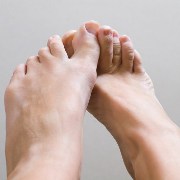
'Plantar' means the sole of a foot and 'Fascia' refers to connective fibers or tissue. 'Fasciitis' means inflammation of the skin or tissue. Planter fasciitis is often related to the achilles tendon. Plantar fasciitis is a condition caused by inflammation of the band of ligaments or tissue at the bottom of the feet that connect the metatarsal bones to the heel of the foot called 'Plantar Fascia'. Whether diabetes causes this condition is not clear.
Planter fasciitis is a progressive condition that usually develops in one foot or in some cases both the feet. People with this problem wake up in the morning with a stabbling pain at the sole of the foot and the heel. It often subsides as the day goes by but sometimes extends into the day. This condition can sometime lead into a heel spur, which is extremely painful.
This condition is seen most commonly in runners or athletes, people whose work includes long hours of sitting or standing in one place, over weight adults, pregnant women and people who wear improper foot wear.
Plantar fascia acts like a shock absorber and supports the arch of the foot. Longer periods of pressure or stress on the foot gradually wears out the tissue and inflammation develops.
According to Mayo Clinic online health manager, there are several risk factors for this condition.
1. People between 40-60 years of age.
2. It is more common in women than men.
3. Incorrect foot wear.
4. Weight distribution of the body on the arch.
5. Over weight.
6. Standing for longer periods of time.
7. When feet are stretched or tensed over and over the achilles tendon contracts and affects the heel causing a heel spur.
8. People who are in sports, especially in running, tend to be the most affected.
Complications arise if this condition is not treated early enough which could affect hips, knees and back with evolving walking patterns.
A visit to the podiatrist is a must, if the pain persists for a long time, to get a complete exam of the affected foot. The most common exams performed to determine plantar fasciitis include, x-rays, MRI (to rule out stress or fineline fractures) and bone spurs.
Preventative measures for Planter Fasciitis are as follows:
-Proper use of foot wear.
-Stretching exercises of the foot especially in the mornings.
-Medications including anti inflammatory drugs.
-Cortico steroids, either injections or local creams.
-An application of mild electric treatment are given in cases of severe pain.
-Physical therapy, splints or orthotics are alternative ways to treat this conditions.
-Other alternative ways include keeping the feet up, applying ice, reduce exercise time for healing, arch support, stretching the calf muscles, arches and feet.
-Weight management
-Diet and exercise
-Surgery (as a final resort).
A visit to the podiatrist monthly or quarterly should help prevent any foot conditions like planter fasciitis. When a heel spur gets to be too unbearable, shaving off the growth is recommended by the orthopedists. Shaving the heel spur could lead to infection and long term complications with walking in diabetics.
I told my lawyers what I knew about this condition, in order for them to help me get out of my law suit, and I was glad I could help myself with my diabetes. I have one less complication to worry about in managing my health. When times are trying with one's health every bit of knowledge with different health issues counts, because 'OUR LIFE MATTERS'.
Add a Comment1 Comments
I was in a car accident and I pushed so hard on the brakes that the damage to my foot resulted in plantar fasciitis. Just because you know medical terminology doesnt mean that you cutting her off didnt cause the plantar fasciitis. Its been two years and I still have problems with my foot.
June 4, 2014 - 8:28amThis Comment