




Improved
6112 HealthChanged
3786 LivesSaved
3568 Lives0 lives impacted in the last 24 hrs Learn More
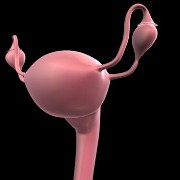 Photo: Getty Images
What can be done about prolonged menstrual bleeding and cramping (menorrhagia)? Research has found that the people most likely to suffer from this symptom are adolescent girls who recently started their periods or older women approaching menopause.
Getting the necessary help is very important. Why? Because failure to get medical help after it becomes evident that this type of bleeding is really a problem may give time for other health problems such as iron-deficiency anemia and severe pain to develop or get worse.
Tests and Diagnosis
It is important to remember that menorrhagia is not the disease, it is only the symptom. Now your physician’s job is to find out exactly what the problem is. That may mean a series of tests will be ordered and performed for you.
Hopefully, the results from these tests will point to the real, underlying problem, and subsequently, a plan of action can be formalized. There are several factors that doctors keep in mind when prescribing treatment: your overall health and medical history, the cause and severity of the condition, your drug tolerance, the likelihood of your periods actually becoming lighter, your future childbearing plans, the effects of your choices on your lifestyle and your personal opinions.
In many cases, doctors may decide that drug therapy would work best for the patient suffering from excessive bleeding. But if more invasive treatment is needed, especially after drug therapy fails, then surgery is an option. As indicated by the Mayo Clinic, treatment options may include:
Dilation and curettage (D and C) – This option is pretty commonly used in cases of menorrhagia. During a D and C, your doctor will clean out tissue from your uterus which, in effect, decreases the bleeding. Be aware that a subsequent D and C may be needed if the first is not successful.
Operative hysteroscopy – Sometimes a polyp is the cause of heavy menstrual bleeding. If so, your doctor can simply cut the polyp out once it is clearly located.
Endometrial ablation – This option is not for everyone, especially those who may be thinking about having children in the near future. An endometrial ablation basically strips off all the endometrium or lining of the uterus. Afterwards, the patient will have a marked drop (if any at all) menstrual bleeding.
Endometrial resection – You should only consider this option if you are not considering having another baby. During an endometrial resection, much like with the endometrial ablation, the lining of the uterus is cut away. Logistically speaking, a wire loop is used during this procedure to surgically detach any tissue.
Hysterectomy – A hysterectomy is usually considered as a last option due to the permanence of this type of procedure. Since it is the removal of the uterus and cervix, infertility and an immediate halt to any menstrual bleeding is definite. This is a serious medical procedure which necessitates the use of anesthesia, qualified medical staff and a brief stay in a hospital.
Resources:
Menorrhagia (Heavy Menstrual Bleeding). Mayo Clinic. Web. 20 October 2011.
http://www.mayoclinic.com/health/menorrhagia/DS00394
Heavy Periods (Menorrhagia). WebMD. Web. 20 October 2011.
http://women.webmd.com/guide/heavy-period-causes-treatments
Dita Faulkner is a freelance writer that lives in the southern U.S. She also blogs so please check out one of her articles indicating what we can do as women to attain better health:
http://redtoenails.wordpress.com/2011/05/12/a-few-practical-tips-for-better-health/
Reviewed October 21, 2011
by Michele Blacksberg RN
Edited by Jody Smith
Add a CommentComments
There are no comments yet. Be the first one and get the conversation started!