


Improved
6112 HealthChanged
3786 LivesSaved
3568 Lives0 lives impacted in the last 24 hrs Learn More
 Photo: Getty Images
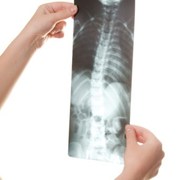
Natural curves occur in everyone’s spine. However, a side-to-side curvature of the spine is known as scoliosis. In most cases of scoliosis, the spine curvature occurs sideways or from the middle. According to the National Scoliosis Foundation, ʺScoliosis affects two to three percent of the population, or an estimated six million people in the United States, and there is no cure.ʺ
The Foundation also stated, ʺThe primary age of onset for scoliosis is 10-15 years old, occurring equally among both genders. However, females are eight times more likely to progress to a curve magnitude that requires treatment.ʺ
According to the U.S. National Library of Medicine, the following may be causes of scoliosis:
• Idiopathic scoliosis is scoliosis of unknown cause. Idiopathic scoliosis in adolescents is the most common type.
• Congenital scoliosis is due to a problem with the formation of the vertebrae or fused ribs during development in the womb or early in life.
• Neuromuscular scoliosis is caused by problems such as poor muscle control or muscle weakness, or paralysis due to diseases such as cerebral palsy, muscular dystrophy, spina bifida and polio.
The best way to determine if you or your loved one may have scoliosis is to visit your health care professional.
The U.S. National Library of Medicine stated the symptoms of scoliosis may include the following:
• One shoulder appears higher than the other (uneven)
• The pelvis appears to be tilted
• Hips appear uneven
• Backache or low-back pain
• Spine curves abnormally to the side (laterally)
• Pain due to irritation of the soft tissue and wear and tear of the spine bones
• Fatigue
According to the Scoliosis Research Society (SRS), there are three types of treatment:
• Observation
• Bracing
• Surgery
The Scoliosis Foundation stated four out of five people with scoliosis have curves of less than 20 degrees. These types of curves require constant observation with your health care professional. In children, this degree of curvature may worsen as the child grows and may require a brace. For adults, physical therapy may benefit.
For curvatures of 25-40 degrees a brace may be required. This treatment is standard for children and adolescents. Please note that the brace does not correct curves it only prevents further curvature.
For curves greater than 50 degrees surgery is one of the options. According to SRS, the spinal fusion surgery ʺis generally achieved by placing metal implants onto the spine which are then attached to rods which correct the spine curvature and hold it in the corrected position until fusion, or knitting of the spine elements together.ʺ
References:
National Scoliosis Foundation. National Scoliosis Foundation. Retrieved November 1, 2011, from
http://www.scoliosis.org/faq.php.
National Scoliosis Foundation. National Scoliosis Foundation. Retrieved November 1, 2011, from http://www.scoliosis.org/info.php.
Scoliosis - PubMed Health. National Center for Biotechnology Information. Retrieved November 1, 2011, from http://www.ncbi.nlm.nih.gov/pubmedhealth/PMH0002221/.
What is Scoliosis? - Scoliosis Research Society (SRS). Scoliosis Research Society (SRS). Retrieved November 1, 2011, from http://www.srs.org/patient_and_family/scoliosis/index.htm.
Reviewed November 1, 2011
by Michele Blacksberg RN
Edited by Jody Smith
Add a Comment1 Comments
I have scoliosis, After years and years of physiotherapy and chiropractic I had to think outside the box and tried holistic AtlasPROfilax Straightening of the axis in your head and Rolfing.
October 8, 2013 - 12:52amAfter my atlas was straightened/ I just quite the pain killers, my jaw was (TMJTMD)helped /low back/ after 2-3 treatments, my hips or scholastic pelvis,shoulder difference /pain in the hip joints /knee pain/ difference in leg length /neck pain/stiff neck back pain/ migraines /bulging or herniated disc . Helped suspension balance and control / going through 9 sessions of Rolfing but need only a few sessions per year to up keep is not going bad is good to maintain. Was considering surgery but not anymore/Nerve pain from carpal tunnel is the thing that has to be worked on still / cannot comment on that yet. I have 4 types of arthritis on top of this.
This Comment