



Improved
6139 HealthChanged
3797 LivesSaved
3584 Lives0 lives impacted in the last 24 hrs Learn More
 Design Pics/PhotoSpin
Ever gotten inspired to make your own facial mask, hair conditioner or lip gloss? These products can be made safely.
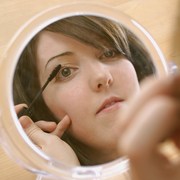
However, nix any idea of making your own mascara. Anything used so close to the eye needs special consideration.
Beautybrains.com is a website that helps consumers look at the science behind why various products have certain ingredients and helps us decide whether the claims a product advertises can really deliver.
They recently posted a warning for people not to follow the instructions on this site as to how to make one’s own mascara.
There are several problems with making your own mascara.
First, the aloe vera gel the writer suggests has these preservatives in it: potassium sorbate, citric acid and xanthan gum.
Usually people make their own makeup to get away from the preservatives in commercial brands.
However, not only are there preservatives used in this aloe vera gel, but these are not the typical preservatives used in regular mascara, according to beautybrains.com.
Typical preservatives for mascara are: imidazolidinyl urea, methylparaben, propylparaben, and phenoxyethanol.
That means that using this aloe vera gel for eye makeup exposes your eye to more risk of irritation from chemicals not used in products applied to eyelashes.
Next, activated charcoal is not a substance that is approved as a colorant for near one’s eyes. The FDA requires that companies use colorants for mascara which are certified to be safe for use so close to the eye.
Activated charcoal is a gritty coarse substance that may have other contaminants in it since its intended use is to absorb poisons or toxins that have been swallowed or as a material to filter liquids.
There are written safety precautions used by companies that sell chemicals that warn to keep activated charcoal away from one’s eyes due to irritation risk. If activated charcoal gets in the eye, thorough flushing is needed and medical attention should be sought.
So this “do it yourself” mascara contains a gel with the wrong type of preservatives to be used near the eye and a substance that, if gotten in the eye, can be so irritating that immediate flushing is required to prevent damage.
Never mind that the activated charcoal may cause an eye infection from any bacteria present in the capsules since they are not sterilized.
Upon searching, I found other websites that also suggested using activated charcoal around the eye such as this one and this one.
It may seem like fun to make your own masacara and create a smokey eyelash look but it could quickly turn into a visit to the emergency room.
Don’t take the chance.
If you want to have fun making your own makeup, stick to recipes such as these endorsed by The Campaign for Safe Cosmetics, which is an agency that takes our health very seriously.
They have a mission “to protect the health of consumers and workers … to eliminate dangerous chemicals from cosmetics and personal care products”.
Sources:
Is DIY Macara Safe? by THEBEAUTYBRAINS on JANUARY 15, 2013. Retrieved Jan. 29, 2013.
http://thebeautybrains.com/2013/01/15/is-diy-macara-safe/#comments
DIY Recipes. SAFE COSMETICS ACTION NETWORK. Retrieved Jan. 29, 2013.
http://safecosmetics.org/article.php?id=233
Natural Homemade Mascara. Passionate Homemaking. Retrieved Jan. 29, 2013.
http://www.passionatehomemaking.com/2010/11/natural-homemade-mascara.html
Wholesale Chemicals Activated Carbon. Continental Chemical USA. Retrieved Jan. 29, 2013.
http://continentalchemicalusa.com/bulk-chemicals/activated-carbon.php
Michele is an R.N. freelance writer with a special interest in woman’s healthcare and quality of care issues. Other articles by Michele are at www.helium.com/users/487540/show_articles
Edited by Jody Smith
Add a Comment14 Comments
Citric acid - will do nothing to your eyes. It's found in citrus fruits. You would need to dump a lot of it into the eyes to cause a problem, probably a cup or more.
Potassium sorbate - Also found in food and will not damage your eyes, oh, and by the way - also found in mainstream cosmetic products to slow the growth of bacteria.
Xantham gum - Again, found in food and even more hilariously... in eye-drops. So it's safe for eye drops but not mascara? Oh, come now!
Who paid you guys to write this article? Sephora?
October 23, 2019 - 11:41pmThis Comment
Wow.
1 ) If activated charcoal is okay to put in your body, it would follow that it is okay to use near your eyes.
2) If aloe vera - a pure, natural substance that can be found organically - is okay to INGEST and use topically, it is safe to use near your eyes.
Why is this article so backwards? "TRUST THE FDA - THEY'VE NEVER APPROVED ANYTHING HARMFUL BEFORE!"
November 23, 2016 - 7:58amThis Comment
You absolutely do not want to put activated charcoal near your eyes. Activated charcoal is what is given to people to who have overdosed to bind the toxic substance. Something you put in your stomach does not mean it is safe to put near your eyes.
Look, I have more than once spent 20 minutes flushing someone's eyes with a liter of saline in the ER because they have gotten something in their eyes that doesn't belong in the eye. Save yourself a trip to the ER. Don't put things near your eyes and risk damaging them.
November 23, 2016 - 5:13pmThis Comment
FDA does not approve charcoal, but approves Titanium Dioxide (top 5 toxic ingredients) and Fluoride in our water. Now the bar soap sales dropped in the store.... great! that means people make their own or buy artisan. But the statistics online show that people prefer liquid soap...junk information. don't read and trust the info the corporations spread around.
November 17, 2016 - 7:53amThis Comment
Please read these links about Titanium Dioxide by Safe Cosmetics
http://www.safecosmetics.org/get-the-facts/chemicals-of-concern/titanium...
Note the concern is inhaled Titanium Dioxide.
and a source written by a science oriented person about Natural Cosmetics with several studies cited.
http://www.organicmakeup.ca/ca/titaniumdioxide.asp
And here from the American Cancer Association about Fluoride:
http://www.cancer.org/cancer/cancercauses/othercarcinogens/athome/water-...
"More than 50 population-based studies have looked at the potential link between water fluoride levels and cancer. Most of these have not found a strong link to cancer."
Please provide people with science backed info before you attempt to scare them.
November 19, 2016 - 9:13pmThis Comment
All of those typical preservatives for mascaras are harmful and dangerous. If you go so strongly against aloe vera and its preservatives you should have at least mentioned that.
October 25, 2015 - 7:03amThis Comment
So true.Ms. Blacksberg obviously puts a WHOLE lot of faith in the FDA's "approval, when most peole, even ones who aren't super aware, know that the FDA approves whatever/whoever pays the most and the can still get away with(so it can't be "in your face," immediate adverseeffects). Let me state it real simply, FDA approval means nothing, other than "bettter check into this yourself."
September 16, 2015 - 8:01amPS this website makes my computer do weird things , like making my cursor bounce around, typing is about 5 seconds delayed from the keyed entry (I can't see what I've typed until 5-10 seconds after I type), and it's almost impossible to go back and fix typos so I'm sending it the way it is. Hopefully my computer doesnt crash after visiting this site.
This Comment
Hello Anon,
Perhaps you misunderstood my quotes around approve. Literally, the FDA does not formally sanction the use of over the counter products other than making sure they do no harm.
The FDA does not "approve" products. The leave it to individual companies to provide the safety information and the onus is on the companies themselves. Companies cannot boast health benefits of their products. That the FDA sends letter out to the companies to cease or their product will be pulled.
It would be nice if there was a true approval system to determine effectiveness but that would be very very costly. So the FDA focuses on approval of drugs/medications which are more likely to do great harm. That process take years as drugs must go through clinical trials of larger and larger test populations.
Michele
September 16, 2015 - 8:33amThis Comment
Thank-you!
I guess i'll use ground coffee or pure cacao powder and a natural oil (coconut), instead. I'll try coffee first, as it is easier to obtain.
I must mention this:
Aloe vera gel (that I know) is gel directly from the leaf and not from a bottle. Many people have access to aloe (we grow aloe, actually) from the leaf. We use the pure aloe gel on skin and hair and even boil it to drink as a tonic (it's a cultural thing and it tastes awful). I've never heard of it being used on eyes, nor do I think anyone should buy the ones sold in stores with additives.
:)
November 11, 2014 - 4:31pmThis Comment
Hello Anon,
Let me state it real simply.
1. The FDA does not "approve" over the counter products. The FDA "approves" products will not do harm. Neither activated charcoal or Aloe vera gel are "approved" (safe) to put near your eyes.
2. You only have 2 eyes. You do not want to do anything to risk your vision in either one.
Michele
August 26, 2014 - 8:09amThis Comment