



Improved
6112 HealthChanged
3786 LivesSaved
3568 Lives0 lives impacted in the last 24 hrs Learn More
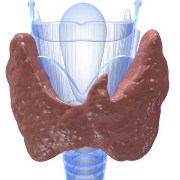 Photo: Getty Images
In the United States, thyroid cancer makes up about 3 percent of cases, according to the National Cancer Institute. While many cases of thyroid cancer are sporadic, genetics play a role in several cases.
The Cleveland Clinic noted that 5 to 10 percent of cases result from genetic mutations. Research has identified genes that contribute to thyroid cancer.
RET
Mutations to the REarranged during Transfection proto-oncogene, or RET gene, account for about 20 to 25 percent of medullary thyroid cancer cases, noted the National Cancer Institute.
Located on chromosome 10q11.2, the RET gene is involved in the production of proteins responsible for intracellular signaling. The mutations to this gene may result in multiple endocrine neoplasia type 2A, multiple endocrine neoplasia type 2B and familial medullary thyroid cancer.
Genetics Home Reference pointed out that more than 25 mutations to the gene result in multiple endocrine neoplasia type 2. Since multiple endocrine neoplasia type 2 is an autosomal dominant disorder, a child of an affected parent has a 50/50 chance of inheriting the mutation.
Genetic testing may be used to identify the mutation to the RET gene. Germline deoxyribonucleic acid-based testing can detect the mutated RET gene in more than 95 percent of patients with multiple endocrine neoplasia type 2A and 2B, and about 88 percent of patients with familial medullary thyroid cancer, stated the National Cancer Institute.
APC
Another gene associated with thyroid cancer is the adenomatous polyposis coli, or APC gene. Located on chromosome 5q21-q22, the APC gene may cause familial adenomatous polyposis when mutated. Genetic Home Reference noted that over 700 mutations to the APC gene result in familial adenomatous polyposis, a disorder in which patients develop multiple benign polyps that can become malignant.
Patients with familial adenomatous polyposis have a higher risk of developing other types of cancer, including thyroid cancer. The Cleveland Clinic stated that about 2 percent of patients with familial adenomatous polyposis get papillary thyroid cancer, the most common type of thyroid cancer.
PTEN
When the phosphate and tensin homolog, or PTEN, gene becomes mutated, it may lead to the development of cancer. A mutated PTEN gene, which is located on chromosome 10q23.3, may result in Cowden syndrome, a rare disease that causes increased risk of developing other cancers.
In this disorder, the enzyme produced by the PTEN gene cannot regulate cellular division, leading to benign growths and malignant tumors. With these changes, patients have a 10 percent chance of having thyroid cancer, according to the Cleveland Clinic. Patients tend to develop follicular thyroid cancer, though some patients may have papillary thyroid cancer.
References:
Genetics Home Reference. RET. Web. 12 January 2012
http://ghr.nlm.nih.gov/gene/RET
National Cancer Institute. Genetics of Medullary Thyroid Cancer. Web. 12 January 2012
http://www.cancer.gov/cancertopics/pdq/genetics/medullarythyroid/HealthProfessional/page1
Genetics Home Reference. APC. Web. 12 January 2012
http://ghr.nlm.nih.gov/gene/APC
Cleveland Clinic. The Genetics of Thyroid Cancer. Web. 12 January 2012
http://my.clevelandclinic.org/disorders/thyroid_cancer/hic_the_genetics_of_thyroid_cancer.aspx
Genetics Home Reference. PTEN. Web. 12 January 2012
http://ghr.nlm.nih.gov/gene/PTEN
Reviewed January 13, 2012
by Michele Blacksberg RN
Edited by Jody Smith
Add a CommentComments
There are no comments yet. Be the first one and get the conversation started!