


Improved
6112 HealthChanged
3786 LivesSaved
3568 Lives0 lives impacted in the last 24 hrs Learn More
 Photo: Getty Images
Thyroid nodules are small lumps in the thyroid gland. Often they go unnoticed until they have grown and cause the thyroid to become enlarged.
Nodules are usually harmless but if you notice any unusual lumps you should see your doctor to rule out anything more serious. Most nodules are non-cancerous growths of thyroid tissue or they are filled with fluid.
Nodules filled with fluid are called cysts. Only 5 percent of thyroid nodules are cancerous.
If you have ever had radiation applied to the neck or head, you should inform your doctor as you will be at a slightly increased risk of having thyroid cancer.
Symptoms
Most nodules don’t have any symptoms, other than an enlarged thyroid but if it is cancerous you may have the following symptoms:
• Swollen lymph nodes
• Hoarse voice
• Difficulty swallowing food and drink
• Difficulty breathing
These symptoms don’t necessarily mean you have cancer, but you should get them checked out as soon as possible. If you have difficulty breathing, call an ambulance.
Diagnosis
Your doctor will examine your thyroid gland where he should be able to feel the nodule. You will be given blood tests to see if your thyroid gland is functioning correctly and help rule out or confirm cancer.
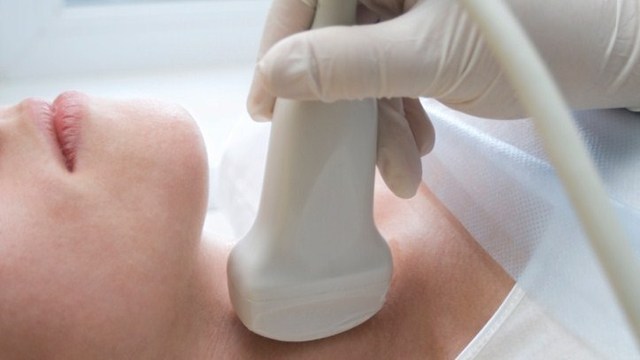
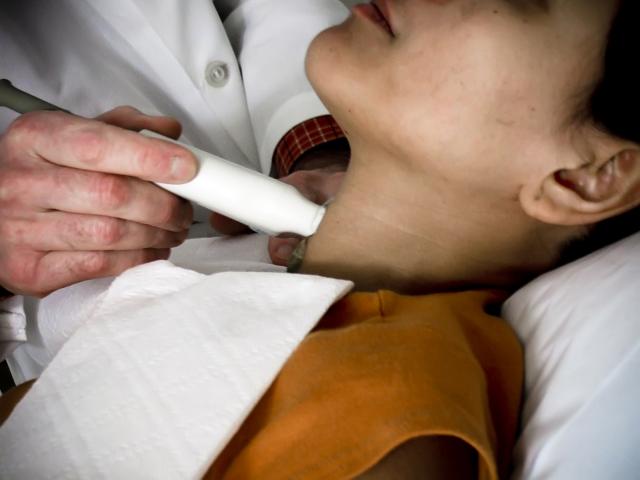
You may also be offered an ultrasound scan of your thyroid that will show up any nodules. You may be administered a small amount of radioactive material and then scanned to see if the nodule is producing hormones. This is called a thyroid scan.
If a nodule is detected, a biopsy will be taken to see if it is cancerous. This involves having a needle inserted into the nodule to remove a sample of it, which is then sent for examination under a microscope.
Treatment
The majority of nodules are benign. If that is the finding in your case, your doctor may leave it where it is and re-examine you at follow-up appointments every six months to a year.
Otherwise he may give you thyroid hormones to help shrink the nodule. If the nodule is caused by hyperthyroidism, it should respond positively to thyroid hormone treatment. If you have a cyst, your doctor may decide to drain it.
If you have cancer, then your nodule will be removed surgically. Some surgeons choose to remove the entire thyroid gland to prevent a reccurrence of the cancer.
You may also be given radioactive iodine to destroy any remaining cells. If your thyroid is removed you will need to take thyroid hormone replacement therapy for the rest of your life.
Sources:
Thyroid Nodules, The Hormone Foundation. Web. 17 January 2012. http://www.hormone.org/Thyroid/nodules.cfm
Thyroid Nodules, Medicine Net. Web. 17 January 2012. http://www.medicinenet.com/thyroid_nodules/page4.htm
Joanna is a freelance health writer for The Mother magazine and Suite 101 with a column on infertility, http://infertility.suite101.com/. She is author of the book, 'Breast Milk: A Natural Immunisation,' and co-author of an educational resource on disabled parenting.
Reviewed January 19, 2012
by Michele Blacksberg RN
Edited by Jody Smith
Add a CommentComments
There are no comments yet. Be the first one and get the conversation started!