


Improved
6112 HealthChanged
3785 LivesSaved
3568 Lives0 lives impacted in the last 24 hrs Learn More
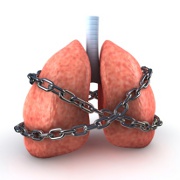 Photo: Getty Images
As many may be aware, tuberculosis is an infectious disease that primarily affects your lungs. The bacteria that cause tuberculosis are spread from person to person through tiny droplets released into the air via coughs and sneezes.
Tuberculosis, or TB, is a very common problem in African countries as well as in anyone with a severely compromised immune system. The spread of HIV/AIDS has contributed to the tangential health issues, among them, TB, which causes limited use of one's lungs and is often fatal.
Required TB testing is de rigeur in almost any employment situation. Almost all of us have undergone the ritual pricking of our forearms, knowing if we were free of TB yet again, that was most certainly a very good thing.
Just take a look at these numbers:
The World Health Organization (WHO) has estimated that 2 billion people have latent TB (which means under the right, or I should say, quite wrong conditions, one would acquire this disease). Globally, in 2009, the disease killed 1.7 million people, and certainly that figure has only increased.
Tuberculosis is in fact considered to be a multisystemic disease with myriad presentations and manifestations, and it is without a shadow of a doubt the most common cause of infectious disease–related mortality in every part of the world.
The benefits of getting tested and having access to health care keeps the rate of TB decreasing in the United States, yet it is still, unfortunately, increasing worldwide. Without access to preventive health care, antibiotics, good hygiene and education about health related issues, many are suffering in ways which could have been prevented.
While there are new vaccines in development, there have not been any to go to market at this time. We can work rigorously and spend money on discovering new drugs but TB is hardly a new disease.
Signs of skeletal TB (Pott disease) were found in Europe from Neolithic times (8000 BCE), in ancient Egypt (1000 BCE), and in the pre-Columbian New World. Even in the time of Hippocrates (400 BCE), TB was recognized as a contagious and was known as "phthisis" (Greek from phthinein, to waste away).
Mycobacterium tuberculosis, a tubercle bacillus, is the causative agent of TB. It belongs to a group of closely related organisms — including M africanum, M bovis, and M microti —in the M tuberculosis complex, and was discovered by Robert Koch, a German physician and Nobel Prize winner, in 1882.
Sources:
Tuberculosis: An Overview. Emedicine. Web. 4. Sept. 2011.
http://emedicine.medscape.com/article/230802-overview
A New Tool For The TB Arsenal by William R. Jacobs. Howard Hughes Medical Institute. Web. 4. Sept. 2011.
http://www.hhmi.org/news/jacobs20110904.html
Aimee Boyle is a regular contributor to EmpowHER
Reviewed September 9, 2011
by Michele Blacksberg R.N.
Edited by Jody Smith
Add a Comment1 Comments
The fluid the unnamed executive drank was apparently CleanStim. A Halliburton spokeswoman did not tell the Associated Press who the executive is or how he is faring now. Instead, she referred reporters to a website that says CleanStim is an inedible fluid containing enzyme, ethoxylated sugar-based fatty acid ester, inorganic and organic acid, inorganic salt, maltodextrin, organic ester, partially hydrogenated vegetable oil, polysaccharide polymer and sulfonated alcohol, best single serve coffee maker, best keurig coffee maker, venus factor system
December 15, 2013 - 12:51amThis Comment