


Improved
6112 HealthChanged
3786 LivesSaved
3568 Lives0 lives impacted in the last 24 hrs Learn More
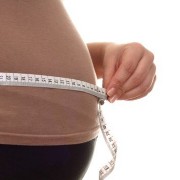 Photo: Getty Images
A friend of mine, Jill, often comments on how everything she eats goes straight to her belly and then holds out there indefinitely. She has tried every diet and exercise known to mankind and still can’t seem to get rid of her mid-section blues.
As it turns out, Jill’s belly pooch may be more than a storage center for surplus calories and an annoying deterrent to wearing her favorite skinny jeans; it could put her at increase risk of heart attacks, cancer and other chronic illnesses.
According to new scientific research, fat tissue stored in the belly region “is an active organ that sends chemical signals to other parts of the body that contributes to chronic illnesses.”
Scientists at Maastricht University in The Netherlands reported in Journal of Proteome Research they discovered 20 new hormones and substances not previously known to be secreted into the body by human fats cells. The researchers say this discovery is verification that fat secretes dozens of chemical messengers all around the body.
Excess fat cells are implicated in the cause of serious health conditions -- cancer (breast, colon and pancreatic), dementia, heart disease, high blood pressure, Type II diabetes, osteoarthritis, metabolic syndrome and sleep apnea to name a few. But where you store fat matters. If it’s your butt or thighs there's good news. You may be at lower risk for these serious health conditions.
New information about fat production is yielding some interesting results. At one time scientists had collectively thought fat cells were nothing more than static storage depots for surplus calories, but more recent research has established fat cells are instead active participants that secrete hormones and proteins—like leptin, which controls the appetite, and adiponectin, a chemical that produces sensitivity to insulin and helps control blood sugar level—just like many other organs inside the body.
It’s a little hard to comprehend that on average, the adult body contains some 27 billion fat cells while an overweight body can contain up to 300 billion fat cells— 10 times normal. Excess fat releases too many bad hormones and chemicals laying the foundation for many of the chronic diseases associated with being overweight, says Stephen Barrie, a specialist in integrative medicine and clinical ecology.
However, prior to the Netherlands study, researchers lacked much information on the proteins produced by those billions of fats cells in the adult body.
Dr. Anja Rosenow and colleagues identified 80 different proteins produced by the fat cells, including six new proteins not previously identified and 20 others that were not previously detected in human fats cells. The findings pave the way for a better understanding of what role hormone-secreting fat cells play in cancer, heart disease, diabetes and other serious health conditions.
Fat cells send out signals that cause blood vessels to constrict, raising blood pressure, and make blood clots form, which may explain how obesity increases the risk for heart attack and stroke. At the same time, fat cells emit signals that promote blood vessel and cell growth, and some increase estrogen production, which could help explain why obesity increases the risk of some cancers, the researchers said.
A separate study conducted by Mayo Clinic researchers discovered what mechanisms are used to grow body fat. The research confirms abdominal fat seems to heighten risk for metabolic disease, while lower body fat on the hips, butt and thighs seems to lower the risk.
Dr. Michael Jensen, a Mayo Clinic endocrinologist and lead author, said the accumulation of the abdominal fat happens largely by individual cells expanding in size, while lower body fat produces new fat cells. “Different mechanisms, different impact,” he says.
Different factors influence how our bodies gain fat, according to Jensen. “A large part of fat gain is genetic and hormonal but environmental factors such as alcohol intake, smoking, and being inactive,” can increase the amount of unhealthy belly fat that accumulates on our bodies.”
Lynette Summerill is an award-winning writer who lives in Scottsdale, Arizona. In addition to writing about cancer-related issues, she writes a blog, Nonsmoking Nation, which follows global tobacco news and events.
Add a CommentComments
There are no comments yet. Be the first one and get the conversation started!