


Improved
6112 HealthChanged
3786 LivesSaved
3568 Lives0 lives impacted in the last 24 hrs Learn More
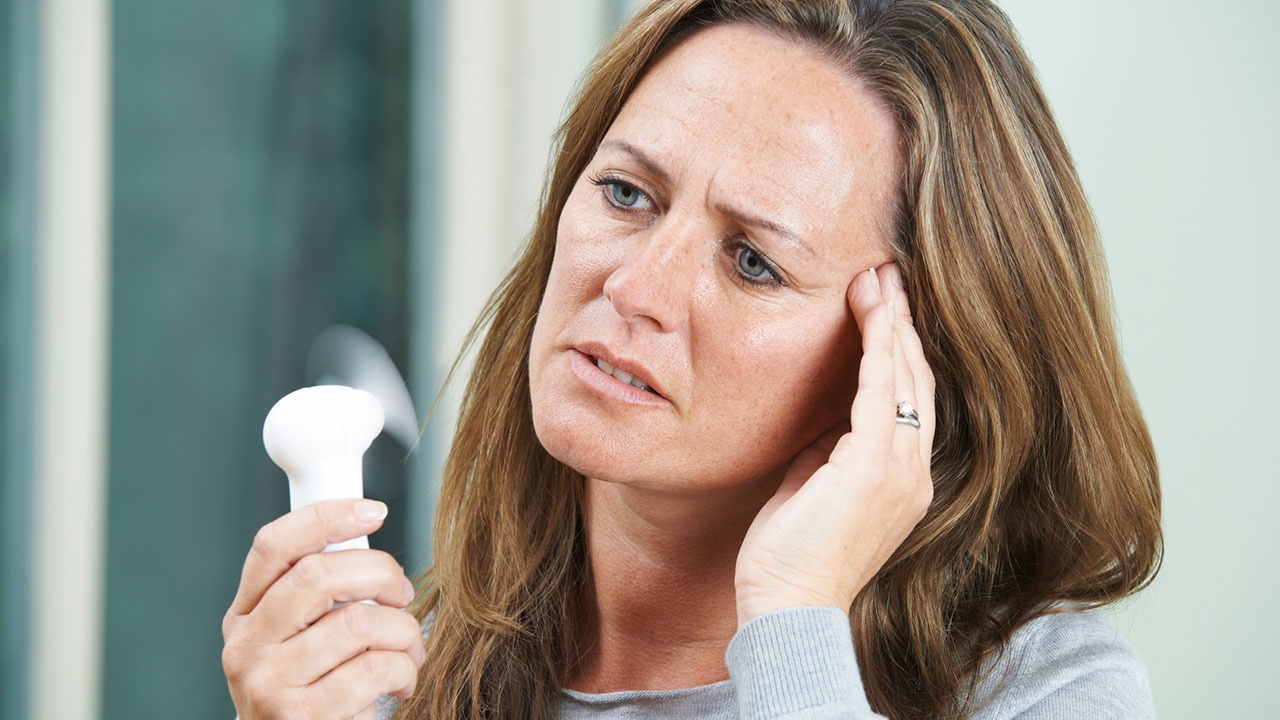
Hot flashes are a common problem in many women. Although hormonal treatments, some newer antidepressants, gabapentin, and clonidine have been shown to decrease hot flashes,(1-4), improved treatment options are needed to provide substantial relief without unwanted risks or side effects. A better understanding of the physiology and measurement of hot flashes would expedite the development and testing of more effective treatment options.
Hot Flash Physiology
With regard to hot flash physiology, the article by Carpenter et al (5) in the current issue of Menopause looks at the question of whether tryptophan depletion, resulting in decreased serotonin, would cause increased hot flashes. The
Nonetheless, there was a study limitation that did not allow the authors to disprove their prestudy hypothesis. The study limitation was that, in the control arm of this trial, participants also experienced some tryptophan depletion.
Although the tryptophan depletion in the control arm was to a lesser degree than that seen in the study arm, it was quite marked, with 35% of participants having tryptophan levels less than 10 KM. The authors propose looking at this subject further by studying tryptophan supplementation versus depletion and by potentially adding in the use of a means to induce hot flashes in both groups (such as raising room temperature).
Although the authors proposed that a positive experiment would have supported a mechanism for why selective serotonin reuptake inhibitors or serotonin norepinephrine reuptake inhibitors decrease hot flashes, the negative results
from their trial neither prove nor disprove whether some of these antidepressants decrease hot flashes.
A recent metaanalysis does demonstrate that some of these drugs do moderately decrease hot flashes.3 Furthermore, the antidepressant agents demonstrated to be effective do modulate serotonin in some way, whereas antidepressants found to be
consistent with placebo effects in open-label pilot trials (ie, mirtazapine,6 bupropion,7 and desipramine8) do not impact serotonin.
Clearly, additional research to elucidate hot flash physiology is needed. Validated markers of neurotransmission activity in the brain would be nice to have.
Hot Flash Measurement
Another article in this issue of Menopause by Otte et al (9) describes a physiologic measure of hot flashes, involving sternal skin conductance. Women who have hot flashes, and thus sweat, have an increased conductance across two attached skin electrodes. In a controlled trial laboratory setting, there is a very high correlation between hot flashes detected by this sternal conductance monitor and by participant reports of hot flashes.10 In real-life situations, however, correlations between hot flashes measured by daily diaries and those measured by event monitoring devices do not correlate quite as well with sternal conductance monitor
signals, which have been considered to be representative of hot flashes.11,12
Given this, it has been proposed that sternal skin conductance represents a new criterion standard and should be used in clinical trials to measure hot flashes and, therefore, the efficacy for agents improving hot flashes.12
Nonetheless, we propose that physiologic measures of hot flashes are not ripe enough to replace the time-honored standard of prospective participant hot flash diaries. There are several factors that support this contention. First, hot flash diaries have been validated,13 and a recent meta-analysis demonstrated
remarkably consistent data across studies that used hot flash diaries.3 Second, these physiologic measures of hot flashes actually measure sweating, which can result from sympathetic activation. However, there are other etiologies for sympathetic activation resulting in sweating as well as other causes of sweating other than hot flashes. If an individual sweats from climbing a couple flights of stairs, or other physical activity, this could be judged to be a hot flash when, in fact, it is not. Related to this issue, one of the investigators working with us, to check to see whether a monitor will record a sweating episode, put the device on
herself and walked up a couple flights of stairs. The device did record activity akin to a hot flash. Otte et al(9) state that hot flashes can be differentiated from exercise-induced sweating, but this article nor the one referenced to support this
statement (12) provides any data to definitively prove this. The ability to pick up skin conductance from various sweating etiologies may explain why hot flash physiologic monitors pick up more ‘‘hot flashes’’ than do participant diaries. Next,
these physiologic measures of hot flashes can be cumbersome, expensive, and not well tolerated by participants. This is particularly true if they are used to measure hot flashes over several days to weeks, as opposed to on a single day.
There is no substantial information to judge whether hot flash changes over time (from a baseline week to different times after treatment has been initiated) are better measured using sternal skin conductance monitors versus hot flash diaries.
Such information should become available before widespread use of these devices, in lieu of participant diaries. We suspect, in the end, that both participant diaries and physiologic measures will provide complimentary information.
Thus, in total, we agree with Otte et al (9) when they state ‘‘that the perception of a hot flash is just as important to investigate in the absence of an objective marker of that hot flash.’’
At the current time, participant reported outcome measures of hot flashes should be considered to be the criterion standard because they, currently, are in other symptom control trials, looking at things such as pain, nausea and vomiting, and treatment-induced peripheral neuropathy.(14)
Acupuncture as a Hot Flash Treatment
With regard to hot flash treatments, there is a study in this issue by Park et al (15) about the use of moxibustion, a specialized form of acupuncture, to alleviate hot flashes. It is difficult to evaluate the contribution of this exploratory pilot study for a couple of reasons. There was no attempt to use an adequate control arm, understanding the difficulties related to devising a placebo for the studied procedure. It should also be noted that a placebo effect of 50% is not unusual. This is particularly true if participants have a high number of hot flashes at baseline16 and may be more common in participants receiving treatments that are associated
with more intense attention.
Also, there was an alarming prevalence of adverse events (22%) that were not insignificant, including burns and negative physical reactions to smoke. Given the lack of proven efficacy and such toxicity, moxibustion is not something that should be recommended for clinical practice.
Nonetheless, this study raises the question of the value of acupuncture as a treatment for hot flashes. There are multiple claims suggesting that it might be beneficial for women with hot flashes in the medical literature, in the lay literature, and on the Internet.
A recent PubMed search of the following terms "hot flash" and "acupuncture" with limitations of "humans," "randomized controlled trial," and "English" revealed 11
clinical trials of interest (Table 1). These studies ranged from 18 to 267 participants. Seven of them had acupuncture and sham acupuncture arms, none of which reported any significant advantage for the purported active acupuncture
arm.(17-23) The sham acupuncture arms involved shallow needling, no needling, or using different points. Given that the mechanism of action of acupuncture is not precisely known, developing a sham that is assuredly not active has not yet been accomplished. Individual studies compared acupuncture with estrogen (22,24) and applied relaxation,(25) neither of which reported a significant advantage for the acupuncture.
One report compared transdermal estrogen versus placebo in one trial and then compared electroacupuncture versus superficial needling (sham) versus oral estrogen in another trial.(26) The authors then went on to perform a statistical analysis by combining the sham and electroacupuncture arms and compared them to the placebo arm from the other trial, something which is not considered to be
a statistically valid approach. A recently reported trial, involving 267 postmenopausal women, randomized participants to receive either acupuncture or a self-care pamphlet.27
Acupuncture decreased hot flashes by 50% in half of the sample, whereas in the control group, only 16% of women reported that their hot flashes were cut in half. Hot flash reductions were statistically significantly greater in the acupuncture group over controls, and this also was associated with more sleep, which was also considered to be statistically significant. The primary weakness of this study was the lack of a control group to account for attention and provider interaction.
Hence, there are some compelling data to study acupuncture further, and the biggest challenge is to develop an adequate control that will not be active in the same way acupuncture is but will control for the nonspecific effects of the intervention (particularly attention). Although acupuncture may eventually be shown to do some good for some women with hot flashes, there is, as of this time, no definitive evidence base to prove its efficacy or to direct its use in clinical practice.
Conclusions
The authors of the three articles related to hot flash conundrums published in this issue of Menopause should be commended for tackling critically important issues related to the science of hot flash management. The future of effective interventions for hot flashes with low or no toxicity lies in the elucidation of hot flash physiology, mechanisms of interventions, new trial paradigms, and hot flash measurement.
Financial disclosure/conflicts of interest: None reported.
Charles L. Loprinzi, MD
Debra L. Barton, RN, PhD
Mayo Clinic
Rochester, MN
REFERENCES
1. Goldberg RM, Loprinzi CL, O’Fallon JR, et al. Transdermal clonidine
for ameliorating tamoxifen-induced hot flashes. J Clin Oncol 1994;12:
155-158.
2. Loprinzi CL, Michalak JC, Quella SK, et al. Megestrol acetate for the
prevention of hot flashes. N Engl J Med 1994;331:347-352.
3. Loprinzi CL, Sloan J, Stearns V, et al. Newer antidepressants and gabapentin
for hot flashes: an individual patient pooled analysis [published
online ahead of print March 30, 2009]. J Clin Oncol doi: 10.1200/
JCO.2008.19.6253.
4. Pandya KJ, Raubertas RF, Flynn PJ, et al. Oral clonidine in postmenopausal
patients with breast cancer experiencing tamoxifen-induced
hot flashes: a University of Rochester Cancer Center Community Clinical
Oncology Program study. Ann Intern Med 2000;132:788-793.
5. Carpenter JS, Yu M, Wu J, et al. Evaluating the role of serotonin in hot
flashes after breast cancer using acute tryptophan depletion. Menopause
2009;16:644-652.
6. Perez DG, Loprinzi CL, Barton DL, et al. Pilot evaluation of mirtazapine
for the treatment of hot flashes. J Support Oncol 2004;2:50-56.
7. Perez DG, Loprinzi CL, Sloan J, et al. Pilot evaluation of bupropion for
the treatment of hot flashes. J Palliat Med 2006;9:631-637.
8. Barton DL, Loprinzi CL, Atherton P, et al. Phase II evaluation of
desipramine for the treatment of hot flashes. Support Cancer Ther
2007;4:219-224.
9. Otte JL, Flockhart D, Hayes D, et al. Comparison of subjective and
objective hot flash measures over time among breast cancer survivors
initiating aromatase inhibitor therapy. Menopause 2009;16:653-659.
10. Freedman RR. Laboratory and ambulatory monitoring of menopausal
hot flashes. Psychophysiology 1989;26:573-579.
11. Carpenter JS, Andrykowski MA. Menopausal symptoms in breast
cancer survivors. Oncol Nurs Forum 1999;26:1311-1317.
12. Carpenter JS, Monahan PO, Azzouz F. Accuracy of subjective hot flush
reports compared with continuous sternal skin conductance monitoring.
Obstet Gynecol 2004;104:1322-1326.
13. Sloan JA, Loprinzi CL, Novotny PJ, et al. Methodologic lessons learned
from hot flash studies. J Clin Oncol 2001;19:4280-4290.
14. Loprinzi CL, Barton DL, Sloan JA. Whose opinion counts? J Clin Oncol
2006;24:5183-5185.
15. Park J, Lee MS, Jung S, et al. Moxibustion for treating menopausal hot
flashes: a randomized clinical trial. Menopause 2009;16:660-665.
16. Jones JM, Loprinzi CL, Qin R, et al. Hot flash placebo responses:
related to baseline hot flash frequency? J Clin Oncol. In press.
17. Cohen SM, Rousseau ME, Carey BL. Can acupuncture ease the
symptoms of menopause? Holist Nurs Pract 2003;17:295-299.
18. Deng G, Vickers A, Yeung S, et al. Randomized, controlled trial of
acupuncture for the treatment of hot flashes in breast cancer patients.
J Clin Oncol 2007;25:5584-5590.
19. Huang MI, Nir Y, Chen B, et al. A randomized controlled pilot study of
acupuncture for postmenopausal hot flashes: effect on nocturnal hot
flashes and sleep quality. Fertil Steril 2006;86:700-710.
20. Nir Y, Huang MI, Schnyer R, et al. Acupuncture for postmenopausal hot
flashes. Maturitas 2007;56:383-395.
21. Vincent A, Barton DL, Mandrekar JN, et al. Acupuncture for hot
flashes: a randomized, sham-controlled clinical study. Menopause 2007;
14:45-52.
22. Wyon Y, Wijma K, Nedstrand E, et al. A comparison of acupuncture
and oral estradiol treatment of vasomotor symptoms in postmenopausal
women. Climacteric 2004;7:153-164.
23. Avis NE, Legault C, Coeytaux RR, et al. A randomized, controlled pilot
study of acupuncture treatment for menopausal hot flashes. Menopause
2008;15:1070-1078.
24. Frisk J, Carlhall S, Kallstrom AC, et al. Long-term follow-up of
acupuncture and hormone therapy on hot flushes in women with
breast cancer: a prospective, randomized, controlled multicenter trial.
Climacteric 2008;11:166-174.
25. Nedstrand E, Wijma K, Wyon Y, et al. Vasomotor symptoms decrease
in women with breast cancer randomized to treatment with applied relaxation
or electro-acupuncture: a preliminary study. Climacteric 2005;8:
243-250.
26. Zaborowska E, Brynhildsen J, Damberg S, et al. Effects of acupuncture,
applied relaxation, estrogens and placebo on hot flushes in postmenopausal
women: an analysis of two prospective, parallel, randomized
studies. Climacteric 2007;10:38-45.
27. Borud E, Alraek T, White A, et al. The Acupuncture on Hot Flushes
Among Menopausal Women (ACUFLASH) study, a randomized
controlled trial. Menopause 2009;16:484-493.
Menopause, Vol. 16, No. 4, 2009 623
Add a Comment6 Comments
Good Info
January 7, 2015 - 11:12pmThis Comment
Thanks for the informative article you have provided regarding hot flashes and the after effects. One of my relatives who is having 50 years, was suffering from the hot flashes is searching for a treatment. I am sure this article would be helpful for us.
May 29, 2013 - 10:47pmThis Comment
Hot flashes are experienced by many women, but not all women undergoing menopause experience hot flashes. A hot flash is a feeling of warmth that spreads over the body, but is often most strongly felt in the head and neck regions. Hot flashes may be accompanied by perspiration or flushing. Hot flashes usually last from 30 seconds to several minutes. Although the exact cause of hot flashes is not fully understood, hot flashes are thought to be due to a combination of hormonal and biochemical fluctuations brought on by declining estrogen levels.
March 12, 2013 - 2:52amMenopausal symptoms can be caused due to Lower level of estrogen and progesterone. But estrovera might be help you to solve all the menopausal issues like vaginal discomfort, hot flashes, loss of libido, mood swings, insomnia, weight gain and more.
This Comment
Don't overlook the power of food to help with hot flashes -- everything from strawberries to garlic! http://www.womentowomen.com/menopause/hotflashesnutritionalrelief.aspx
Jacqueline
October 9, 2012 - 8:36amWomen to Women Contributor
This Comment
Some natural herbs and supplements help women with hot flashes. Black cohosh, dong quai, flaxseeds and soy can be quite beneficial.
:) Elizabeth
http://www.estrogensource.com
September 24, 2009 - 8:42amThis Comment
I had 50+ hot flashes a day. My doc put me on an adrenal support supplement (all natural). I don't feel that hot flashes need to be addressed with drugs, there are natural alternatives that are effective. I get no side effects and have not hot flashed since I started taking the supplements regularly.
From how it was explained to me, since I wore down my adrenals living a stressful life, I needed supplementation to build back up my adrenals. I reduced my stress and started doing yoga as well.
Hot Flashes are your bodys way of trying to regulate it's temperature, that's where the adrenals come in... when those are not working properly.. your body can't regulate.
September 21, 2009 - 7:08amThis Comment