

Improved
6112 HealthChanged
3786 LivesSaved
3568 Lives0 lives impacted in the last 24 hrs Learn More
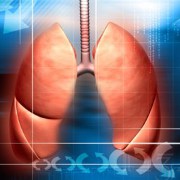 Photo: Getty Images
The lungs are a pair of air-filled organs which are suspended on either side of the heart in the chest cavity. These comprise a matrix of tubes with specific functions in the process of respiration.
What is respiration?
The lungs are the essential organs of respiration. Respiration is the process of breathing. It can be broken down into four distinct components, pulmonary ventilation, external respiration, internal respiration and cellular respiration and metabolism.
Pulmonary ventilation is the process of moving air in and out of the lungs.
External respiration is the gas exchange process that occurs between the alveoli and the surrounding pulmonary capillaries. Blood is oxygenated and carbon dioxide is eliminated.
Internal respiration is the gas exchange process that occurs between the cells of the lungs and the systemic capillaries. Oxygen is delivered to the cells and carbon dioxide is eliminated from the cells.
Cellular respiration is a metabolic process that produces energy for the cells.
What do the lungs look like?
The lungs are made up of a substance that is light, porous and spongy in texture. The surface is smooth and shiny. The left lobe is divided into two lobes and the right lung has three lobes.
At birth, the lungs are a pinkish white in color. In adult life, the color changes to a dark gray with mottled patches. With advanced age, these patches become black in color.
A thin tissue layer called the pleura covers each lung. This same tissue lines the inside of the chest cavity and acts as a lubricant. The pleura allows the lungs expand and contract smoothly with each breath.
The lungs are suspended in the chest cavity on a framework of elastic fibers.
How does inhaled air get into the lungs?
With each breath, air is inhaled through the mouth or nose. The nose acts as an air filter, trapping dust particles in its hairs.
Air is warmed before entering the trachea or windpipe. The trachea is divided at its base into two airways called the bronchi.
Each bronchi leads to a lung. The bronchi split like the branches of a tree into tens of thousands of smaller tubes called bronchioles, which connect to tiny sacs called alveoli. The alveoli are where the crucial gas exchange of respiration happens.
What is the gas exchange?
Gas exchange is the delivery of oxygen from the lungs to the bloodstream and the elimination of carbon dioxide from the bloodstream to the lungs. This happens between the alveoli and the network of tiny blood vessels called capillaries, which are located in the walls of the alveoli.
Oxygen passes through the alveoli into the pulmonary capillaries and through the pulmonary veins. The pulmonary veins carry the oxygenated blood to the left atrium of the heart.
At the same time, unoxygenated blood travels from the body to the lungs via the pulmonary arteries. Carbon dioxide is eliminated in the alveoli and expelled with exhalation.
Sources:
National Geographic: Lungs, Sept. 16, 2011
http://science.nationalgeographic.com/science/health-and-human-body/human-body/lungs-article
The Human Body: Human Lungs, Sept. 16, 2011
http://www.the-human-body.net/lungs.html
Gray’s Anatomy of the Human Body, Yahoo! Education: The Lungs, Sept. 17, 2011
http://education.yahoo.com/reference/gray/subjects/subject/240
“Prehospital Emergency Care” , Joseph J. Mistovich, Med, NREMT-P, Keith J. Karren, PhD., EMT-B, copyright 2010, Pearson Education Inc., New Jersey, ninth edition
Respiration page 251
Reviewed September 19, 2011
by Michele Blacksberg RN
Edited by Jody Smith
Add a CommentComments
There are no comments yet. Be the first one and get the conversation started!