



Improved
6139 HealthChanged
3797 LivesSaved
3584 Lives0 lives impacted in the last 24 hrs Learn More
Until recently, doctors didn’t really give much credence to women’s long lists of complaints. And if we were indistinct, well we probably came off as PMS-afflicted harpies. Yet, although some diseases have early signs that help in diagnosing a serious problem, communicating them continues to be a problem.
Fortunately, medical professionals have begun listening to us, trying to decipher critical diagnostic clues that can mean the difference between life and death. But with some diseases, like gynecologic cancers, symptoms are hard to express in quantifiable terms because they are vague and inconsistent. Symptoms many of us have been conditioned to ignore.
The responsibility ultimately falls to us to know our own bodies, observe what’s changed and communicate it as clearly as possible to our doctors. Often, that's nearly impossible. And in the end, the person who lives with the effect of a late diagnosis is . . . you.
To help women be heard and respected when describing changes that might point to a more serious problem, the Ovarian Cancer National Alliance and the Gynecologic Cancer Foundation just released a Symptom Diary as a tool for women to document specific symptoms and their frequency, which will assist in earlier diagnosis (or elimination) of the possibility of ovarian cancer.
The Diary covers a four week timeframe, during which a woman circles each of the main symptoms she experiences on a daily basis. It’s as simple as that. Once the data is documented, she can share the diary with her gynecologist and pursue the next steps in diagnosis.
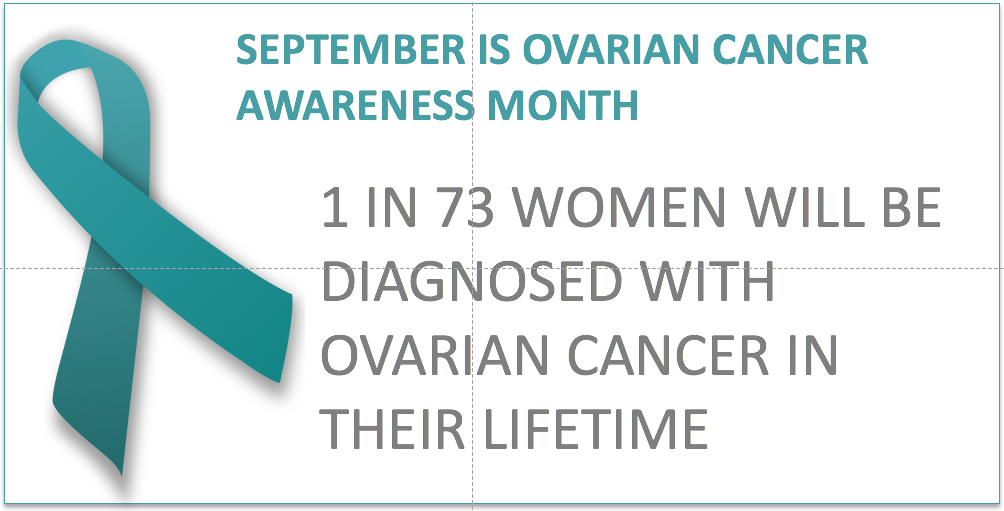
The diary was created to help women communicate with their doctors with credibility and assurance that they are being heard. It quantifies the symptoms she is having, with what frequency, and for how long. In most cases, the women with these symptoms do not have cancer. However, each year about 75,000 American women are diagnosed with some form of gynecologic cancer; about 28,000 of these are ovarian cancer. And with each of those cases, the earlier the disease is diagnosed and treated, the greater the chance that woman will have a successful outcome.
If you are experiencing bloating, abdominal or pelvic pain, urgent or frequent urination, feeling full too quickly or other bowel function problems but are unsure about next steps, use the Diary and make an appointment with a gynecologist in a few weeks. It is empowering to be able to share your data with your doctor and work together on resolving your case.
To access the Symptom Diary, go to http://www.ovariancancer.org/diary/
Add a Comment3 Comments
My best friend has horrible migraines, and has for several years. She keeps a detailed migraine diary, including not only her symptoms, but also the results of doctor appointments, the medicines she's taking, anything having to do with her condition.
It may seem like extra work, but the best part is, as you say, the undeniable record of her own body. She doesn't have to say, "I think it was about two years ago," when she can just check. She can look back at how a particular medicine affected her and tell a doctor. And most importantly, since she has seen everyone from her primary care doctor to a neurologist to an acupuncturist, she can keep their information straight and inform each one of exactly what another one said.
It makes HER the one in the room with the most information! Which, for anyone who is a bit shy about speaking up in a doctor's office, can be an incredible tool.
Thanks so much for your post.
November 2, 2009 - 8:22amThis Comment
Thanks, Pat. As women become more confident advocating for themselves, this can be a very useful tool. It could be adapted for general symptoms and even help children describe these important indicators of a medical problem. I always appreciate your perspective.
October 30, 2009 - 5:52pmBe well-
Annette
This Comment
Annette - The Symptom Diary sounds like a powerful and useful tool, thanks for sharing. It's interesting what a difference the choice of words can make. For far too long, women's intuition, and our ability to describe what we sense in our bodies, was dismissed as "complaining" instead of being recognized as the ability to recognize and verbalize important and significant changes impacting our health. It's great to see an important tool like this be developed.
October 30, 2009 - 5:34pmTake good care,
Pat
This Comment