


Improved
6139 HealthChanged
3797 LivesSaved
3584 Lives0 lives impacted in the last 24 hrs Learn More
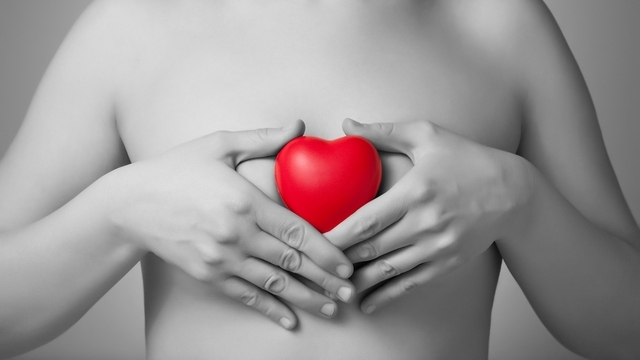
One of the biggest challenges that a woman with breast cancer faces is whether to undergo a mastectomy -- the surgical removal of one or both breasts in order to eliminate the spread of cancerous tissue. A procedure of this magnitude is a huge change for many women. The time period after a mastectomy can be very difficult, and it is often made easier through the use of prosthesis.
Many women choose to place padding in their bras, which usually consists of cotton or a gel-based substance, to restore the appearance of a bust line. Others have silicone gel surgically implanted directly after their mastectomy, sometimes even making their breasts larger than before.
The practice of prosthesis is so common, in fact, that some women find the emphasis on physical appearance after surgery to be almost overwhelming. When author Audre Lorde* underwent a mastectomy, she was shocked by the comments she received from medical practitioners after telling them she had decided not to wear a prosthesis.
"We really like you to wear something, at least when you come in," remarked one nurse. “Otherwise it’s bad for the morale of the office.” Another encouraged her to make her prosthesis look more "believable."
"When Moishe Dayan, the Prime Minister of Israel, stands up in front of parliament or on TV with an eye patch over his empty eye socket, nobody tells him to go get a glass eye," Lorde writes. "The world sees him as a warrior with an honorable wound."
She also discusses the fact that in every other amputation procedure, the purpose of prosthesis is mostly functional. It enables the patient to continue to participate in society to the extent that their limbs can perform basic tasks and duties. A fake breast, however, does not function as a real breast; it cannot produce milk for offspring and often has no sensation around the nipple. Stressing the need for a prosthetic breast, therefore, implies that the primary function of the female breast is to be looked at by others.
On this note, Lorde continues, "The emphasis put upon the cosmetic after surgery reinforces this society’s stereotype of women, that we are only what we look or appear, so this is the only aspect of our existence we need to address."
Lorde succumbed to cancer on November 11, 1992, but her thoughts and message still live on. Undergoing radiation, chemotherapy, and a mastectomy are horrible things that no one should have to endure – but breast cancer survivors have no choice but to face the process of recovery head on. We would be wise to focus on strength, healing, and emotional survival during treatment, because a woman must be spiritually whole before she can be physically whole.
*Quotes for this article were taken from The Cancer Journals by Audre Lorde.
-----------------------
Shaina Gaul is a feminist and freelance writer living in Iowa. View more of her writing at http://www.couchSpud.net.
Add a CommentComments
There are no comments yet. Be the first one and get the conversation started!