



Improved
6141 HealthChanged
3797 LivesSaved
3584 Lives0 lives impacted in the last 24 hrs Learn More
 Photo: Getty Images
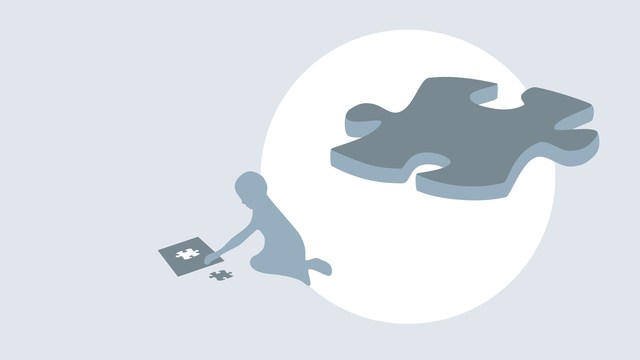
Autism is a neurological disorder that causes developmental delay, including speech delays and difficulty in relating to others, maintaining eye contact and difficulty in playing with other children. Autistic people may have behavior disorders and be prone to aggressive or repetitive behaviors. A person with autism often likes to have the same routine every day and becomes frightened, withdrawn or combative if the routine is changed.
Depending on the severity of the autism, some children may be mentally handicapped, although many people with autism are intelligent and just cannot communicate and express themselves.
They often have other illnesses that co-exist with autism such as a sensory processing disorder like hyperacusis (hearing everything too loudly), immune system dysfunction and gastrointestinal disease.
Some children have a very mild type of autism in which they are intellectually normal but they feel awkward in social situations, don’t know how to have appropriate conversations and don’t enjoy playing with other children. They can struggle with school and with relationships because of these issues but otherwise lead normal lives.
Autism used to be a rare disorder, first identified in 1943 by child psychologist Leo Kanner and named Kanner Syndrome. He also referred to it as infantile autism as it occurred in infancy and often at birth.
The word autism means "escape from reality", so it was used to describe the emotional detachment that occurs in some children with the condition. Dr. Kanner gave the rate of autism as 1 in 10,000. Now, rates vary according to country but range anywhere between 1 in 40 for boys and 1 in 66 for boys and girls, to 1 in 110 children in the USA.
Cambridge University experts wrote:
"The prevalence estimates generated from the SEN register and diagnosis survey were 94 per 10 000 and 99 per 10 000 respectively ... Taken together, we estimate the prevalence to be 157 per 10 000, including previously undiagnosed cases. This study has implications for planning diagnostic, social and health services."
The CDC wrote:
"In 2006, on average, approximately 1 percent or one child in every 110 in the 11 ADDM (Autism and Developmental Disabilities Monitoring (ADDM) Network) sites was classified as having an ASD (approximate range: 1:80--1:240 children [males: 1:70; females: 1:315]). The average prevalence of ASDs identified among children aged 8 years increased 57 percent in 10 sites from the 2002 to the 2006 ADDM surveillance year. Although improved ascertainment accounts for some of the prevalence increases, a true increase in the risk for children to develop ASD symptoms cannot be ruled out."
Some children with autism on the more severe end of the spectrum will need on-going care and social support for the rest of their lives.
Sources:
Autism FAQ – History, Autism Resources. Web. 4 September 2011. http://www.autism-resources.com/autismfaq-hist.html
What is Autism Spectrum Disorder?, Autism Epicenter. Web. 4 September 2011. http://www.autismepicenter.com/what-is-autism.shtml
Health Matters, The Autism Directory. Web. 4 September 2011. http://www.theautismdirectory.com/Health.html
Prevalence of Autism Spectrum Disorders --- Autism and Developmental Disabilities Monitoring Network, United States, 2006, MMWR, CDC. Web. 4 September 2011.
http://www.cdc.gov/mmwr/preview/mmwrhtml/ss5810a1.htm
Prevalence of autism-spectrum conditions: UK school-based population study, The British Journal of Psychiatry. Web. 4 September 2011. http://bjp.rcpsych.org/content/194/6/500.abstract
Joanna is a freelance health writer for The Mother magazine and Suite 101 with a column on infertility, http://infertility.suite101.com/. She is author of the book, 'Breast Milk: A Natural Immunisation,' and co-author of an educational resource on disabled parenting.
She is a mother of five who practised drug-free home birth, delayed cord clamping, full term breast feeding, co-sleeping, home schooling and flexi schooling and is an advocate of raising children on organic food.
Reviewed September 5, 2011
by Michele Blacksberg R.N.
Edited by Jody Smith
Add a Comment5 Comments
A good educational video on classic autism is seen on You Tube, titled, "Classic Day with Classic Autism." It shows a good day. Other videos on this same channel show very disturbing days where autistic person is punching self or having seizure activity.
April 1, 2012 - 3:59pmThis Comment
Yes, that's what I mean, that calling someone autistic meant they were just a bit dreamy and distracted and self-absorbed.
September 9, 2011 - 7:06amThis Comment
Yes, but it also means in the person's own world because back in the 40's psychologists used to refer to a person as autistic if they meant in a dream world, not necessarily that the person had autism as we know it today. The term Kanner syndrome gradually got replaced by the term autism because people with Kanner syndrome had many autistic traits.
September 9, 2011 - 6:37amThis Comment
Before Kanner, “autistic” referred to a symptom, not a syndrome. Freud used the word “autistic,” too. when he contrasted the “social” with what he called the “narcissistic,” but was was clear that by “narcissistic” he meant the same thing as “autistic,” “in which the satisfaction of the instincts is partially or totally withdrawn from the influence of other people.” Freud didn’t care for the word “autistic”. It might be because by the early 1920s some doctors uses “autistic” to refer to daydreams and fantasies; Freud thought the word should refer to an impairment in social functioning.
September 9, 2011 - 6:47amThis Comment
"Autism" is from the Greek "autos" which means "self" and "ismos" which means action or state of.
September 9, 2011 - 5:07amThis Comment