




Improved
6113 HealthChanged
3786 LivesSaved
3568 Lives0 lives impacted in the last 24 hrs Learn More
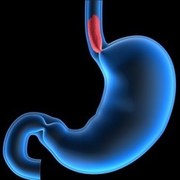 Photo: Getty Images
What is Barrett’s Esophagus?
Barrett’s esophagus develops when the lining of the esophagus changes to resemble the lining of the intestine. The esophagus is the tube that carries food from the mouth to the stomach.
Barrett’s esophagus is a complication usually associated with long-term GERD (gastroesophageal reflux disease) with about 10-15 percent of chronic GERD sufferers developing Barrett’s esophagus.
Patients with Barrett’s esophagus are at increased risk for developing cancer of the esophagus, although even to these patients the risk is extremely rare. Esophageal cancer affects only 1 percent of people with Barrett’s.
GERD allows stomach contents to flow back into the esophagus because “the lower esophageal sphincter opens spontaneously ... or does not close properly ...
Overall, 10 to 20 percent of Americans experience GERD symptoms every day, making it one of the most common medical conditions." (National Digestive Diseases Information Clearinghouse) GERD is commonly referred to as “acid reflux”. Over time, because of the acid reflux, the normal esophageal cells are replaced by intestinal cells.
It is important to remember that “[m]ost people with acid reflux do not develop Barrett’s esophagus ... [a]nd not everyone with Barrett’s esophagus had GERD.” (WebMD)
Facts and Symptoms of Barrett’s Esophagus
“Barrett’s esophagus affects about 1 percent of adults in the United States. The average age of diagnosis is 50 ... Men develop Barrett’s esophagus twice as often as women, and Caucasian men are affected more frequently than men of other races. Barrett’s esophagus is uncommon in children.” (National Digestive Diseases Information Clearinghouse)
Many people with Barrett’s esophagus do not experience any “tell-tale” symptoms. Any symptoms are usually related to the acid reflux:
• Frequent heartburn
• Difficulty swallowing food
• Chest pain
• Upper abdominal pain
• Dry cough
Diagnosis and Treatment of Barrett’s Esophagus
Diagnosis of Barrett’s esophagus can only be done through a procedure called an upper endoscopy and biopsy, which is generally recommended for patients over the age of 40 with a long-term history of GERD. In this procedure, the doctor visually examines the lining of the esophagus and removes a small sample of tissue that will be sent to laboratory for confirmation of diagnosis.
The sample will also be examined for early signs of cancer. “If you have Barrett’s esophagus but no cancer or precancerous cells ... the doctor will most likely recommend that you have periodic repeat endoscopy ... If precancerous cells are present in the biopsy, your doctor will discuss treatment options with you.” (WebMD)
The primary goal of treatment is to prevent further damage to the esophagus, usually by treating and controlling the acid reflux. Your doctor may recommend changes to your diet including:
• Avoiding fatty foods, chocolate, spicy foods and peppermint
• Avoiding alcohol, caffeine and tobacco
• Avoiding wearing tight fitting clothes
• Avoiding stooping or bending
• Eating smaller, more frequent meals
• Losing weight
• Sleeping with your head elevated
• Not lying down within 3 hours of eating
• Drinking plenty of water when taking medications
Surgical procedures are also available including:
Photodynamic Therapy which uses a laser to kill abnormal cells in the lining of the esophagus.
Endoscopic mucosal resection (EMR) in which the abnormal lining is lifted and cut off the wall of the esophagus and the tissue removed through the endoscope, with the goal of removing precancerous or cancerous cells.
Surgery to remove most of the esophagus is also an option, but usually only reserved for severe precancerous or cancerous diagnoses.
If you have been diagnosed with Barrett’s esophagus, it is important that you go to all of your appointments to ensure that no significant changes have occurred, make healthier lifestyle choices, and be aware and report any new symptoms. Your doctor can give you a list of symptoms to watch for that will require immediate follow-up.
Sources:
Barrett’s Esophagus. Digestive Diseases Information Clearinghouse. Web. Nov 17, 2011.
http://digestive.niddk.nih.gov/ddiseases/pubs/barretts
Barrett’s esophagus. Mayoclinic.com. Web. Nov 17, 2011. http://www.mayoclinic.com/health/barretts-esophagus/HQ00312
Barrett’s Esophagus: Symptoms, Causes, and Treatments. WebMD.com. Web. Nov 17, 2011.
http://www.webmd.com/heartburn-gerd/barretts-esophagus-symptoms-causes-and-treatments
Reviewed November 17, 2011
by Michele Blacksberg RN
Edited by Jody Smith
Add a Comment2 Comments
There are treatments that are less invasive that what you discuss her including spray cryotherapy and radio frequency ablation. A Pubmed search will show data for both technologies.
November 18, 2011 - 7:20amThis Comment
There are probably more therapies than I discuss here. It's difficult to cover every possible treatment option. It is important for every patient to learn as much as they can about their condition and discuss every possible treatment that might be available to them with their doctor, though not every treatment option is right for everyone.
November 18, 2011 - 12:38pmThis Comment