





Improved
6112 HealthChanged
3786 LivesSaved
3568 Lives0 lives impacted in the last 24 hrs Learn More
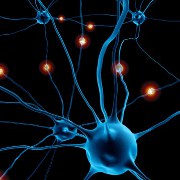 Photo: Getty Images
In the United States, about two million people have epilepsy, according to the Centers for Disease Control and Prevention. With epilepsy, neurons in the brain send abnormal signals, causing seizures. Someone who have epilepsy will have several seizures over their lifetime.
These abnormal electrical signals result from permanent damage to the brain tissue, from stroke, congenital brain defect, brain tumor or traumatic brain injury. People can have epilepsy at any age, though it commonly starts between the ages of 5 and 20, according to MedlinePlus.
The symptoms of epilepsy that patients have depend on the type of seizures that she has. Seizures can be grouped into two broad categories: focal seizures and generalized seizures.
With a focal seizure, the abnormal electrical activity only occurs on one side of the brain. The National Institute of Neurological Disorders and Stroke stated that about 60 percent of patients with epilepsy have focal seizures.
If a patient has a simple focal seizure, she does not lose consciousness, but can experience unusual sensations or feelings. For example, she may feel sad without an explanation. She may also experience tingling or involuntary jerking of a part of her body, such as her leg.
If a patient has a complex focal seizure, then she can have a change in her level of consciousness, which can include losing consciousness during the seizure. Repetitive behaviors can occur, such as twitching, chewing or blinking, which are called automatisms.
The other broad group of seizures are generalized seizures. With this group of seizures, the abnormal electrical activity affects the entire brain. The symptoms of these types of seizures can range from mild to severe.
For example, a patient who has absence seizures, which are also called petit mal seizures, stares and has subtle movements during the seizure. In comparison, a patient with tonic-clonic seizures, also called grand mal seizures, can lose consciousness and have shaking and stiffening of her body.
MayoClinic.com added that a patient with tonic-clonic seizures may lose control of her bladder or bite her tongue during the seizure. With tonic seizures, the patient has stiffening of her muscles, which may cause her to fall down. Myoclonic seizures include sudden twitches of the limbs. Other symptoms of epilepsy with generalized seizures include suddenly losing muscle tone and falling down with atonic seizures and jerking muscle contractions with clonic seizures.
References
Centers for Disease Control and Prevention. Epilepsy. Web. 7 September 2011
http://www.cdc.gov/epilepsy/
MedlinePlus Medical Encyclopedia. Epilepsy. Web. 7 September 2011
http://www.nlm.nih.gov/medlineplus/ency/article/000694.htm
National Institute of Neurological Disorders and Stroke. Seizures and Epilepsy: Hope Through Research. Web. 7 September 2011
http://www.ninds.nih.gov/disorders/epilepsy/detail_epilepsy.htm
MayoClinic.com. Epilepsy: Symptoms. Web. 7 September 2011
http://www.mayoclinic.com/health/epilepsy/DS00342/DSECTION=symptoms
Reviewed September 7, 2011
by Michele Blacksberg R.N.
Edited by Malu Banuelos
Add a CommentComments
There are no comments yet. Be the first one and get the conversation started!