





Improved
6112 HealthChanged
3786 LivesSaved
3568 Lives0 lives impacted in the last 24 hrs Learn More
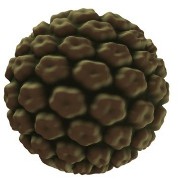 Photo: Getty Images
We’re all familiar with them--those tiny little acronyms we use every day in our emails and text messages – BRB, OMG, and LOL. We understand the meaning behind what is condensed into these three small letters. However, there is a formidable adversary out there, one that affects 80 percent of the population and which, under the right circumstances, can kill you. That acronym is HPV.
HPV is short for human papillomavirus, a virus, as inherent in the name, which has over 100 different strains, some of which can kill you. Many people have been infected with varying other strains of HPV and don’t even realize it. Plantar warts on the feet, flat warts found on the body, warts on the fingers and hands that are so annoying; these are all caused by different strains, or types, of the human papillomavirus.
I would hope by now that most of you have heard that HPV causes cervical cancer. You may also be familiar with the vaccine developed to protect against certain strains of the virus which cause the majority (70 percent) of cervical cancers. The Gardasil vaccine was approved by the U.S. Food and Drug Administration in 2006 and Cervarix, a newer vaccine, was approved by the FDA last year. The Gardasil vaccine protects against four types of HPV: two low risk strains--6 and 11--which cause genital warts and the two high risk strains--16 and 18--which cause the majority of cancers. Cervarix only protects against the two high risk strains 16 and 18, and provides no protection for the lower risk types.
HPV is transmitted through skin-to-skin contact with an infected area. Although HPV is considered the number one sexually transmitted disease, intercourse is not a requirement for contracting the virus. In fact some believe that the virus can be transmitted via fomites, or inanimate objects which also have come in contact with an HPV infected area. Because there is no test to determine if a man is carrying HPV, a woman can remain celibate until marriage and contract the virus from her husband.
While an increased number of sexual partners is considered a risk factor, this is a very contagious virus and one which can be transferred on a single occasion. Some individuals have chosen to make this into a debate about giving your child permission to have sex if you provide him or her with the vaccine. (Yes, the vaccine is also available now for boys and young men as of last year.) This is, or at least should be, about providing either yourself or your child with protection against what could potentially become a deadly cancer.
This virus, unlike bacteria, is not affected by antibiotics and utilizes your own cells to reproduce. It has a unique way of “hiding” from our immune system, while other properties of the virus function to disable our body’s cancer defenses. As a result, the potentially cancer causing cells reproduce again and again. Essentially, the virus becomes immortal.
For the majority of people, the body’s immune system will function to cause the virus to become dormant. This by no means indicates that you are virus-free, or that it has been eradicated from your system. Many health care professionals will tell patients that their body will “clear” the virus. This is more often than not grossly misleading for patients who think it means that the virus is gone from their body. Nothing could be further from the truth. HPV can remain dormant within the body for months, years and even decades. No one can predict just who will go on to develop a deadly cancer, nor when. This is why it is so important to maintain regular screenings.
http://www.gardasil.com/what-is-gardasil/cervical-cancer-vaccine/index.html
http://www.cdc.gov/hpv/cancer.html
http://www.cdc.gov/hpv/vaccine.html
http://www.cdc.gov/hpv/Screening.html
Bonnie Diraimondo is a registered nurse and expert in HPV. She maintains her own website and advocates for patients regarding education and vaccination.
Add a Comment2 Comments
Thanks Bonnie,
April 16, 2011 - 9:05amGood information.
Dita
This Comment
My crony got herpes simplex virus type 2 a few years ago. life’s tough for him sometimes. To help more people with STDs, in 2001,we launched STDdatings, the exclusive STD support site for poz people with Herpes(HSV 1,HSV 2),HIV,HPV,Hepatitis. If you’re living with STDs, gratefully come visit us and add us as friend. Never live in your own dark corner.
April 13, 2011 - 11:44pmThis Comment