




Improved
6112 HealthChanged
3786 LivesSaved
3568 Lives0 lives impacted in the last 24 hrs Learn More
Hypothyroidism Diagnosis
Hypothyroidism is a relatively common disorder. It affects more women then men, but I happen to be one of the men who does have it. Symptoms of hypothyroidism include fatigue, gradual weight gain, constipation, muscle aches, joint pain, feeling cold, menstrual irregularities, weakness, hair loss, dry, cold skin and slow reaction time. Many patients will have a goiter (enlarged thyroid). Although it has received much discussion, I believe low body temperature is not a reliable sign of hypothyroidism.
The incidence of hypothyroidism increases with increasing age. In other words, the older we get, the more likely a thyroid deficiency will show up. The most common cause of primary hypothyroidism (hypothyroidism originating in the thyroid gland itself), is Hashimoto’s thyroiditis. Hashimoto's is an autoimmune condition. The body's own antibodies attack the thyroid gland and destroy it, leading to hypothyroidism. Hashimoto’s thyroiditis may be a manifestation of multiple autoimmune syndromes and may occur in families. Hypothyroidism can also be due to a pituitary problem (central hypothyroidism).
Diagnosing all types of hypothyroidism is important, because treatment with thyroid hormone will improve symptoms in patients with hypothyroidism, but is unlikely to help those who do not have hypothyroidism. In primary hypothyroidism, the thyroid gland, located in the neck, is less able to produce the thyroid hormones, T4 and T3. The pituitary gland, located in the head, responds to this deficiency by secreting more TSH. Thus, in more mild cases of primary hypothyroidism, T4 and T3 levels are normal, but the TSH is high. In more severe cases, T4 and T3 levels drop. Although the normal range for TSH is often between 0.5 and 5 mU/mL, values at the high end of the normal range may be abnormal. T3 is the more bioactive hormone compared to T4, but T4 is more stable in the circulation.
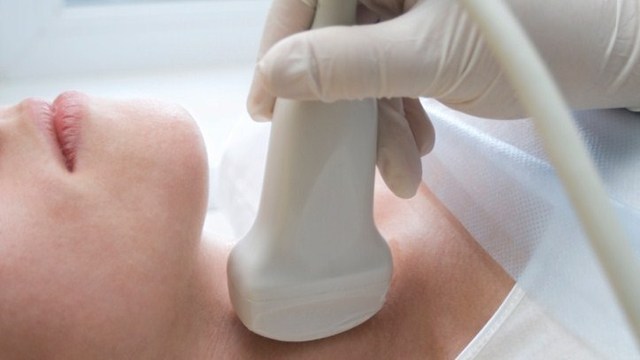
My approach to diagnosing hypothyroidism is to start with a careful history and physical. Then an endocrinologist should perform a hands-on thyroid examination to determine if the patient has a goiter. Blood TSH, free T4, free T3 and anti-TPO antibodies should be tested. Patients with an enlarged thyroid and/or a positive anti-TPO antibody test AND a TSH greater than 4.0 mU/mL should be considered to have primary hypothyroidism. Patients without an enlarged thyroid and without a positive anti-TPO antibody test but WITH a TSH greater than 7.5 mU/mL should also be considered to have primary hypothyroidism. Patients with a free T4 of less than 0.9 mg/dL and a TSH less than 1.0 mU/mL are likely to have central hypothyroidism. Patients with symptoms of hypothyroidism but who do not meet these criterion should be watched and retested in six months.
Hypothyroidism Treatment
Once hypothyroidism is diagnosed, there are many treatment options, including synthetic L-thyroxine
(T4) preparations (Synthroid, Levoxyl and Unithroid), synthetic L-triiodothyronine (T3) preparations (Cytomel), synthetic T4/T3 combinations (Thyrolar) and dessicated thyroid preparations (Armour, Naturethroid, Bio-Throid, and Westhroid).
All of the L-thyroxine preparations contain the same active ingredient, but contain different fillers and have different quality control. Until recently, Synthroid did not have FDA approval, but now all L-thyroxine preparations have FDA approval. Thyrolar and the dessicated thyroid preparations probably have a higher T3/T4 ratio than desirable and thus, I often give a lower amounts of these preparations supplemented with T4.
Most endocrinologists use L-thyroxine preparations for the initial treatment of all forms of hypothyroidism. Although the use of L-thyroxine (T4) compared to L-triiodothyronine (T3) may be surprising, as T3 is the more bioactive thyroid hormone, T4 is most frequently used. This is because tissues convert T4 to T3 to maintain physiologic levels of the T3. Thus, administration of T4 results in bioavailable T3 and T4. As T4 is more stable than T3, T4 therapy gives even blood levels, while T3 therapy leads to high levels after taking the medicine and low levels before the next dose. Armour thyroid is the least expensive preparation. Because Armour thyroid comes from pig thyroids, some endocrinologists feel that there is high pill to pill variability, but this is unlikely to be true.
A recent study published in New England Journal of Medicine in 1999 suggested that brain T4 to T3 conversion may be impaired in some patients and that a select group of patients should be treated with both T4 and T3. Other studies published in Journal of Clinical Endocrinology and Metabolism in 2003 suggested that addition of T3 to T4 treatment is not needed for most patients with primary hypothyroidism.
I recommend that most patients be started on a T4 preparation, which improves symptoms in the large majority of the patients. I have found that most patients prefer Levoxyl or Unithroid to Synthroid, but this varies with each patient. After initial treatment with T4, I adjust their T4 dose until their TSH is between 0.5 and 2 mU/mL. If they remain symptomatic, despite an optimized TSH, then low doses of T3 given two or three times a day can be added cautiously to T4. If patients start with a low blood free T3 level, then I am more inclined to treat them with T4 plus T3. On T4 plus T3 therapy, I use blood tests to make sure the free T4 and free T3 are in the upper-normal range. The TSH value is usually suppressed on combination treatment.
A percentage of patients will have symptomatic improvement on T4 plus T3 therapy. For those that do not improve, I occasionally recommend treatment with dessicated thyroid preparations, usually Armour, plus synthetic T4. This combination is needed, as desicatted thyroid preparations
have a higher T3/T4 ratio than desirable and need to be supplemented with synthetic T4 to achieve
normal ranges of both hormones. Again, I aim for a free T4 and free T3 in the upper-normal range.
Patients with central hypothyroidism can be treated with any of the preparations available for patients with primary hypothyroidism. The difference is that treatment needs to be monitored by aiming for a free T4 and free T3 in the upper-normal range, as TSH is suppressed with proper treatment. Patients with both central and primary hypothyroidism also needed to be treated by aiming for a free T4 and free T3 in the upper-normal range.
I was diagnosed with primary hypothyroidism in February 2003. An endocrinologist performed an examination of my thyroid gland and I was found to have a goiter. My blood values showed a TSH of 8 mU/mL and strongly positive anti-TPO antibodies. I have a strong family history of Hashimoto’s thyroiditis, but I was lucky to be fairly asymptomatic prior to treatment. I am now on 150 mg a day of Levoxyl, have a TSH of 1.9 mU/mL and feel great. I have lost a few pounds on T4 therapy and my cholesterol profile has improved.
For more information about Dr. Friedman’s endocrinology clinic, visit his Web site at
www.goodhormonehealth.com. To schedule an appointment with Dr. Friedman, please e-mail
Kimberly at [email protected].
Link to article: http://www.goodhormonehealth.com/Hypothyroidism-final.pdf
Add a Comment3 Comments
Thank you for this informative post. I was diagnosed with hypothyroidism following the birth of my first son in 2006 and experienced many of the symptoms you have listed. I trusted my doctors completely assuming they knew everything there was to know about this disease, especially when I became pregnant again in late 2008. How wrong I was! Under their care my TSH, the gold standard for measuring thyroid function, rose high above the safe range for pregnancy and I miscarried. I vowed to myself that I would research everything there was to know about hypothyroidism and warn other women. I fulfilled my vow and launched my blog Hypothyroidmom.com in memory of the baby I lost to hypothyroidism.
October 21, 2012 - 5:48amThis Comment
Thank you for this useful post. However, hypothyroidism isn't the only condition that may cause the loss of hair in an individual but if the thyroid gland is under controlled and still there is a loss of hair, one must think of some other reasons. Hair loss, if not hereditary caused, may be signal of something ‘unfair’ with the body and one should pay an awareness of it.
December 20, 2010 - 2:53amThis Comment
Thank you for the informative post. I am an RN who was just diagnosed with hypothyroidism as well (TSH 122, T4 0.4, positive antibodies and multiple nodules on thyroid ultrasound). I just started levothyroxine 50mcg last week. I am waiting to feel better, and also to see ENT regarding possible biopsies of nodules.
Any words of advice about nodules?
Heather
July 24, 2009 - 8:25amhttp://3underthree.blogspot.com/2009/07/coming-clean.html
This Comment