





Improved
6112 HealthChanged
3786 LivesSaved
3568 Lives0 lives impacted in the last 24 hrs Learn More
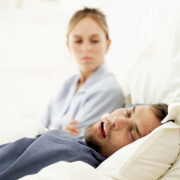 Photo: Getty Images
It is the wee hours of the night and you are tossing and turning in your bed. Your partner and or pet are snoring away and you can’t catch any ZZZZZs.
You try to relax but 20 minutes had just passed on the clock. Now, you are becoming frustrated and this isn’t helping your sleepless situation.
You are not alone. According to CNN, ʺabout one-third of all U.S. adults experience weekly difficulties with nighttime sleep, and an estimated 50 to 70 million people complain of associated daytime impairment.ʺ
Your insomnia may also be carrying over to the workplace. ʺInsomnia costs [the]U.S. $63 billion annually in lost productivity,ʺ said CNN.
CNN also revealed insomnia rates are higher among women.
What is the exact cause of your sleeplessness? According to the University of Maryland Medical Center (UMMC), ʺabout 50 percent of insomnia cases have no identifiable cause.ʺ
Don’t be discouraged by this percentage because there are remedies for your sleepless nights. However, some of these reasons for sleep-deprived nights, according to UMMC and the National Heart Lung and Blood Institute (NHLBI), include:
• The snoring partner. Their snoring interrupts you sleep patterns.
• Medication side effects. NHLBI website stated ʺcertain asthma medicines, such as theophylline, and some allergy and cold medicines can cause insomnia. Beta blockers also can cause the condition. These medicines are used to treat heart conditions.ʺ
• Emotional disorders (anxiety, depression, post traumatic stress disorder). According to UMMC, studies have revealed that between 40 to 60 percent of people who have insomnia show signs of depression.
• Neurological disorder (Parkinson's disease and Alzheimer's disease)
• Stress
• Menopause and hot flashes. More than 30 percent of women experience insomnia
• Disruption of circadian rhythms -- shift work, jet lag, or vision loss can impair the body's natural clock.
• Sleeping disorders such as restless legs syndrome and sleep-related breathing problems
• Hormonal changes during menstrual cycle -- insomnia may occur during menstruation. Sleep improves mid-cycle with ovulation.
• Conditions that cause chronic (ongoing) pain, such as arthritis and headache disorders
• Conditions that make it hard to breathe, such as asthma and heart failure
• An overactive thyroid
• Gastrointestinal disorders, such as heartburn
• Stroke
• Substance abuse, excessive amounts of caffeine, alcohol, smoking
• Excessive computer work -- too much mental stimulation, particularly close to bedtime, can make it difficult to fall asleep.
Help is available. The remedy many be as simple as closing the curtains and turning down the light on your alarm clock.
Here are some additional tips from UMMC and NHLBI to help ʺput you to sleep.ʺ
• http://www.nhlbi.nih.gov/health/health-topics/topics/inso/treatment.html
• http://www.umm.edu/sleep/simp_things.htm
References:
Insomnia. University of Maryland Medical Center | Home. Retrieved February 14, 2012, from
http://www.umm.edu/altmed/articles/insomnia-000096.htm
Insomnia costs U.S. $63 billion annually in lost productivity - CNN.com. CNN.com - Breaking News, U.S., World, Weather, Entertainment & Video News. Retrieved February 14, 2012, from
http://www.cnn.com/2011/09/01/health/insomnia-cost-productivity/index.html
What Causes Insomnia? - NHLBI, NIH. NIH Heart, Lung and Blood Institute. Retrieved February 14, 2012, from
http://www.nhlbi.nih.gov/health/health-topics/topics/inso/causes.html
Reviewed February 15, 2012
by Michele Blacksberg RN
Edited by Jody Smith
Add a CommentComments
There are no comments yet. Be the first one and get the conversation started!