




Improved
6112 HealthChanged
3786 LivesSaved
3568 Lives0 lives impacted in the last 24 hrs Learn More
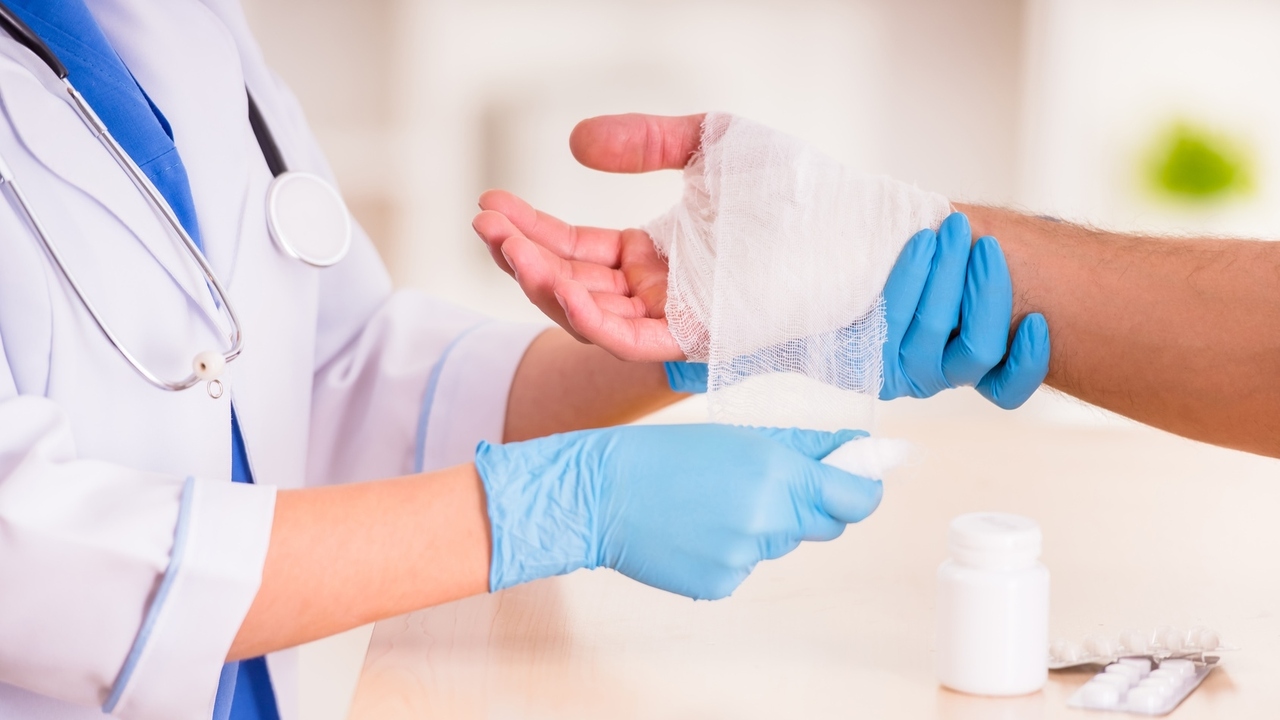 georgerudy/Fotolia
Burns are the fifth cause of accidental deaths in children and adults, killing nearly 3,500 adults and children each year. Among children 4 years of age and under who are hospitalized for burns, scalding is the cause 65 percent of the time.(1)
Seventy-five percent of scalding burns are preventable.(1)
If you have children in the house, stop reading right now and turn down your water heater to 120º.(2)
Second-Degree Burns
A second-degree burn is more serious than a first-degree burn and usually forms a blister. A second-degree burn occurs when the epidermis and dermis layer of skin are burned.
It is recommended that if a second-degree burn is over more than 10 percent of your body, you should seek medical treatment immediately.
According to various medical sources, symptoms of second-degree burns include:
- Blisters: they sometimes break open and the area looks wet with a bright pink to cherry red color
- Swollen skin
- Red or splotchy skin color
- Severe pain
- Deep redness
- Burned area which may appear wet and shiny
- Skin which is painful to the touch
- Burned area which may be white or discolored in an irregular pattern
Treatments for Second-Degree Burns(4)
If a burn is caused by electricity or chemicals, call 911 immediately. For any type of burn in a child, contact your doctor’s office for guidance as to how to proceed.
For other burn injuries, seek immediate medical attention for a second-degree burn that is more than 2 or 3 inches wide, or covering the hands, feet, face, groin or joints of the body.
The American Academy of Family Physicians recommends the following tips on how to treat a second degree burn:
- Soak the burn in cool water for 15 to 30 minutes
- For small burns, place a damp, cool, clean cloth on the burn for a few minutes every day
- Put on an antibiotic cream or other creams or ointments prescribed by your doctor
- Cover the burn with a dry non-stick dressing held in place with gauze or tape
- For pain and swelling, take an over-the-counter pain reliever like ibuprofen or acetaminophen
- DO NOT give aspirin to children under 12 years of age
- Make sure your tetanus vaccine is up to date
- Change the dressing daily
- Wash your hands with soap and water
- Gently wash the burn
- Apply an antibiotic ointment (if not allergic)
- If the burn area is small, a dressing may not be needed during the day
Second-degree burns generally heal in two or three weeks without further treatment.
Sometimes the burn will take more than three weeks to heal because of its size. Also, as the burn heals it will itch.
DO NOT itch or scratch the burn. Itching and scratching could cause an infection.
Contact your doctor if you notice signs of an infection. Those signs may include:
- Drainage or pus from the burned skin
- Fever
- Increased pain
- Red streaks spreading from the burn
Swollen lymph nodes
Preventing Burns at Home
In addition to turning down the water heater to 120º, take further precautions to prevent burn injuries in the home.
Install smoke detectors in every room, turn pan handles inward when cooking, and practice fire safety with children.
Keep matches and lighters out of reach and have fire extinguishers in key places: the kitchen, the garage, the basement, and near every fireplace.(4)
Be safe and be well.
Originally written September 19, 2011
Updated August 15, 2016 by Misty Jacobs
Reviewed August 15, 2016 by Michele Blacksberg RN
Edited by Jody Smith
1) Burns in Children. StanfordChildrens.org. Retrieved August 11, 2016.
http://www.stanfordchildrens.org/en/topic/default?id=burns-in-children-90-P01887
2) Preventing Burn Injuries. StanfordChildrens.org. Retrieved August 11, 2016.
http://www.stanfordchildrens.org/en/topic/default?id=preventing-burn-injuries-90-P01750
3) Second-Degree Burns (Partial Thickness Burns). Retrieved August 11, 2016. StanfordChildrens.org.
http://www.stanfordchildrens.org/en/topic/default?id=second-degree-burns-partial-thickness-burns-90-P01757
4) Burns. MedlinePlus.gov. Retrieved August 11, 2016.
https://medlineplus.gov/burns.html
5) Burns . KidsHealth - the Web's most visited site about children's health. Retrieved August 15, 2016.
http://kidshealth.org/parent/firstaid_safe/emergencies/burns.html#
6) Burns | Dr. Sears Official Website | Parenting Advice, Parenting Books & more. Dr. Sears Official Website | Parenting Advice, Parenting Books & more. Retrieved August 15, 2016.
http://www.askdrsears.com/topics/skin-care/burns
7) First Aid: Burns -- familydoctor.org. Health information for the whole family -- familydoctor.org. Retrieved August 15, 2016.
http://familydoctor.org/familydoctor/en/prevention-wellness/staying-healthy/first-aid/first-aid-burns.html
8) Burns. University of Maryland Medical Center | Home. Retrieved August 15, 2016. http://umm.edu/health/medical/altmed/condition/burns
9) Natural Treatment of Burns - Dr. Weil. DrWeil.com - Official Website of Andrew Weil, M.D.. Retrieved August 15, 2016.
http://www.drweil.com/drw/u/ART02917/Burns.html
10) MORGAN, ERIC D., MAJ, MC, USAAmbulatory Management of Burns. Am Fam Physician. 2000 Nov 1;62(9):2015-2026.
http://www.aafp.org/afp/2000/1101/p2015.html
Add a Comment12 Comments
I recently got 2nd degree burn at work on my back/side and right arm. I went to er, now what I dont understand is everything I read says I should be wrapped up but was never told could this be becasue I have big blister bigger then 50 cent piece on me?
January 15, 2018 - 10:12pmThis Comment
Hello Anon
Call your doctor or the number on the paperwork from the ER to ask what to do.
Susan
January 16, 2018 - 5:12pmThis Comment
I got 2nd degree burns on my legs, went to ER and the DR gave me treatment of Saline, silvadine cream, gauze there was discharge on my right leg because the skin had burned off and it was painful. My left leg has a couple of huge blisters, one on my right leg is swollen a bit. The Doctor also put me on Antibiotics just as a precaution for infection on the right leg. I put my right leg up but when I brought it down it really hurt.
September 22, 2017 - 2:10pmThis Comment
I have a tea scald on my arm, bicep. It's been over 2 weeks and I have tiny blisters developing around the main burn site. I think I'm allergic to non stick bandages!!! What's worst, I read that I should move my arm regularly so the skin doesn't heal tight, but I find when I do it breaks open again! I'm frustrated, I've never had a wound take so long to heal.
February 4, 2017 - 5:28pmThis Comment
Sounds very uncomfortable!
In general, second degree burns should be evaluated by a medical professional.
Allergy to adhesives from bandages as well as topical antibiotics (such as neomycin or bacitracin) are common causes of irritation at the site of an injury.
For patients with concerns for irritation from adhesives, a non-stick gauze pad (e.g. Telfa) held in place with either paper tape or a self-adhering bandage (e.g., Coban or VetFlex) can be helpful.
Keeping the area moist with plain petrolatum (e.g. plain Vaseline) will speed the healing and prevent a dry sensation.
Hope this helps.
February 8, 2017 - 1:14pmThis Comment
Slipped and fell in the kitchen while carrying a pot of boiling water..second degree burns down my right rib cage.
November 20, 2016 - 2:59amWent to Urgent care where it was bandaged and I was given a script for silvadine..My question is. 36 hours later it is very wet/weepy where the blisters have broken..I have changed the dressing and applied more cream
Everything is about immediate first aid..but now what should I do? Unbandage it and let it dry out some.. or should I be keeping it moist with the cream obvioulsy this is not going to heal for days yet.
This Comment
Hello Anonymous,
Because blisters have broken open, a bandage is needed. To further help prevent infection, apply a clean bandage whenever your bandage gets wet or soiled. If a bandage is stuck to a burn, soak it in warm water to make the bandage easier to remove. If available, use a nonstick dressing.
Superficial second-degree burns usually heal in about three weeks, as long as the wound is kept clean and protected. Deep second-degree burns may take longer than three weeks to heal.
Call to schedule a follow up appointment with your primary care physician, who can take a look at the burn, and guide you in further home care.
Wishing you a quick recovery,
November 24, 2016 - 5:21amMaryann
This Comment
For those who found our original photo to be difficult to look at, we have changed to an image that we hope will be a more comfortable fit.
August 15, 2016 - 11:50amThis Comment
I just want to share my experience with 2nd degree kitchen burns on my hands over the years. The largest burn (actual contact area with the hot item) about 1 1/2 inches by 1/2 inch, happened just 60 hours ago. Immediately after the burn the skin on my hand (on my outer palm below pinky) the contact area was white and very painful. I ran cold tap water over it for several minutes(winter time so water is pretty cold). I then broke open vitamin E capsules and squeezed the oil over the burn and much of the area surrounding it and kept it fully covered over the next 6 hours. For smaller burns I kept it on for a shorter periods. In 12 hours the pain was gone and the burn was only slightly red, no blister, skin fully intact. It took about 48 hours for a very small blister to form in the center of the burn area (1/4 inch x 1/2 inch). It is only slightly raised. Now at only 60 hours after, the contact area only looks discolored(a little darker but not red) with just the slightest blister at the center.
February 6, 2016 - 9:47amNo where have I found Vitamin E as a first line of treatment but when I use it immediately, it really works for me.
This Comment
Thanks so much for the story. I recently (2 hours ago) got a small 2nd degree burn from touching a hot pan which I treated with cool water and paracetamol. I also have a bandage on it now. I have been looking for a healing time for a while now so thanks for the information.
August 1, 2016 - 7:28amThis Comment