




Improved
6139 HealthChanged
3797 LivesSaved
3584 Lives0 lives impacted in the last 24 hrs Learn More
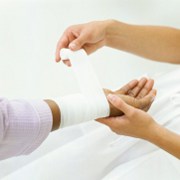 Photo: Getty Images
According to the American Burn Association more than 450,000 people visit the emergency room and receive treatment for burns annually. More than 66 percent of burns occur in the home.
There are three types of burns. The mildest type of burn is known as the first-degree burn. With a first-degree burn, only the top layer of the skin is burned.
Symptoms of first-degree burns include:
• Redness
• Skin is painful to touch
• Minor swelling
The first-degree burn generally heals on its own and takes three to six days to completely heal. Also, the burned skin may peel away in 24 to 48 hours after the initial burn. This will leave a very thin layer of skin which will be red and very sensitive to touch.
First-degree burns need to be treated quickly. Quick treatment reduces the temperature of the skin and damage to the burn area.
Do not apply ice to a first-degree burn. Ice can cause additional damage to the skin. Also, never apply powder, butter, grease, or any other ʺurban legendʺ remedies to a first-degree burn. These old wives' tale remedies can further irritate your skin and cause a skin infection.
According to the American Academy of Family Physicians, the following steps need to be taken to treat first-degree burns. First-degree burn treatment includes:
• Removing the skin from the heat and burn source.
• Immediately removing clothing from the burn area.
• Soaking the burn in cool water for at least five minutes. The cool water helps reduce swelling by pulling heat away from the burned skin.
• Treating the burn with a skin care product like aloe vera cream or an antibiotic ointment three times a day.
• Wrapping a dry gauze bandage loosely around the burn for 24 hours. This will protect the area and keep the air off of it.
• Taking acetaminophen or Ibuprofen to reduce the pain and swelling.
In an emergency, if cool water is not available, any cool drinkable liquid that is available can be applied, or you can apply a clean, cold compress to the burn for approximately three to five minutes.
Finally, the American Academy of Family Physicians recommends seeing a doctor for a first-degree burn if:
• The burn is on your face, over a major joint (such as the knee or shoulder), on the hands, feet or genitals.
• A first-degree burn covers an area larger than 2 to 3 inches in diameter.
Sources:
American Burn Association. American Burn Association. Retrieved September 18, 2011, from
http://www.ameriburn.org/resources_factsheet.php?PHPSESSID=71a33a3cc8b87e7f3e0ea9880be92f3d
First-Degree Burns. Children’s Hospital of Pittsburgh. Retrieved September 18, 2011, from
http://www.chp.edu/CHP/P01744
CDC Mass Casualties | Burns. CDC Emergency Preparedness & Response Site. Retrieved September 18, 2011, from http://www.bt.cdc.gov/masscasualties/burns.asp
Burns . KidsHealth - the Web's most visited site about children's health. Retrieved September 18, 2011, from http://kidshealth.org/parent/firstaid_safe/emergencies/burns.html#
First Aid: Burns -- familydoctor.org. Health information for the whole family -- familydoctor.org. Retrieved September 18, 2011, from http://familydoctor.org/online/famdocen/home/healthy/firstaid/after-injury/638.html
Treating first-, second-, and third-degree burns - FamilyEducation.com. Family Life, Child Development, Nutrition, Teen Health & School Safety - FamilyEducation.com. Retrieved September 18, 2011, from
http://life.familyeducation.com/wounds-and-injuries/first-aid/48249.html
First-Degree Burns - Comer Children's Hospital at the University of Chicago. Comer Children's Hospital at the University of Chicago - At the Forefront of Kids' Medicine. Retrieved September 18, 2011, from
http://www.uchicagokidshospital.org/online-library/content=P01744
Exercises For A First Degree Burn Patient | LIVESTRONG.COM. LIVESTRONG.COM - Lose Weight & Get Fit with Diet, Nutrition & Fitness Tools. Retrieved September 18, 2011, from
http://www.livestrong.com/article/466694-exercises-for-a-first-degree-burn-patient/
Reviewed September 19, 2011
by Michele Blacksberg RN
Edited by Malu Banuelos
Add a Comment1 Comments
Hello Mr. Kelby,
Find your writeup very informative but sorry to interrupt that I find some thing more which you can include in your treatments that is rubbing some type of petroleum jelly gently on the burned area and also not to rub too much since the skin lost it's smoothness and is sensitive enough. This will provide some moisture to the skin so heating area will recovered faster.
I find this one more treatment from the following source:
http://www.gethealtharticles.com/2/first-degree-burn-treatment/
If you find it informative then share it with other people as well.
Thanks
May 21, 2013 - 12:03amThis Comment