



Improved
6112 HealthChanged
3786 LivesSaved
3568 Lives0 lives impacted in the last 24 hrs Learn More
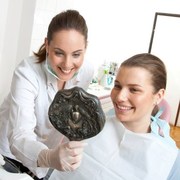 Photo: Getty Images
Dental implants are permanent dentures that are fixed into the jaw bone. A metal rod (usually titanium) is placed into the jawbone and the false teeth and crowns and screwed onto the implant.
This can be done if:
• You don’t like the idea of removable dentures
• Your dentures don’t stay firmly in your mouth
• If your jawbone is shrinking due to missing teeth, an implant may slow down this process
• You have lost teeth at a younger age, for instance, due to accident
Having dental implants fitted requires an operation or two. You will be given a local anesthetic (sometimes a general anesthetic in a hospital). The dentist will make a cut in your gum and then drill a hole in your jawbone and fit the implant through the hole. If you are having just one operation, the false teeth will be screwed onto the implant as soon as it is put in.
In a two-stage operation, the implant is fitted and hidden under your gum so that you can’t see it, you will have to wait several months while your gum heals. You will be given temporary bridges or removable dentures during the healing phase. Once healed, the false teeth are attached to the implant.
After Surgery
You may have some post-operative bleeding so you will have to stay in the dentist’s care until this has stopped. You will be numb for several hours so it is best not to eat during this time in case you accidently bite your mouth.
If you have had a general anaesthetic in hospital, you will normally be discharged on the same day but you will need to have someone else drive you home and you will need someone to stay with you for 24 hours afterwards.
Dental implants are expensive but depending on the premiums you pay, you may be able to get them covered on your dental insurance.
Risk of complications from dental inplants are low but it is important to discuss these with your dentist.
Sources:
Dental Implants, Bupa. Web. 20 November 2011. http://www.bupa.co.uk/individuals/health-information/directory/d/dental-implants
Does Dental Insurance Cover My Dental Implants? Dental Implants US. Web. 20 November 2011.
http://www.dentalimplants.us/patients/247/dental-insurance-for-dental-implants
Joanna is a freelance health writer for The Mother magazine and Suite 101 with a column on infertility, http://infertility.suite101.com/. She is author of the book, 'Breast Milk: A Natural Immunisation,' and co-author of an educational resource on disabled parenting.
Reviewed November 21, 2011
by Michele Blacksberg RN
Edited by Malu Banuelos
Add a CommentComments
There are no comments yet. Be the first one and get the conversation started!