


Hypermenorrhea

Get Email Updates

Related Topics

More

Hypermenorrhea Guide

Rosa Cabrera RN Guide

Have a question? We're here to help. Ask the Community.

ASK

Free Newsletter

Receive the latest and greatest in women's health and wellness from EmpowHER!

ask: I have been having 3week-1 month long periods w/ large clots. What could be causing the length and clots? Should I worry?

By sueannrush August 29, 2008 - 4:39pm
 
Rate This
30 comments View Comments

I'm 29 yrs. old and I've been having periods that last anywhere between 3 weeks and 1 month with about a 2 week break between each period. Along with my period I have huge clots. This has been happening since I had my daughter in 2006. I saw a doctor about it and he just put me on birth control pills to try and regulate it, but that just caused me to have blood clots in my lungs. I went on Coumadin and my period was normal while I was on the meds. Now I'm off Coumadin and my period went back to being long again and with the huge clots. Is there something my doctors should be testing for? Can this cause complications with conceiving again? What is wrong with my cycle?

30 comments View Comments
 
Rate This

All user-generated information on this site is the opinion of its author only and is not a substitute for medical advice or treatment for any medical conditions. Members and guests are responsible for their own posts and the potential consequences of those posts detailed in our Terms of Service.

Around the Web

Add a Comment30 Comments

Susan Cody HERWriter Guide

Hi Sueann

Thank you for your question and I am sorry you are experiencing this unpleasant and worrisome problem.

Have you been tested for PCOS? (Polycystic Ovary Syndrome)?
Even though most women with PCOS have infrequent periods (unlike you), they can experience clotting and irregularity.
Click here for more info http://www.pcosupport.org/

And yes, your problem may cause issues with you conceiving again because it doesn't sound like you can tell you are ovulating, unlike women with normal cycles.

Some women have said that by eliminating sugars and 'white' foods like bread and rice has helped. Others have said that a D& C has helped. A D&C (Dilation and curettage) is where the uterus is widened and tissue and the lining of the uterus is scraped out.

I'm glad the Coumadin helped you but as I am sure you know, that drug is certainly not something you take if trying to get pregnant or pregnant.

You may also have uterine fibroids, where very heavy bleeding is a symptom.
Click here for more info http://www.4woman.gov/faq/fibroids.htm#5

Please talk to your doctor about these and other possibilities and keep us posted. Be as proactive as you can and explain to your doctor how much this is affecting you. You get an average of 5 minutes to talk with your doctor during a visit so make the most of it and absolutely request to be taken seriously and listened to!

August 30, 2008 - 7:54am
libraponi

I'm 39 years old and have had one child (now 17 years old). A year ago I started having periods that last anywhere from 2 weeks straight, or heavy interrmitent bleeding. Every period comes with excruciating cramping, fatigue and huge disgusting blood clots. I've had uterine fibroids removed 13 years ago via laparoscopy and had an ovarian cyst removed almost 2 years ago. I'm scheduled to see a new Gyn. next month and the term "cryo ablation" has been mentioned by primary care physician.

Has anybody had either cryo ablation or REA (known as 'roller-ball' ablation)? I'm curious as to the pro's and cons of each - especially recovery time.

Thank you.

~ Michelle

July 7, 2009 - 9:36am
Diane Porter

Michelle, we have quite a few women on our site who have experience with cryoablation procedures. There are even a couple of long threads where various women have talked about how it went for them and what their recoveries were like. You can find them by typing cryoablation into our search box. Here is the thread with the most conversation on it:

http://www.empowher.com/community/ask/has-anyone-had-her-option-cryo-abl...

I don't come up with anything on our site on roller-ball ablation or REA. It seems like an older procedure? What has your doctor told you about its pros and cons?

Here's a 2003 study that says the cryoablation requires less anesthesia but that the REA (called electroablation here) reduced menstrual bleeding about 10% more:

http://www.journals.elsevierhealth.com/periodicals/aagl/article/PIIS1074...

And here's a reference that says that cryoablation patients had about a 1% to 2% better chance of success at 12- and 24-months afterward than electroablation patients, and cryablation needed retreatment about 1% less often than electroablation:

http://www.ncbi.nlm.nih.gov/pubmed/12634643

All those statistics are very close together. I'm wondering if your doctor feels that one treatment has an advantage over the other for any reason? Can you share her or his reasoning with us here?

July 8, 2009 - 9:38am
libraponi (reply to Diane Porter)

Thank you so much for your response. I'd be happy to share my gynecologist's opinion and recommendations after I see him (end of August). One thing that I failed to mention in my previous comment is that my 17 year old daughter has recently began experiencing the same symptoms and, she too, had an ovarian cyst removed around the beginning of '09. I do intend to speak with my gynecologist about this as well about hereditary and what she should expect in her adulthood.

July 8, 2009 - 10:12am
Diane Porter

Libraponi (Michelle),

In order to get more readers to see your question, I've broken it out under a title of its own. You can link to it here:

http://www.empowher.com/community/ask/cryoablation-vs-electroablation-re...

July 8, 2009 - 9:42am
Image
Anonymous

I have been having periods that last over two months I am 19 my doctor put me on birth control an didn't explain what is wrong sometimes they are light and sometimes they are heavy will I be able to have children?

December 11, 2009 - 5:40am
Diane Porter (reply to Anonymous)

Anon,

First of all, welcome to EmpowHer! And thank you so much for your question.

How long have you been having these extremely long periods, Anon?

And do you mean they last two months whether they are light OR heavy?

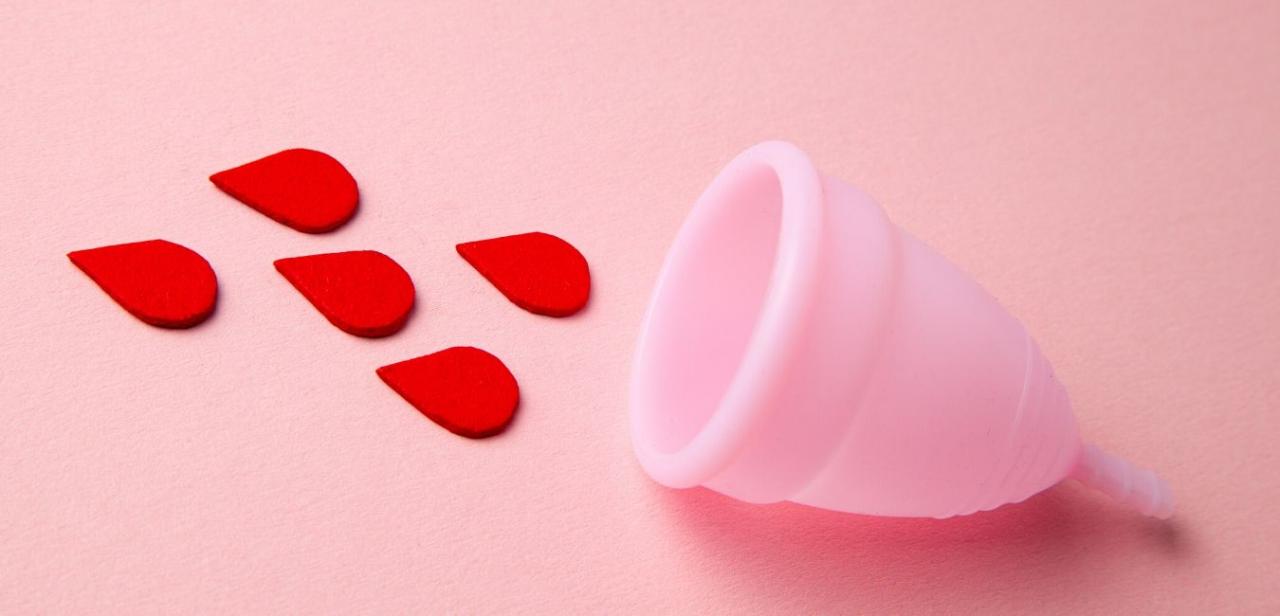
What you have is called Hypermenorrhea (big name) or Menorrhagia (not quite as big a name), which stands for excessive bleeding during your period. About 10% of all women have this condition.

Here's some information from ourEmpowHer Encyclopedia page on this. It covers a lot of areas that may not apply to you because you are so young, but you may be interested in all of it:

Causes

In some cases the cause of menorrhagia is unknown. However, many conditions have been known to be associated with menorrhagia. These include:

◦Menstrual cycle hormone dysfunction (this means perhaps a hormonal imbalance; easy to test for)
◦Cervical or endometrial polyps
◦Uterine fibroids
◦Infection (pelvic infections)
◦Blood-clotting disorders (you can be tested for this)
◦Anticoagulant medications (blood thinners)
◦Anti-inflammatory medications (large amounts over a long period of time)
◦Liver, kidney, or thyroid disease
◦Problems with an intrauterine device (IUD)
◦Ectopic pregnancy
◦Ovarian cysts
◦Chronic medical conditions
◦Cancer of the uterus or cervix (rare)
◦Vaginal injury from trauma or sexual abuse
◦Complications from pregnancy, such as miscarriage

Risk Factors

A risk factor is something that increases your chance of getting a disease or condition. People at greatest risk for menorrhagia include:

◦Adolescent girls who have started menstruation within the last 12 to 18 months
◦Women approaching menopause
◦Women with hereditary bleeding disorders
◦Women who are obese

SymptomsSymptoms of menorrhagia include:

◦Menstrual bleeding lasting more than seven days
◦Unusually heavy bleeding (soaking through a sanitary napkin or tampon every hour)
◦Menstrual flow requiring change of sanitary protection during the night
◦Menstrual flow including large clots
◦Menstrual flow interfering with lifestyle
◦Fatigue and/or shortness of breath (symptoms of anemia )

Diagnosis

Your healthcare provider will ask about your symptoms and medical history. A physical examination including pelvic exam will be done as part of the evaluation. Tests may include:

◦Pap test
◦Blood tests
◦Pregnancy test
◦Ultrasound —a test that uses sound waves to examine your reproductive organs (uterus and ovaries)
◦Endometrial biopsy —removal of a sample of endometrial tissue to look for changes in the lining of the uterus
◦Dilation and curettage (D&C)—scraping of the inner lining of the uterus
◦Hysteroscopy—examination of the cervix and fallopian tubes using a telescope-like viewing device

Treatment

Treatment of menorrhagia will depend on the underlying cause. Women who experience persistent excessive bleeding should discuss with their healthcare provider whether to take iron supplements to prevent anemia.

If there is no medical disorder causing your menorrhagia, your doctor may prescribe the following:

Medications
These may include:

◦Hormone therapy (estrogen and/or progestogen hormones by mouth, skin application, vaginal application, or injection)
◦An IUD that releases a progestogenic drug (Mirena)
◦Nonsteroidal anti-inflammatory drugs such as ibuprofen (Advil, Motrin), naproxen (Aleve, Naprosyn), and mefenamic acid (Ponstel, Ponstan)

Surgical Procedures
Procedures may include:

◦Dilation and curettage (D&C)
◦Operative hysteroscopy—A long, thin instrument is inserted into the uterus that can aid in removal of a polyp or fibroid.
◦Endometrial ablation or resection—The surgical removal of the lining of the uterus using heat, microwave, or surgical tools. After this procedure, you will not be able to carry a pregnancy.
◦Hysterectomy —The surgical removal of the uterus. After this procedure, you will not be able to carry a pregnancy. If the ovaries are also removed, early menopause will follow.

Your age, overall health, and medical history should be considered when choosing treatment. Discuss with your doctor your plans for having children.

----
In terms of having children, it's first important to get your cycle balanced and to figure out why it goes so long. Getting pregnant has to do with making sure you are ovulating and that your body is building up the uterus in case a fertilized egg happens by. All of that is a function of hormones such as estrogen and progesterone.

Because you are young and you haven't been having periods for more than a few years, it makes sense that your doctor first tries birth control pills to help regular your cycle. How long ago did you start them, and does it seem to be helping?

December 11, 2009 - 9:25am
Image
Anonymous (reply to Diane Porter)

Well I have been on birth control since I was about sixteen and I got off of them for about 8 months to a year and I was put back on them recently I am starting my second month today of being back on it...everything was fine I was regulating good an then I started bleedin in August and didn't stop until a month ago when I was put back on the pill...I understand I am nineteen but my doctor treats me like a child and doesn't say anything accept for ok let's try a new pill...I will be married in less than a year and I would like to kno what is going on so we can start planning our future

December 11, 2009 - 9:44am
Diane Porter (reply to Anonymous)

Anon,

Plain and simple: You need a new doctor.

There is no excuse for a doctor who treats his or her patient like someone who doesn't need detailed information about what is going on in her body.

Don't be shy about finding a new doctor, now. Ask your friends if they have an ob/gyn that they like. And if they say they do, ask about how that ob/gyn acts with them: Do they get detailed information? Is the doctor's manner one of "I am busy, don't bother me?" Or is it, "I am very interested in you, what questions do you have?"

Same with friends in the workplace. Ask them if they have a doctor who freely shares information.

If you can't get a personal recommendation, search the web for ob/gyn offices within your area. Visit the doctors' web sites and see what they say. Very often, the web sites reflect the attitude of the office.

Call your old doctor's office and ask for a copy of your medical records. You can deal with the front office, you don't have to talk to your doctor. If they ask, just tell them you're getting a second opinion (which is true). Doctors are accustomed to this; it happens all the time. Get your records and make an appointment with the new doctor. Take your records with you when you go, and talk about this issue from the very beginning.

Especially since you are beginning a new marriage soon and thinking about planning the future, you need a doctor who treats you like a smart, thoughtful adult with important questions. Don't stop until you find it.

Promise?

December 11, 2009 - 10:03am
Image
Anonymous (reply to Diane Porter)

I promise...I'm just really concerned because my soon to be is in the marines and we definitely want children in a few years...I just get so irritated because this doctor treats me like I'm a sixteen year old pregnant girl...he has been known to be irritable with pregnant teenagers who are unwed an he treats me no different

December 11, 2009 - 10:23am
Image CAPTCHA
By hitting submit, you agree to EmpowHER's terms of service and privacy policy

Take our Featured Poll

Do you know what your cholesterol levels are? :
View Results