





Improved
6112 HealthChanged
3786 LivesSaved
3568 Lives0 lives impacted in the last 24 hrs Learn More
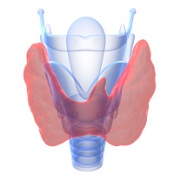 Photo: Getty Images
Congenital hypothyroidism (CH) is a condition that occurs in infants when the thyroid gland does not produce enough thyroid hormone. Thyroid hormone is critical to brain growth and development, so babies born with this condition are at risk of intellectual disability, abnormal growth, and neurological impairment.
The thyroid is the gland that produces thyroid hormone. This hormone is a chemical messenger used by the brain to control metabolism which is the way the body uses energy. In infants, thyroid hormone is also critical for brain development. The amount of thyroid hormone produced by the gland is controlled by another chemical messenger known as thyroid stimulating hormone (TSH). TSH is produced by the pituitary gland.
Hypothyroidism can result if the body does not produce enough TSH or if the thyroid does not respond to the TSH to produce enough thyroid hormone. Another possible cause of hypothyroidism is poorly formed thyroid hormones that do not work the way they are supposed to.
The most common cause of congenital hypothyroidism is a thyroid gland that does not develop correctly. This may mean the thyroid is incomplete, is located in the wrong place in the body, is very small, or is completely missing.
Diet can also affect the production of thyroid hormone. The thyroid gland uses iodine to create thyroid hormone. So a deficiency of iodine in the diet can reduce the amount of hormone the body is able to produce. Before birth and while nursing, infants are dependent on the amount of iodine in their mothers’ diet to supply the iodine needed for thyroid hormone production.
Congenital hypothyroidism, which is also known as neonatal hypothyroidism or cretinism, is found in approximately 1 in 4000 births in the United States. Twins are 12 times as likely to be born with the condition as single babies.
Around the world, locations where iodine deficiency is common see a higher number of infants born with CH. Some of the highest rates are found in the Middle East where between 1 in 1400 to 1 in 2000 babies are born with the condition. CH is found in all races, but Hispanic girls have a higher risk of the disease. In general, girls are twice as likely to be born with congenital hypothyroidism as boys. (emedicine.com)
When this condition is diagnosed early, treatment can produce a very good outcome including normal intelligence. Click here for more on the symptoms and treatment for CH.
Sources:
Medscape. Congenital Hypothyroidism. Daniel C. Postellon, MD. Web. December 14, 2011.
http://emedicine.medscape.com/article/919758-overview
Medline Plus. Neonatal hypothyroidism. Web. December 14, 2011.
http://www.nlm.nih.gov/medlineplus/ency/article/001193.htm
About.com: Thyroid Disease. Understanding and Diagnosing Congenital Hypothyroidism in Infants and Children. Mary Shomon. Web. December 14, 2011.
http://thyroid.about.com/cs/childrenseniors/a/hypothyroidkids.htm
PubMed Central. Congenital hypothyroidism. Maynika V. Rastogi and Stephen H. LaFranchi. Web. December 14, 2011.
http://www.ncbi.nlm.nih.gov/pmc/articles/PMC2903524/
Genetics Home Reference. Congenital Hypothyroidism. Web. December 14, 2011.
http://ghr.nlm.nih.gov/condition/congenital-hypothyroidism
Reviewed December 15, 2011
by Michele Blacksberg RN
Edited by Jody Smith
Add a CommentComments
There are no comments yet. Be the first one and get the conversation started!