




Improved
6113 HealthChanged
3786 LivesSaved
3568 Lives0 lives impacted in the last 24 hrs Learn More
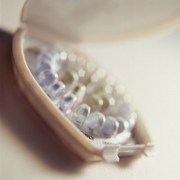 Photo: Getty Images
The Obama administration has made major changes to federal health laws. How so? For one, by August 1, 2012, new health insurance plans will consider birth control (ones approved by the FDA) as a part of preventive care, and therefore, be prescribed at no cost to patients.
The Wall Street Journal reports that the whole point of this is to enable insured women to obtain doctor-prescribed birth control, sterilization, and varying forms of birth control at no cost. It is hoped that this move will also help poorer women as well. The Department of Health of Human Services (HHS) seems to be happy about this move. HHS even stated that this change could help women have their babies a safer distance apart, thereby improving mom’s health and baby’s.
But of course, not everyone is pleased with this change. Those who are pro-life and/or are from religious factors, including the Roman Catholic Church, are definitely not on board. Cardinal Daniel N. DiNardo was quoted as saying, “The pro-life majority of Americans – Catholics and others – would be outraged to learn that their premiums must be used for this purpose,” and that “Pregnancy is not a disease, and children are not a ‘health problem.’”
The Roman Catholic Church officially banned all so-called artificial birth control in 1930 on New Year’s Eve. What does the church consider to be artificial birth control? Condoms, diaphragms, cervical caps, douches, suppositories, spermicides are included on this list. In modern times, this list no doubt includes the morning-after pill and tubal sterilizations as well. Plain and simple, the church’s stand is, if you have sex, then be prepared to have a baby. The rhythm method, in which partners do not have sex during the women’s ovulation, is the only approved method. Although, truth be told, this method is not as reliable as others.
But as for the rest of society, it’s pretty plain that most will appreciate this change since between 2006 and 2008 alone, 10.7 million women were on the pill. Further, there was a record 10.4 million women that used tubal ligation during that same time according to the Guttmacher Institute.
It is important to note, however, that these changes will not apply to Medicaid and federal-state health insurance plans for the poor. Also, older plans will not be changed; only plans that began after President Obama signed the revised law on March 23, 2010.
Resources:
PBS American Experience – People & Events: The Catholic Church and Birth Control. PBS.org
http://www.pbs.org/wgbh/amex/pill/peopleevents/e_church.html
Law Eases Availability of Birth Control.Wall Street Journal
http://online.wsj.com/article/SB10001424053111903341404576482063615921074.html
Reviewed August 11, 2011
by Michele Blacksberg R.N.
Edited by Jody Smith
Dita Faulkner is a freelance writer and a great blogger. Check her out at:
http://redtoenails.wordpress.com/
Add a CommentComments
There are no comments yet. Be the first one and get the conversation started!