



Improved
6140 HealthChanged
3797 LivesSaved
3584 Lives0 lives impacted in the last 24 hrs Learn More
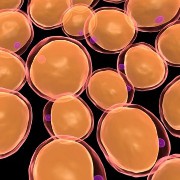 Photo: Getty Images
If you’re fighting the battle of the bulge—or bulges, as the case may be—it’s helpful to know something about fat cells and how they behave. Let’s take a look.
They’re with You from the Start
You have your fat cells at birth, and the way they’re distributed throughout your body is genetically determined. Know how some women sport saddlebags while others have chubby arms or a muffin top, even if they’re not overweight? That’s genetics in action.
There are also general differences in how fat cells are distributed in men’s bodies and women’s. Most men carry the majority of their fat cells around their torsos and some in their buttocks. In women’s bodies, fat cells occur mainly in the breasts, around the waist and across the hips and buttocks.
They’re Not All Bad
We humans actually need some fat in our bodies. Fat cells store energy we burn during our daily lives. Within the deepest layers of skin, where most fat is found, it helps insulate us. Some fat cushions our internal organs, such as our kidneys. Fat cells also produce certain hormones.
Are you glad you have breasts? Thank your fat cells. Fatty tissue makes up a large portion of the volume in your breasts and provides a safe framework for milk producing structures.
Too much fat, of course, is not a good thing. Obesity puts a strain on the body and its systems and contributes to type 2 diabetes, stroke and other life threatening conditions. Visceral fat, or fat that’s located within the abdominal cavity instead of under the skin, threatens your health most of all.
Fat Cells are Loyal
You might think that when you gain and lose weight, you gain and lose fat cells. For the most part, that’s not true. Those fat cells that come into the world with you simply expand or shrink as your weight changes.
What is true is that without cosmetic intervention, like liposuction, you can’t make your fat cells disappear. That’s why there’s really no such thing as “spot reducing.” Sit ups are a great way to tone abdominal muscles, for instance, but they will not have any effect on fat cells.
You need to control calories to shrink the contents of those fat cells. What are those contents? Along with a small amount of basic cell structure, fat cells are composed of a droplet of fat. The Discovery Health website suggests you think of a fat cell as a "tiny plastic bag that holds a drop of fat." For more on how the fat actually gets there, visit http://health.howstuffworks.com/human-body/cells-tissues/fat-cell1.htm.
Liposuction Sends them Packing
Liposuction indeed does remove fat cells. And for good—they won’t “come back.” That doesn’t mean you won’t gain weight if you overeat. You will have some fat remaining after liposuction; no cosmetic surgeon will remove all fat from any area of the body. And those remaining cells can expand if they’ve got the fuel.
It’s no surprise that cosmetic surgeons talk about liposuction as a way to “banish stubborn fat pockets.” Many people indeed have love handles, saddlebags or other areas where fat refuses to budge, even when they're not obese or even overweight. That’s why liposuction is the most popular form of cosmetic surgery in the U.S for men, and second most popular for women, behind breast augmentation.
They’re at Least Somewhat Vulnerable to New Treatment Options
New fat blasting treatments seem to emerge in the marketplace monthly. Some, such as mesotherapy, in which patients are injected with chemicals that are said to "dissolve" fat, receive mixed reviews at best. Others, however, do appear to show promise.
One new treatment, called CoolSculpting, applies extreme cold to fat cells, ultimately destroying as much as 20 percent of the cells in target areas in a non-invasive, painless way. It's not inexpensive, and it doesn't match the results of liposuction, but so far it appears that CoolSculpting is a viable alternative to surgery.
It would be oversimplifying to characterize fat cells as your enemy. After all, distributed properly and moderately throughout your body, fat is your friend. It keeps you warm and protects delicate areas, and it's largely responsible for your feminine curves.
But remember, you can have "too much of a good thing!"
References:
http://health.howstuffworks.com/human-body/cells-tissues/fat-cell.htm
http://www.mayoclinic.com/health/breast-cancer-early-stage/BC00001&slide=2
http://www.surgery.org/sites/default/files/2009stats.pdf
http://www.coolsculpting.com/en-us/
Add a CommentComments
There are no comments yet. Be the first one and get the conversation started!