




Improved
6141 HealthChanged
3797 LivesSaved
3584 Lives1 lives impacted in the last 24 hrs Learn More
 Photo: Getty Images
Recent research has given people a lot to think about when it comes to the added sugar in their diet. Not that long ago common wisdom told us that our collective sweet tooth may be bad for our teeth, but we didn’t worry much about our overall health. However, a new review on fructose in an upcoming Journal of the American Society of Nephrology (JASN) says think again. It indicates just how dangerous the simple sugar may be.
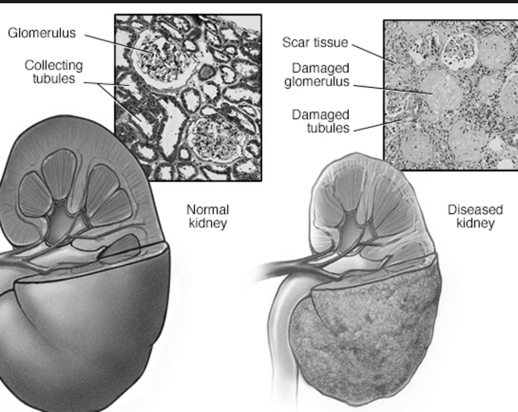
In the JASN article, Richard J. Johnson, MD, chief of the Renal Diseases and Hypertension Division at the University of Colorado and Takahiko Nakagawa, MD, director of Research at University of Colorado, provide a concise overview of recent clinical and experimental studies to understand how excessive amounts of fructose – present in added sugars – may play a role in high blood pressure, diabetes, obesity, and chronic kidney disease (CKD).
Dietary fructose is present in our food primarily in added dietary sugars, honey, and fruit. Most people are eating fructose from sucrose, a disaccharide containing 50 percent fructose and 50 percent glucose bonded together, and high fructose corn syrup (HFCS), a mixture of free fructose and free glucose, usually in a 55/45 proportion.
With the introduction of HFCS in the 1970s, an increased intake of fructose has occurred in the American diet and obesity rates have soared simultaneously, studies show. Prior to the introduction of HFCS, about 15 percent of Americans were considered obese, today it's 33 percent, including a growing number of children and teens.
As Americans’ weight increase so do the risks of coronary heart disease, stroke, high blood pressure, and diabetes. Obesity has also been linked to breast cancer in postmenopausal women, endometrial cancer, colon cancer, kidney cancer and esophageal cancer.
More and more people are becoming aware of the dangers of excessive fructose in their diet and this has led to a consumer revolt. As such, food manufacturers have recently started to advertise they are no longer using HFCS in their products. Earlier this year, the Corn Refiners Association began its new advertising campaign whereby they changed HFCS – a term with an increasingly negative connotation – to the more "natural sounding corn sugar" and pronounced to Americans to stop worrying about using their product, because, as they say, “sugar is sugar”.
Not so fast, the authors said. The link between excessive intake of fructose and metabolic syndrome is becoming increasingly established. The authors concluded the not-so-sweet truth from this review of the literature is increasing evidence that fructose may also play some role in hypertension and renal disease.
“Science shows us there is a potentially negative impact of excessive amounts of sugar and high fructose corn syrup on cardiovascular and kidney health,” explained Johnson, author of The Sugar Fix. He says excessive fructose intake could be viewed as an “increasingly risky food and beverage additive.”
Use of HFCS as a sweetener instead of sugar has risen sharply in recent decades, and now is commonly used to sweeten thousands of products including breads, cereals, breakfast bars, beverages, luncheon meats, yogurts, soups, and condiments, to name a few.
According to estimates by the Institute for Agriculture and Trade Policy, a family farming trade group, the average American eats about 12 teaspoons of HFCS each day, with teenagers and other high-end users eating as much as 80 percent more than average.
In 2009, two independent studies showed HFCS was being produced using mercury-grade caustic soda that caused many branded food products containing the sweetener to also be tainted with mercury, a metal that is toxic to humans.
Johnson and Nakagawa, who hold several patent applications related to lowering uric acid for the treatment or prevention of hypertension, diabetes, and fatty liver, say they are increasingly concerned that physicians may be overlooking this health problem when advising CKD patients to follow a low protein diet. They recommend low protein diets should also include an attempt to restrict added sugars containing fructose.
The article, entitled “The Effect of Fructose on Renal Biology and Disease,” will appear online at http://jasn.asnjournals.org on November 29, 2010, doi 10.1681/ASN.2010050506.
Lynette Summerill is an award-winning writer who lives in Scottsdale, Arizona. In addition to writing about cancer-related issues for EmpowHer, she pens Nonsmoking Nation, a blog following global tobacco news and events.
Add a Comment2 Comments
The November 29 study in Journal of the American Society of Nephrology incorrectly suggests that consumption of ‘excessive’ fructose in the American diet may play a unique role in high blood pressure, diabetes, obesity and chronic kidney disease. It is important to note that the authors’ hypothesis, drawn largely from rat and epidemiological studies rather than human trials, fails to take into account studies conducted with human subjects consuming table sugar and high fructose corn syrup at typical intake levels consistently return normal range values for important metabolic markers like serum glucose and insulin; appetite hormones ghrelin and leptin; triglycerides and uric acid; and for measured feelings of hunger and satiety.
While obesity, metabolic syndrome, hypertension, renal disease, cardiovascular disease and kidney disease are serious health conditions, it is certainly premature and inappropriate, not to mention potentially misleading, to suggest that simple sugars found in nature, like fructose, are uniquely responsible for these debilitating medical conditions.
The American Medical Association stated that, “Because the composition of high fructose corn syrup and sucrose are so similar, particularly on absorption by the body, it appears unlikely that high fructose corn syrup contributes more to obesity or other conditions than sucrose.”
As many dietitians agree, all sugars should be consumed in moderation as part of a balanced lifestyle.
Consumers can see the latest research and learn more about high fructose corn syrup at www.SweetSurprise.com.
Audrae Erickson
November 30, 2010 - 9:27amPresident
Corn Refiners Association
This Comment
Lynette,
November 24, 2010 - 7:59pmThis is a great article, you've done lots of research and it shows. I like keeping up with the latest health issues. Sugar is addictive, but I didn't know about all of these new findings. Thank you for this article.
This Comment