


Improved
6112 HealthChanged
3786 LivesSaved
3568 Lives0 lives impacted in the last 24 hrs Learn More
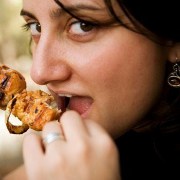 Photo: Getty Images
Some experts think that you should eat like a cavewoman because it's better for your health. According to Dr. Loren Cordain, professor of health and exercise science at Colorado State, “It makes sense from an evolutionary perspective. “It’s a system of eating that we’ve already adapted to.”
There are other experts who don’t agree. They contend that surely the body can adapt to changes in nutrition. Dr. Marlene Zuk, professor of biology at the University of California-Riverside, said, “We don’t know exactly what early humans ate.
“But, their diet almost certainly included grains at least some of the time and they also ate many different foods depending on where they lived and what time period you’re talking about...the idea that humans haven’t had enough time since the advent of agriculture to evolve adaptations to new foods is false.”
Who’s right? In my opinion, both camps are right to some extent. The Cavewoman or Paleo Diet has been around forever but has gained significant attention over the last decade. Its high concentration of meat (as much as 65 percent of daily calories), fruit, non-starchy vegetables, nuts and seeds are good for your diet.
At the same time, no one can argue that foods such as oatmeal, olive oil, avocados, green tea, brown rice, whole grains and beans are also good for your diet.
Whatever the diet, the same rule applies: you will gain weight if you eat more calories than you burn.
So, what’s a woman to do? I say eat a balanced diet, adjusted for your goals. Your body needs the macronutrients to function properly:
--proteins (20-35 percent of daily calories)
--fats (mainly unsaturated, 10-20 percent) and
--carbohydrates (50-60 percent)
In my opinion, there are elements of the Cavewoman diet that will work well for anyone. Eating protein (meats, seafood, nuts) with every meal is always good. Proteins keep you fuller for longer, helps you eat less and the body has to work harder to digest them. Proteins also help rebuild muscle tissues after a tough weight training workout. And the health benefits of fruits and vegetables are unquestioned.
There are also foods, like those mentioned above, not included in the Cavewoman diet that taste good and are good for your body.
The most important thing to remember when putting your meals together: eat healthy, nutritious meals that you like and you can maintain in order to reach your health, fat loss and weight loss goals. You don’t have to eat like a cavewoman to do that.
Mark Dilworth, BA, PES, CPT is a Certified Personal Trainer and former NCAA Division I athlete. Mark is the owner of My Fitness Hut, Her Fitness Hut, Sports Fitness Hut and My Nutrition Hut. Mark’s Fat Blaster Athletic Training System has been proven to give his clients the fit, sculpted and athletic-type bodies they want. Visit Mark’s main site:
Your Fitness University http://yourfitnessuniversity.com
Add a Comment6 Comments
Yes, I agree that it matters what you eat....its better to eat a 200 calorie green salad than a 200 calorie piece of candy....one is empty calories has a totally different effect on insulin spikes...I will check out the book...thanks!
March 29, 2011 - 12:44pmThis Comment
here is an interesting blog post regarding insulin, fat, and muscle. http://www.gnolls.org/1794/why-snacking-makes-you-weak-not-just-fat/
March 30, 2011 - 9:24amThis Comment
you hit on insulin which is the key to is all. insulin will store glucose in the blood into fat cells after the muscle cells are full. all carbs turn to glucose in the blood. unfortunately, americans eat way more carbs than their muscle cells need.
another book to read that is a much quicker read is by the same author. "why we get fat and what to do about it" you may discover a competitive advantage or you may not agree. in the end, you will find it worth the time to read.
March 29, 2011 - 1:07pmThis Comment
Thank you for your comment! If you consistently eat more calories than you burn, you will gain weight. That is the first law of thermodynamics as it relates to weight gain. There are many reasons why we eat too much: emotional, behavioral or otherwise.
What you eat matters and how much you eat matters as well.
As for whole grains, etc., some of these foods may not agree with a person's body for various reasons (gluten, etc.)....but, generally, these are healthy foods. You will always adjust your meal plan for your individual needs.
March 29, 2011 - 11:46amThis Comment
Unfortunately, the multifaceted, multi hormone metabolism of the human body is much more complicated than just the 1st law of thermodynamics. Read the book Good Calories, Bad Calories. It is a tremendous read for someone in your field and will set yourself apart from your competition.
March 29, 2011 - 12:36pmThis Comment
to the author:
"no one can argue that foods such as oatmeal, olive oil, avocados, green tea, brown rice, whole grains and beans are also good for your diet."
there are plenty of very smart scientist that make well supported arguments that whole grains, beans, brown rice, and oatmeal are not good for you.
and your calories in/calories out theory is antiquated.
March 29, 2011 - 9:45amThis Comment